CM Majhi Flags Odisha's Industrial Shift to Semiconductors, IT

Synopsis
On the second anniversary of his BJP government, Odisha Chief Minister Mohan Charan Majhi announced the state has become a top investor destination in semiconductors, IT, aerospace, and shipbuilding, backed by the Go Swift clearance system and new skill centres in three cities.
Key Takeaways
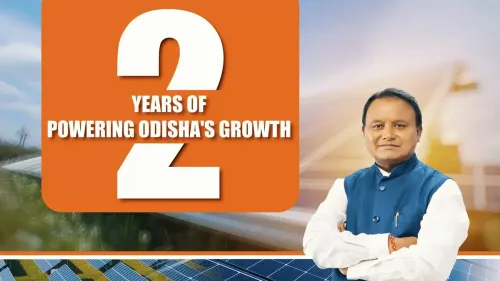
Chief Minister Mohan Charan Majhi marked two years of his BJP government in Odisha on 19 June 2026 .
The government's 'Nibesharu Niyukti' (Investment to Employment) policy and Go Swift Single Window System are cited as the drivers of industrial growth.
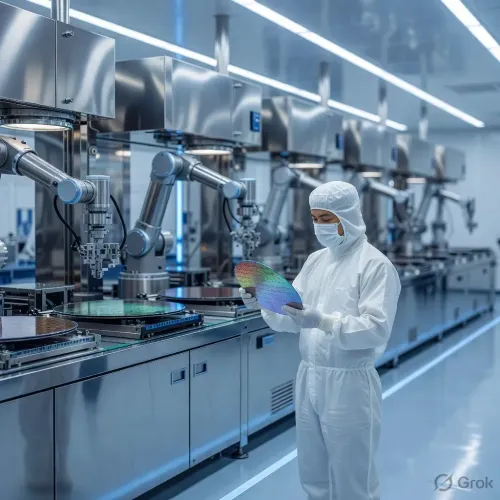
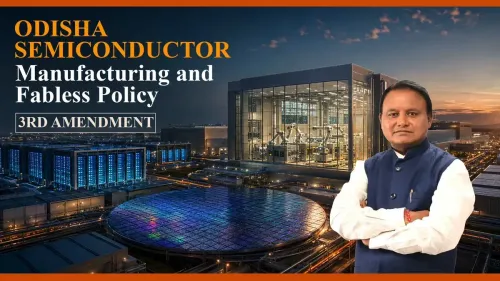
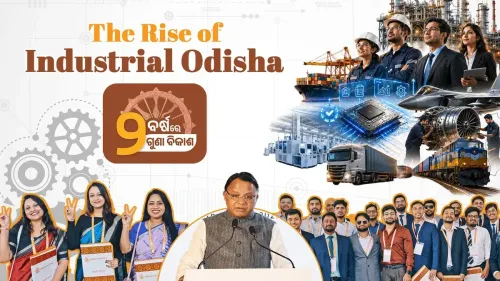
Odisha is targeting semiconductors, IT, aerospace, and shipbuilding — a deliberate shift beyond traditional mineral-based industries.
World-class skill centres are being built in Bhubaneswar, Sambalpur, and Berhampur to prepare youth for employment in high-growth sectors.
The state's strategy aligns with national PLI schemes and the Semiconductor Mission launched in 2021.
Investment realisation data and employment figures from new sectors will be the key test of these claims going forward.
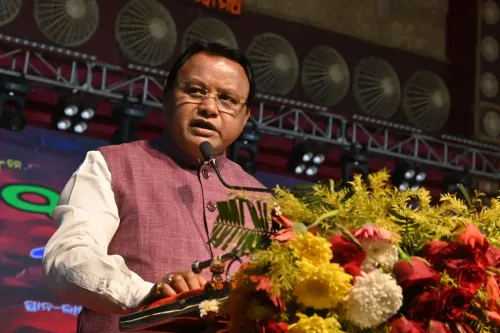
Odisha Chief Minister Mohan Charan Majhi declared on Friday, 19 June 2026 that the state has entered a new era of transparent and practical industrial growth, crediting his government's 'Nibesharu Niyukti' (Investment to Employment) resolve, the Single Window System, and the Go Swift framework for driving this momentum.
Posting on X to mark two years of his government, Majhi wrote that Odisha is no longer confined to traditional mineral-based industries and has become the first choice of investors in future high-growth sectors — semiconductors, IT, aerospace, and shipbuilding. The post was tagged with the hashtags #2YearsofLokankaSarakar (Two Years of People's Government), #BikasharaDharaOdishaSara (Development Flow Across Odisha), and #2YearsOfIndustrialMomentum.
Context
The post marks the second anniversary of the BJP government in Odisha, which came to power in June 2024 after the party ended the long-running Biju Janata Dal administration. Chief Minister Majhi has since anchored his economic messaging on converting resource wealth into diversified, employment-generating industries rather than relying solely on mining and mineral processing.
The 'Nibesharu Niyukti' principle — translating investment into actual jobs — has been the stated cornerstone of the administration's industrial policy, with Go Swift serving as the technology-backed clearance mechanism designed to reduce bureaucratic delays for incoming investors.
Policy Backdrop
Odisha's industrial pivot builds on a layered national and state policy framework. The Odisha Industrial Policy Resolution 2015 had already begun streamlining land and power allocation for manufacturers, while the central government's Make in India campaign from 2014 encouraged states to diversify beyond extractive industries. The Production Linked Incentive (PLI) schemes, introduced from 2020 onward, provided fiscal support specifically for semiconductors, IT hardware, and shipbuilding — sectors Majhi's post now explicitly claims as Odisha's new priority destinations.
India's Semiconductor Mission, launched in 2021, further opened a national window for states to compete for chip manufacturing investments, a race in which Gujarat and Tamil Nadu have also been active participants. Odisha's positioning in this space represents a significant strategic ambition for a state historically dependent on iron ore, coal, and steel.
Skill Infrastructure and Stakeholder Impact
Majhi specifically highlighted world-class skill centres being developed in Bhubaneswar, Sambalpur, and Berhampur, describing them as preparing the state's youth not with promises but with 'real employment capability.' This three-city spread signals an intent to distribute industrial benefits beyond the capital and into western and southern Odisha.
For industrial investors, the Single Window System and Go Swift framework are designed to compress approval timelines, a persistent concern that has historically steered investment toward states with leaner clearance processes. For skilled youth, the sector shift toward semiconductors, aerospace, and IT implies a demand for higher-order technical training rather than the semi-skilled labour traditionally absorbed by mining operations.
What's Next
The government's credibility on these claims will be tested by the release of verifiable investment realisation data and employment figures from the new sectors. Any follow-up announcements at the next Make in Odisha conclave will be closely watched by investors and policy observers as a measure of whether the industrial momentum Majhi describes has translated into ground-level outcomes. The trajectory of Odisha's semiconductor and aerospace bids, in the context of national PLI allocations, will determine whether the state consolidates its position or cedes ground to more established industrial rivals.
Point of View
Contrasting implicitly with the previous administration's mineral-dependent model. The explicit naming of semiconductors and aerospace reflects a broader national pattern where state governments compete for PLI-linked investments to signal modernity and attract skilled employment. However, the gap between policy intent and verified outcomes remains the central question: Odisha's rivals in this space, particularly Tamil Nadu and Gujarat, have years of head-start in electronics and aerospace ecosystems. Whether Go Swift and the skill centres translate into measurable job numbers will define whether this narrative holds beyond the anniversary cycle.
NationPress
19 Sept 2026
Frequently Asked Questions
What is Go Swift in Odisha?
Go Swift is Odisha government's online single-window portal designed to fast-track industrial approvals and clearances, reducing bureaucratic delays for investors seeking to set up operations in the state.
What sectors is Odisha now targeting for investment?
Odisha is actively targeting semiconductors, information technology, aerospace, and shipbuilding — sectors beyond its traditional base of mineral and mining industries.
What is 'Nibesharu Niyukti' in Odisha?
'Nibesharu Niyukti' means 'Investment to Employment' in Odia and is the stated policy principle of Chief Minister Mohan Charan Majhi's government, aiming to convert industrial investment directly into jobs for Odisha's youth.
Where are Odisha's new skill centres being built?
World-class skill centres are being developed in Bhubaneswar, Sambalpur, and Berhampur to train youth for employment in high-growth industries such as IT, semiconductors, and aerospace.
How long has Mohan Majhi been Chief Minister of Odisha?
Mohan Charan Majhi became Chief Minister of Odisha in June 2024 after the BJP won the state assembly elections, ending the long-running Biju Janata Dal government. His administration completed two years in June 2026.