CM Majhi Flags Top Priority for Rath Yatra Pilgrims
Synopsis
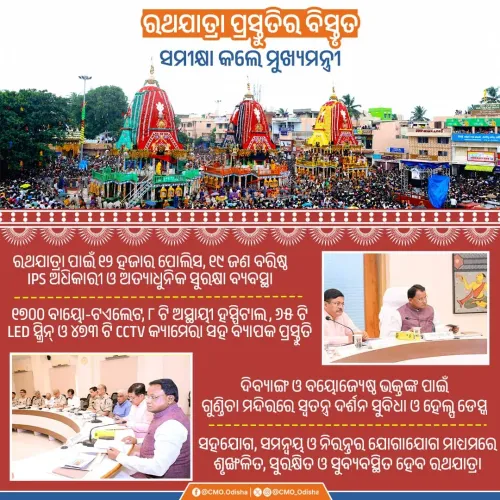
Odisha Chief Minister Mohan Charan Majhi declared pilgrim safety the government's top priority for the 2026 Rath Yatra, announcing over a hundred special trains, real-time monitoring, temporary hospitals on Bada Danda, and advanced ambulances for the world-famous Puri chariot festival.
Key Takeaways
CM Mohan Charan Majhi posted on 15 July 2026 outlining Rath Yatra safety measures in Puri .
Over a hundred special trains are being deployed to transport pilgrims to and from Puri.
Temporary hospitals and advanced ambulances will be stationed along Bada Danda , the main procession route.
Advanced real-time monitoring systems will be used to manage crowd flow during the festival.
The state government has called the service and protection of Lord Jagannath devotees its 'highest priority.' Coordinating safety for Rath Yatra is a long-standing inter-departmental practice in Odisha , continued by the current BJP administration.
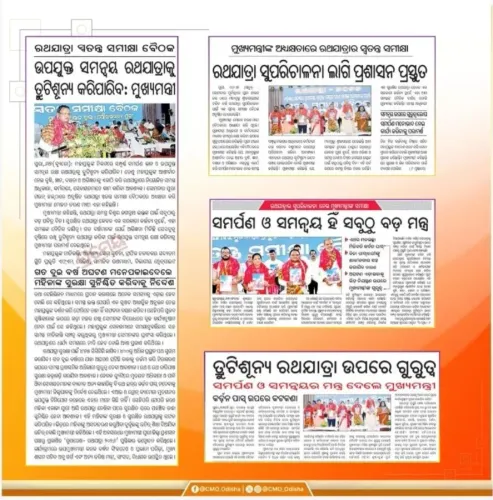
Odisha Chief Minister Mohan Charan Majhi on Wednesday, 15 July 2026 outlined the state government's comprehensive safety and service arrangements for the world-famous Rath Yatra in Puri, declaring pilgrim welfare the administration's 'highest priority' ahead of the annual chariot festival of Lord Jagannath.
Context
Posting in Odia on X (formerly Twitter), CM Majhi wrote: 'Biswa prasiddha Rath Yatra abasarrare Mahaprabhuanka darshana pain asuthiba bhaktanka seba o suraksha amara sarkarara sarbochcha prathmikata' — 'Serving and protecting the devotees who come to have the blessed sight of Mahaprabhu during the world-famous Rath Yatra is the highest priority of our government.' He called on the public to join hands in making the sacred procession 'grand, disciplined, and unforgettable.'
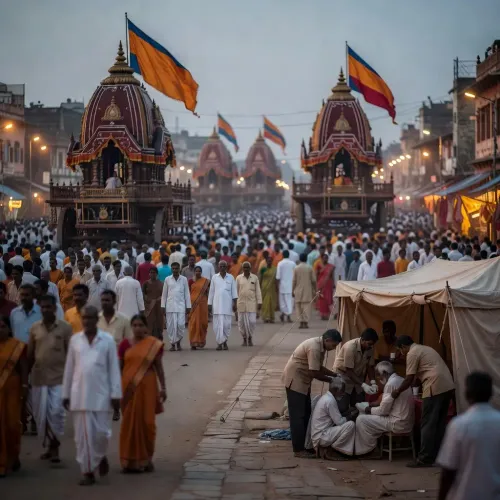
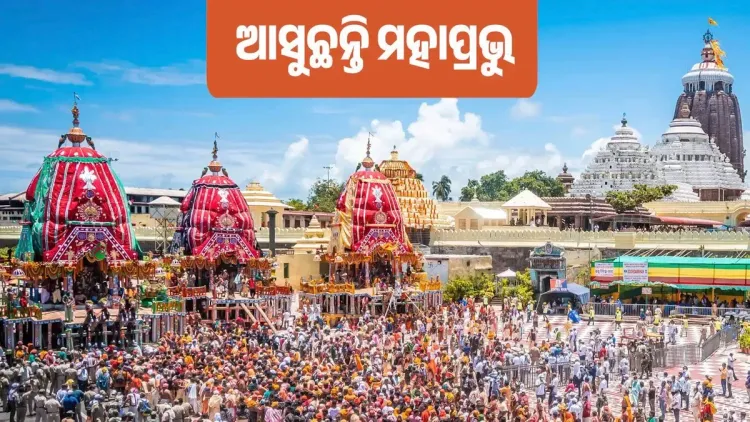
The Rath Yatra is one of India's largest religious gatherings, drawing millions of pilgrims to the 12th-century Jagannath Temple in Puri each year. The main procession travels along Bada Danda, the grand avenue leading from the temple, making crowd management and medical preparedness critical logistical challenges for the state.
Policy Backdrop
CM Majhi's post details a multi-pronged deployment: over a hundred special trains to ferry pilgrims, advanced real-time monitoring systems, temporary hospitals on Bada Danda, and advanced life-support ambulances positioned along the procession route. While exact operational counts remain subject to official confirmation, the scale described reflects the inter-departmental mobilisation that Rath Yatra demands.
Coordinating special rail services with Indian Railways and deploying medical infrastructure for the festival is a decades-old administrative practice in Odisha, continued across successive state governments regardless of political affiliation. The Shree Jagannath Temple Administration, which functions under state government oversight, works alongside the home, health, and transport departments during the festival period.
Stakeholders and Impact
The primary beneficiaries of these measures are the millions of pilgrims — many travelling from distant parts of India — who converge on Puri for the Rath Yatra. Puri residents, local traders, and the city's civic infrastructure also bear the direct impact of the surge in footfall during festival days.
The emphasis on temporary hospitals and advanced ambulances signals a specific focus on medical contingency, a lesson drawn from past incidents at large religious gatherings across India where crowd density has led to stampedes or medical emergencies. State administrations have increasingly invested in surveillance and rapid-response systems to mitigate such risks.
What's Next
Operational reports on crowd flow, train utilisation, and medical response during the 2026 Rath Yatra will be closely watched by both the state home and health departments. Any official post-event review of the arrangements is expected to inform planning for future editions of the festival.
With CM Majhi's BJP government having taken charge in Odisha in June 2024, the administration's handling of the Rath Yatra — a festival of deep cultural and electoral significance in the state — will be seen as a key governance benchmark in the months ahead.
Point of View
Delivering a smooth Rath Yatra carries outsized symbolic weight. How the arrangements perform on the ground will shape the administration's credibility on both governance and cultural stewardship.
NationPress
13 Oct 2026
Frequently Asked Questions
When is Rath Yatra 2026 in Puri?
Rath Yatra 2026 is the annual chariot festival held in Puri, Odisha, in July. CM Mohan Charan Majhi's post on 15 July 2026 outlined safety preparations, indicating the festival period was imminent or under way.
What arrangements has the Odisha government made for Rath Yatra 2026?
The Odisha government has announced over a hundred special trains, advanced real-time monitoring systems, temporary hospitals on Bada Danda, and advanced ambulances to ensure pilgrim safety during Rath Yatra 2026.
Who is in charge of Rath Yatra arrangements in Odisha?
Chief Minister Mohan Charan Majhi heads the BJP state government in Odisha, which coordinates Rath Yatra logistics across the home, health, transport, and railway departments alongside the Shree Jagannath Temple Administration.
Why are special trains run for Rath Yatra?
Millions of pilgrims travel to Puri for Rath Yatra each year, creating enormous demand for transport. Special trains are coordinated with Indian Railways to ease congestion and ensure safe, timely movement of devotees.
What is Bada Danda in Puri?
Bada Danda is the grand avenue in Puri along which the Rath Yatra procession travels from the Jagannath Temple. It is the focal point of crowd management, medical deployment, and security during the festival.