CM Majhi's Odisha Marks 2 Years of BJP Rule
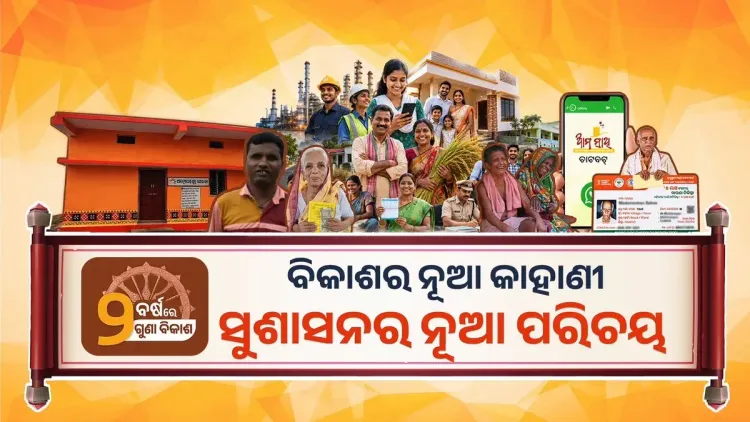
Synopsis
The Chief Minister's Office of Odisha marked two years of the Mohan Majhi-led BJP government on 20 June 2026, citing rural infrastructure development, digital governance outreach, zero-tolerance on corruption, and a public grievance system as key achievements for the state's 4.5 crore citizens.
Key Takeaways
The Chief Minister's Office of Odisha officially marked two years of the BJP government under CM Mohan Charan Majhi on 20 June 2026 .
The government cited rural infrastructure strengthening and people-oriented, transparent administration as core achievements.
A zero-tolerance policy against corruption and a public grievance redressal system were highlighted as trust-building measures.
Digital governance through modern technology has been positioned as reaching every one of Odisha's 4.5 crore citizens .
The BJP formed its first-ever government in Odisha after the June 2024 elections , ending a 24-year BJD rule .
The government pledged to continue its 'development trajectory' while protecting Odia identity and aspirations .
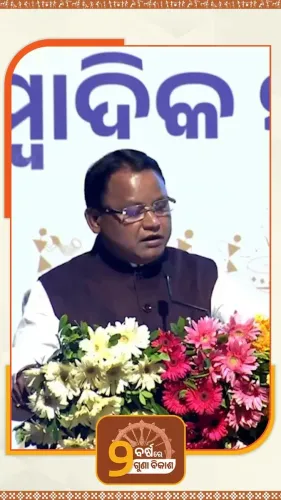
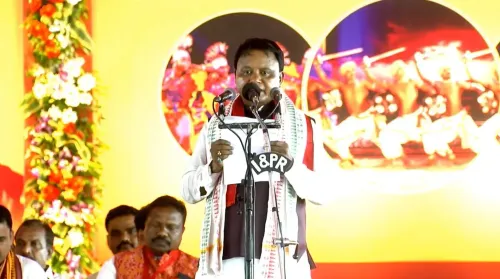
The Chief Minister's Office of Odisha on Saturday, 20 June 2026 marked the completion of two years of the Mohan Charan Majhi-led BJP government in the state, highlighting achievements in rural infrastructure, digital governance, anti-corruption measures, and citizen-centric administration.
Context
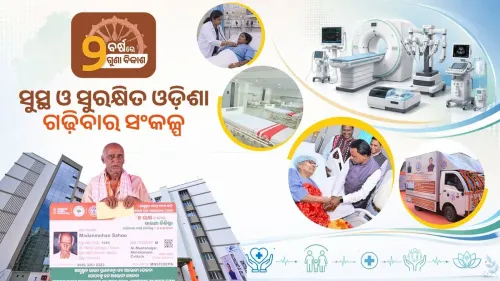
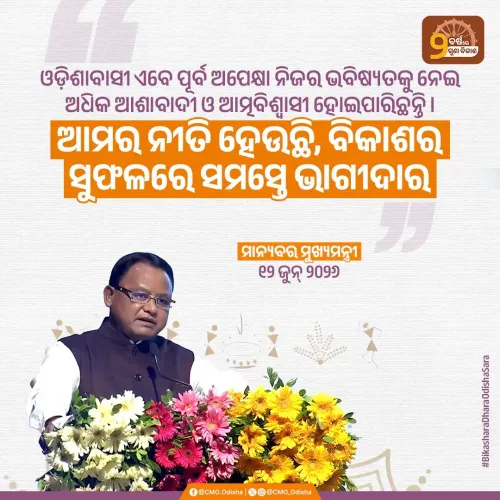
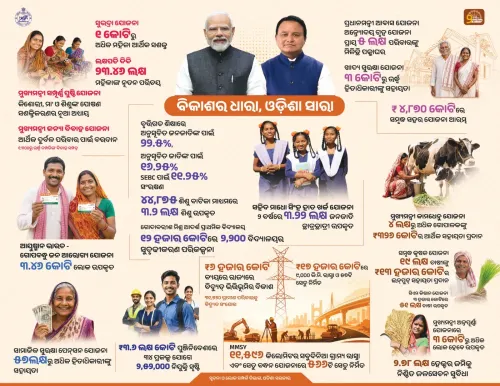
The post, published in Odia, states that under the 'visionary leadership' of Chief Minister Mohan Majhi, the state government has 'successfully completed two years of service, dedication, and all-round progress.' It adds that through various public welfare initiatives, rural infrastructure has been strengthened while administration has been made 'completely people-oriented and transparent.'
The statement further notes that 'digital governance through modern technology has reached every citizen,' while a 'zero-tolerance policy against corruption' and a public grievance redressal system have 'further strengthened the bridge of trust between the government and the people.' The post closes with a pledge to continue this 'development trajectory' in building a 'new and prosperous Odisha' while safeguarding the hopes, aspirations, and identity of 4.5 crore Odia people.
Policy Backdrop
The BJP formed its first-ever government in Odisha following the June 2024 assembly elections, ending the 24-year rule of the Biju Janata Dal under former Chief Minister Naveen Patnaik. Mohan Charan Majhi was sworn in as Chief Minister in June 2024, marking a significant political shift in a state that had been a BJD stronghold since 2000.
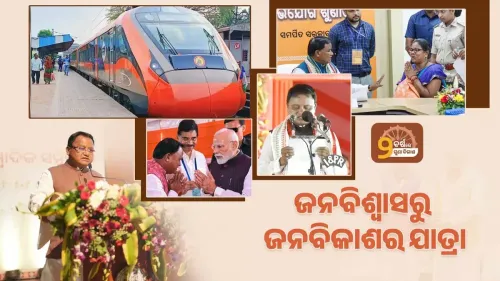
The governance themes highlighted — digital service delivery, anti-corruption drives, and grievance redressal — closely mirror priorities promoted by the BJP at the national level since 2014, suggesting a deliberate alignment of state governance messaging with the party's broader ideological framework. The hashtags #2YearsofLokankaSarakar ('two years of people's government') and #BikasharaDharaOdishaSara ('the stream of development for all of Odisha') frame this as a structured political milestone communication.
Stakeholders and Impact
The primary beneficiaries cited in the post are rural communities and the broader Odia citizenry. Strengthening of rural infrastructure and expanding digital governance to reach every citizen are positioned as the twin pillars of the government's two-year record.
The emphasis on a public grievance hearing system signals an attempt to institutionalise accountability mechanisms — a recurring demand from civil society in states where administrative access has historically been uneven. For 4.5 crore Odia citizens, the stated outcomes of transparency and technology-led administration represent benchmarks against which the government's third year will be measured.
What's Next
With the two-year mark now officially commemorated, the Majhi government's performance on rural infrastructure and digital service delivery will face closer scrutiny through state budget allocations and annual administrative reports. The BJP's ability to sustain governance momentum in Odisha — a state with complex social and economic needs — will be a key indicator of the party's long-term consolidation in eastern India.
Progress on translating stated commitments around anti-corruption and grievance redressal into measurable outcomes will determine whether the narrative of 'all-round progress' holds beyond political messaging cycles.
Point of View
Anti-corruption, and citizen-first administration — applied to a state where the party is still consolidating its first-ever majority. By anchoring the message around the aspirations of '4.5 crore Odia people' and invoking Odia cultural identity (Odia asmita), the government is attempting to blend development politics with regional pride, a strategy that proved effective for the BJD for two decades. The absence of specific scheme names or verifiable statistics in the post reflects a broader trend of milestone communications that prioritise narrative over data. Whether this messaging translates into durable political capital will depend on ground-level delivery in the state's rural heartland ahead of the next electoral cycle.
NationPress
20 Jun 2026
Frequently Asked Questions
How many years has CM Mohan Majhi's government completed in Odisha?
The Mohan Majhi-led BJP government in Odisha completed two years in office as of June 2026, having come to power after the June 2024 state assembly elections.
When did the BJP first come to power in Odisha?
The BJP formed its first-ever government in Odisha in June 2024, defeating the Biju Janata Dal which had ruled the state for 24 consecutive years under Naveen Patnaik.
What are the key achievements claimed by the Odisha government after 2 years?
The Odisha CMO cited rural infrastructure development, technology-driven digital governance, a zero-tolerance anti-corruption policy, and a public grievance redressal system as the government's main achievements over two years.
What does 'Lokankan Sarkar' mean in the Odisha government's anniversary post?
'Lokankan Sarkar' translates roughly to 'people's government' in Odia, used in the hashtag #2YearsofLokankaSarakar to frame the BJP administration's two-year milestone as a government that serves the public.
What is the population of Odisha referenced in the CMO's post?
The CMO's post references 4.5 crore (45 million) Odia people whose hopes, aspirations, and identity the state government has pledged to protect and serve.