CM Mann's Punjab Pushes to Become World-Class Tourism Hub
Synopsis
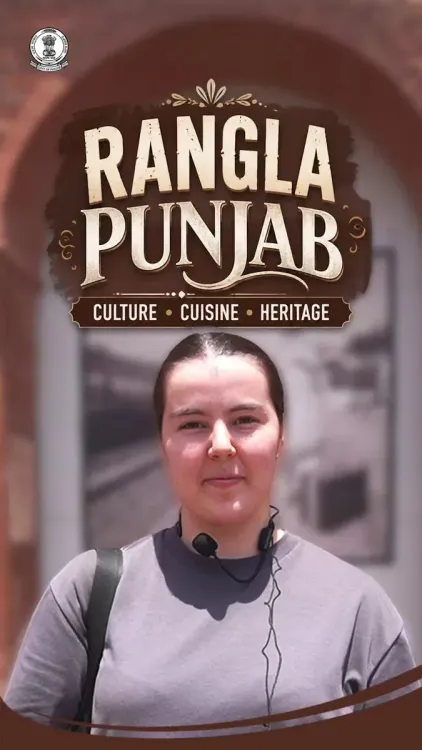
The Chief Minister's Office of Punjab announced on June 6, 2026, that the Mann government is actively promoting the state as a world-class tourism destination. Foreign tourists are visiting Punjab to experience its vibrant markets, cuisine, religious landmarks, and historic sites under the 'Rangla Punjab' identity.
Key Takeaways
The Chief Minister's Office of Punjab announced on June 6, 2026 that the state is pursuing concrete steps to become a world-class tourism destination.
Chief Minister Bhagwant Mann is leading the initiative under the Aam Aadmi Party government, which took office in March 2022.
Foreign tourists are already visiting Punjab, drawn by vibrant markets, local delicacies, religious landmarks, and historic sites.
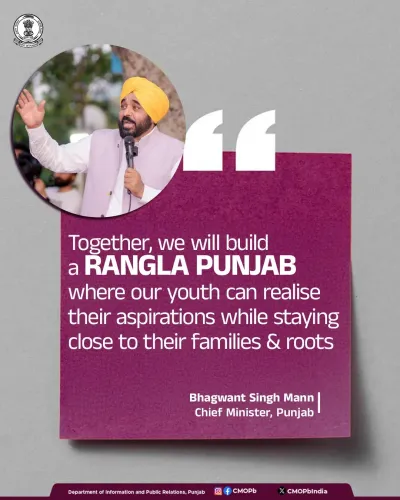
The campaign is built around the identity of Rangla Punjab — the colourful, culturally rich character of the state.
Punjab's tourism strategy aligns with broader national trends, with states like Rajasthan and Kerala having used distinct cultural identities to attract international travellers.
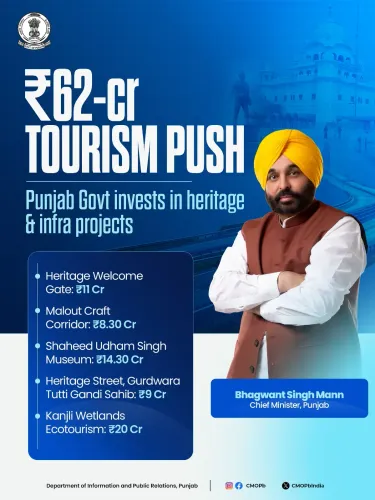
Specific project names, investment figures, and timelines for the 'concrete steps' have not yet been publicly detailed.
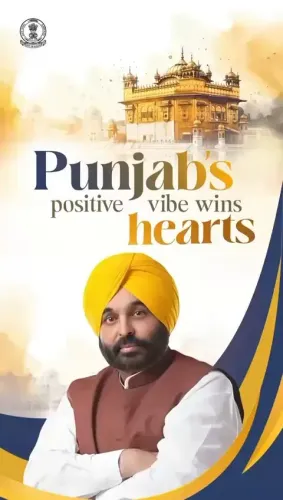
The Chief Minister's Office of Punjab, on behalf of Chief Minister Bhagwant Mann, announced on Saturday, June 6, 2026, that the state government is taking concrete steps to promote tourism and position Punjab as a world-class destination, with foreign tourists already visiting to experience the many facets of Rangla Punjab — the colourful, vibrant identity of the state.
Context
The official post from the Chief Minister's Office states that foreign tourists are now visiting Punjab and experiencing its 'vibrant markets, local delicacies, religious landmarks, and historic sites.' The phrase Rangla Punjab — loosely translated as 'Colourful Punjab' — is a long-standing cultural expression that captures the state's rich heritage, festivity, and diversity. The announcement signals that the Mann government is actively marketing this identity on an international stage.
Policy Backdrop
Punjab's push for tourism is not new. As far back as 2019, the state had released a tourism policy targeting heritage circuits and religious destinations to increase visitor footfall. Chief Minister Bhagwant Mann, who assumed office in March 2022 under the Aam Aadmi Party, has continued and sought to deepen this focus, framing tourism as a pillar of broader economic development for the state.
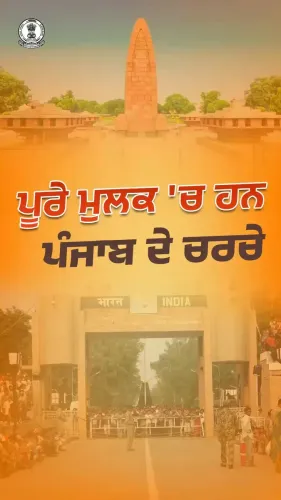
Punjab's appeal to international travellers rests on a powerful combination of assets: the Golden Temple in Amritsar, one of the most visited religious sites in the world; historic battlegrounds and forts; and a cuisine and folk culture — from makki di roti to bhangra — that enjoys global recognition among the Indian diaspora and beyond. These assets give the state a credible foundation for its world-class tourism ambitions.
Stakeholders and Impact
The direct beneficiaries of an uptick in foreign tourist arrivals are local tourism operators, hospitality businesses, artisans, and street-food vendors who form the backbone of Punjab's cultural economy. International visitors tend to generate higher per-capita spending than domestic tourists, making their attraction a priority for states seeking to boost revenue and employment.
Punjab's strategy mirrors successful models adopted by Rajasthan and Kerala, both of which have built internationally recognised tourism brands around distinct cultural identities — heritage palaces and backwaters, respectively. For Punjab, religious tourism anchored at Amritsar and the broader Sikh pilgrimage circuit offers a similarly differentiated proposition in the competitive Indian tourism landscape.
What's Next
The government has indicated that concrete steps are underway, though specific project names, timelines, or investment figures have not yet been detailed in this announcement. Observers will be watching for updated tourist arrival data for 2025-26, as well as any public-private partnership projects targeting heritage site development or international marketing campaigns. A formal tourism policy update or dedicated budget allocation would signal the depth of the state's commitment to this agenda.
If Punjab sustains momentum and translates cultural richness into structured tourism infrastructure, it could emerge as one of North India's most compelling international travel destinations — extending its reach well beyond the diaspora travellers who already make the pilgrimage to the Golden Temple each year.
Point of View
The government is leaning into a brand that already has organic global recognition, particularly among the sizeable Punjabi diaspora in the United Kingdom, Canada, and the United States. However, the announcement remains light on specifics, and the real test will be whether infrastructure, ease of travel, and hospitality standards keep pace with the marketing rhetoric. Punjab's success in this arena could also carry political dividends for the AAP government ahead of future electoral cycles, making tourism promotion both a policy and optics exercise.
NationPress
14 Sept 2026
Frequently Asked Questions
What is the Punjab government doing to promote tourism?
The Punjab government, led by Chief Minister Bhagwant Mann, is taking steps to position the state as a world-class tourism destination by highlighting its vibrant markets, local cuisine, religious landmarks such as the Golden Temple, and historic sites under the cultural identity of 'Rangla Punjab.'
What does Rangla Punjab mean?
'Rangla Punjab' translates loosely to 'Colourful Punjab' and is a long-standing cultural expression that captures the state's festive spirit, rich heritage, folk traditions, and diverse cultural identity.
Which foreign tourists visit Punjab and why?
Foreign tourists visit Punjab primarily for its Sikh religious sites — most notably the Golden Temple in Amritsar — as well as its historic forts, traditional cuisine, and vibrant folk culture including music and dance.
What is Punjab's tourism policy history?
Punjab released a state tourism policy in 2019 targeting heritage circuits and religious destinations. The current Bhagwant Mann government, which took office in March 2022, has continued this focus and is working to expand international tourist arrivals.
How does Punjab's tourism strategy compare to other Indian states?
Punjab's approach mirrors strategies used by Rajasthan and Kerala, both of which built internationally recognised tourism brands around distinct cultural identities — heritage palaces and backwaters respectively. Punjab is similarly leveraging its Sikh heritage, cuisine, and folk culture to differentiate itself.