Punjab CMO highlights Golden Temple visit to boost tourism
Synopsis
The Chief Minister's Office of Punjab on June 6, 2026, shared a video of Mumbai visitor Jaanvi describing her positive experience at Darbar Sahib, Amritsar, framing Punjab as a leading domestic tourism destination and continuing the state's social-media-driven heritage tourism push.
Key Takeaways
The Chief Minister's Office of Punjab posted on June 6, 2026 , promoting Punjab as an emerging national tourism destination.
The post featured Jaanvi , a visitor from Mumbai , sharing positive impressions of her visit to Darbar Sahib (the Golden Temple) in Amritsar .
Darbar Sahib is Sikhism's holiest shrine and Punjab 's most visited religious and tourist site, attracting millions annually.
Punjab has run tourism campaigns centred on Sikh heritage sites since at least the early 2000s, using these destinations as its primary differentiator.
Indian states are increasingly leveraging authentic visitor testimonials on social media to drive domestic tourism growth.
Upcoming Punjab tourism arrival statistics and any new infrastructure announcements around Amritsar will indicate whether this campaign translates into measurable growth.
The Chief Minister's Office of Punjab on Saturday, June 6, 2026, shared a visitor's firsthand account of a pilgrimage to Darbar Sahib in Amritsar, positioning the state as a rising domestic tourism destination. The post featured a video of Jaanvi, a visitor from Mumbai, who shared her positive impressions after attending the sangat (congregation) and experiencing the sacred shrine.
Context
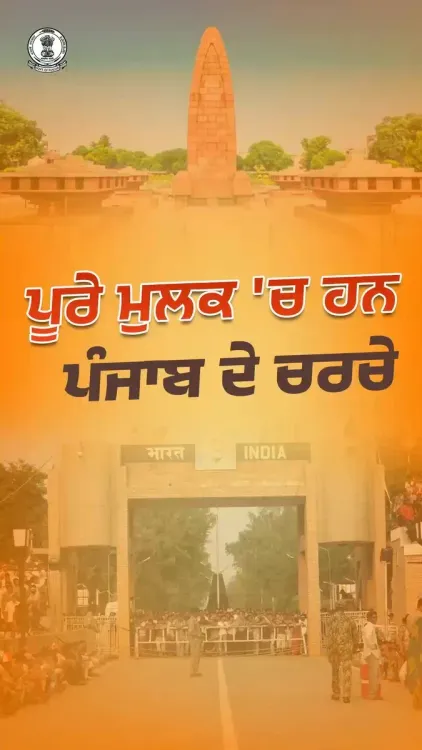
The Punjabi-language post states: 'Punjab saer-sapaate de sthan vajo poore mulk vich ubhar ke saamhne aa raha hai' — 'Punjab is emerging across the country as a tourism destination.' Jaanvi, who travelled from Mumbai, joined the sangat at Darbar Sahib and shared what the CMO described as positive reflections about her visit to the shrine. The post was accompanied by a video capturing her experience.
Darbar Sahib, widely known as the Golden Temple, is Sikhism's holiest shrine and Punjab's single most-visited religious site. It draws millions of pilgrims and tourists from across India and abroad every year, making it the anchor of the state's tourism identity.
Policy Backdrop
Punjab has run successive tourism promotion campaigns centred on the Golden Temple and other Sikh heritage sites since at least the early 2000s. The state government has consistently used Sikh heritage destinations to differentiate Punjab within India's highly competitive domestic tourism market.
Indian states have increasingly turned to social media to amplify authentic visitor testimonials at iconic religious sites — a low-cost, high-reach strategy to revive and expand domestic footfall. The CMO Punjab account's use of a real traveller's video fits squarely within this broader pattern of state-led digital tourism promotion.
Stakeholders and Impact
Domestic tourists, pilgrims, and the hospitality and services sector around Amritsar stand to benefit most from heightened visibility. Visitor-generated content shared through official government channels carries institutional credibility while also humanising the destination for prospective travellers who may not have considered Punjab for a leisure trip.
For a visitor like Jaanvi — a resident of Mumbai, India's largest metro — to travel to Amritsar and publicly share a positive experience signals cross-regional appeal, a metric state tourism boards actively seek to cultivate. The hospitality sector in and around Amritsar directly benefits from such amplified word-of-mouth.
What's Next
Attention will turn to whether Punjab releases updated tourism arrival statistics for 2025-26 or announces new infrastructure projects and policy measures around Amritsar to sustain this momentum. The state government's continued use of social media storytelling suggests a deliberate, ongoing campaign rather than a one-off post.
As competition among Indian states for domestic tourist spending intensifies, Punjab's ability to convert viral visitor moments into measurable footfall growth and hospitality investment will be the real test of its emerging tourism brand.
Point of View
Non-local voice, the state government implicitly addresses perceptions that Darbar Sahib is a destination primarily for Sikh pilgrims, broadening its appeal to all domestic travellers. This fits a wider pattern of Indian state governments using official social media not just for governance communication but as active destination-marketing channels. The real measure of success will be whether such storytelling is backed by tourism infrastructure investment that can absorb and sustain growing visitor numbers.
NationPress
28 Oct 2026
Frequently Asked Questions
Why is Punjab promoting tourism through the CMO's social media account?
The Chief Minister's Office of Punjab uses its official social media presence to amplify visitor experiences and position Punjab as a top domestic tourism destination, part of a long-running state strategy centred on Sikh heritage sites like Darbar Sahib.
What is Darbar Sahib and why is it important for Punjab tourism?
Darbar Sahib, commonly known as the Golden Temple, is located in Amritsar and is the holiest shrine in Sikhism. It is Punjab's most visited site and the anchor of the state's tourism identity, drawing millions of pilgrims and tourists from across India and the world each year.
Who is Jaanvi and what did she say about her visit to the Golden Temple?
Jaanvi is a visitor from Mumbai who attended the congregation (sangat) at Darbar Sahib. The CMO Punjab shared a video in which she expressed positive impressions of her experience at the shrine.
How is Punjab different from other states in promoting domestic tourism?
Punjab differentiates itself by centering its tourism brand on Sikh religious and cultural heritage, particularly Darbar Sahib in Amritsar, and has done so through successive government campaigns since at least the early 2000s.
What should tourists expect when visiting Darbar Sahib in Amritsar?
Darbar Sahib welcomes visitors of all faiths and backgrounds. Pilgrims and tourists can attend the daily congregation (sangat), experience the langar (community kitchen), and visit the iconic gold-clad shrine complex, which operates around the clock.