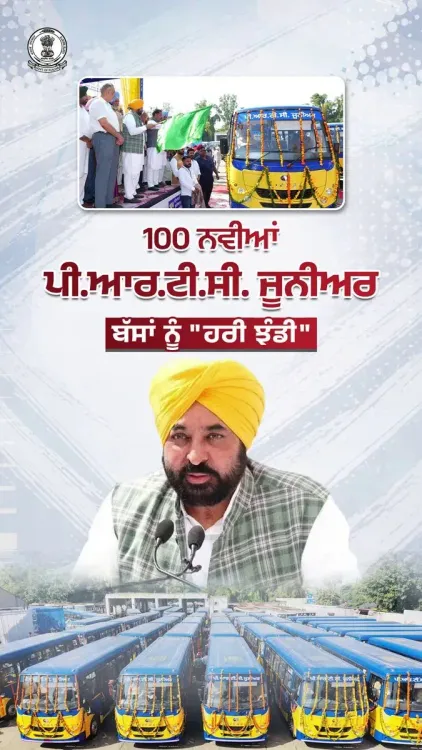
CM Bhagwant Mann flags off 100 PRTC Junior Buses in Patiala
Synopsis
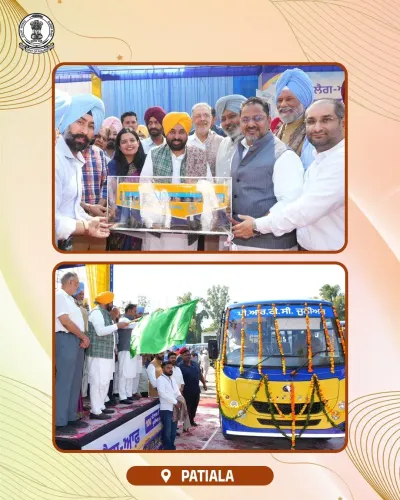
Punjab Chief Minister Bhagwant Singh Mann flagged off 100 new PRTC Junior Buses at Patiala, aiming to improve transport connectivity in rural villages across the state.
Key Takeaways
100 new PRTC Junior Buses were flagged off by CM Bhagwant Singh Mann at Patiala on 26 October 2026 .
The initiative is aimed at improving transport connectivity in Punjab's rural villages.
Junior Bus format is suited to narrower village roads where standard full-size buses cannot operate easily.
The AAP-led Punjab government has prioritised fleet modernisation and rural accessibility since taking office in March 2022 .
The Punjab Road Transport Corporation (PRTC) is the state entity operating the expanded fleet.
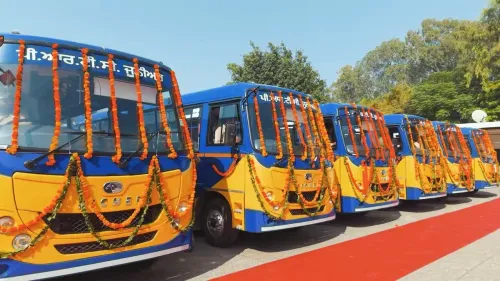
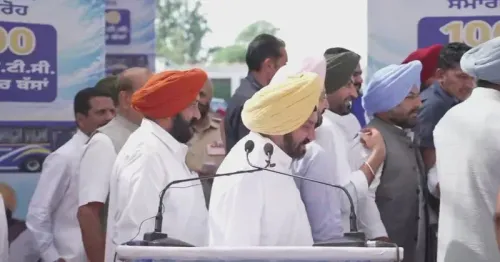
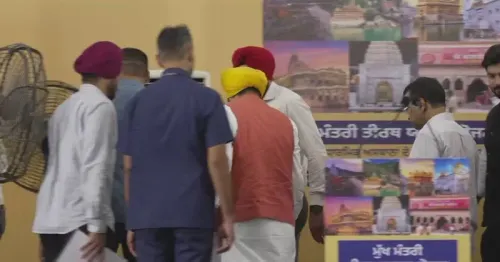
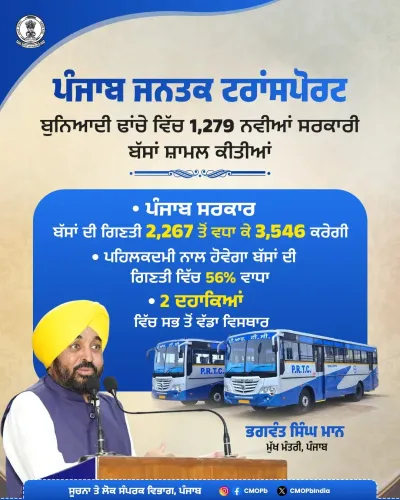
A fleet of 100 new PRTC Junior Buses rolled out of Patiala on Monday, 26 October 2026, flagged off by Punjab Chief Minister Bhagwant Singh Mann in a move the state government says will meaningfully improve last-mile connectivity for the villages that public transport has long underserved.
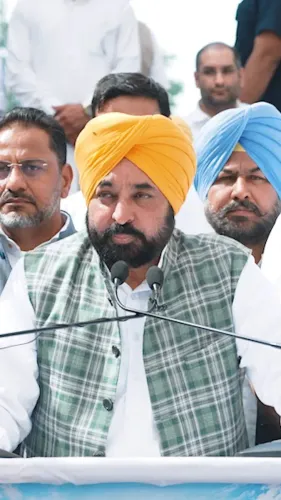
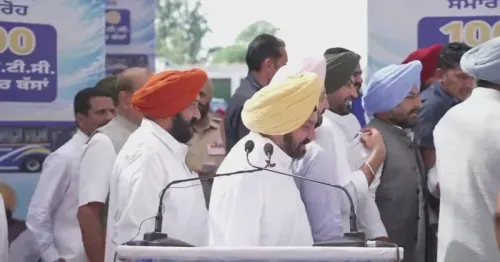
Addressing the gathering at the flagging-off ceremony, CM Bhagwant Singh Mann said that this initiative by the Punjab government would bring about a clear improvement in rural transport — 'ਪਿੰਡਾਂ ਦੀ ਆਵਾਜਾਈ ਵਿੱਚ ਸੁਧਾਰ ਹੋਵੇਗਾ' ('there will be improvement in the movement of villages'). The smaller-format Junior Buses are specifically suited to narrower rural roads that standard full-size coaches cannot easily navigate.
PRTC's push to close the rural connectivity gap
The Punjab Road Transport Corporation (PRTC) is the state-owned entity responsible for public bus services across Punjab. Rural connectivity has historically been a weak point — many villages are serviced infrequently or not at all, forcing residents to rely on private, often costlier, alternatives.
Since the Aam Aadmi Party formed the Punjab government in March 2022, it has pledged to modernise the state fleet and prioritise village-to-town linkages. The addition of 100 Junior Buses represents the latest instalment of that commitment, building on a broader pattern of periodic fleet procurement that successive Punjab governments have undertaken to replace ageing vehicles.
Why 'Junior Buses' matter for Punjab's villages
The compact Junior Bus format is not cosmetic. Punjab's rural road network includes a large proportion of narrow lanes and low-traffic routes where deploying a standard 50-seater is operationally unviable. Smaller buses allow PRTC to make routes commercially feasible while keeping fares accessible for daily commuters — students, farmers, and workers who depend on affordable transport.
For rural commuters, the practical stakes are straightforward: more buses on more routes means fewer hours lost and lower out-of-pocket costs. Whether this fleet addition translates into measurable service-frequency gains on neglected routes will be the real test — and the one the government will be measured against.
Point of View
Deliverable governance — tangible assets that rural voters can see and use. Punjab's rural transport deficit has been a chronic governance failure across administrations, and compact Junior Buses on village routes offer a targeted, low-drama fix. The harder question is whether this batch meaningfully increases service frequency on underserved routes, or primarily generates optics. Fleet additions without accompanying route-rationalisation and driver deployment have historically produced diminishing returns in Indian state transport corporations.
NationPress
26 Oct 2026
Frequently Asked Questions
What are PRTC Junior Buses in Punjab?
PRTC Junior Buses are compact, smaller-format buses operated by the Punjab Road Transport Corporation, designed specifically for narrower rural roads where standard full-size buses cannot easily travel.
How many new PRTC buses were flagged off by CM Bhagwant Mann?
100 new PRTC Junior Buses were flagged off by Chief Minister Bhagwant Singh Mann at Patiala on 26 October 2026.
Where did the PRTC bus flagging-off ceremony take place?
The ceremony took place at Patiala district in Punjab.
What is the purpose of the new PRTC Junior Buses in Punjab?
The new buses aim to improve transportation in rural villages across Punjab, providing affordable and accessible public transport on routes that were previously underserved.
Which party governs Punjab and what is its transport policy?
The Aam Aadmi Party (AAP) has governed Punjab since March 2022 and has announced measures to modernise the state bus fleet and improve rural connectivity under Chief Minister Bhagwant Singh Mann.