CM Mann: Punjab eyes top education spot, cites JEE wins
Synopsis
Four years into its Sikhya Kranti drive, the Bhagwant Mann government says Punjab has overtaken Kerala in national education rankings, seen girls dominate board-topper lists, and produced 359 JEE Main qualifiers from government schools — positioning the state as India's emerging education destination.
Key Takeaways
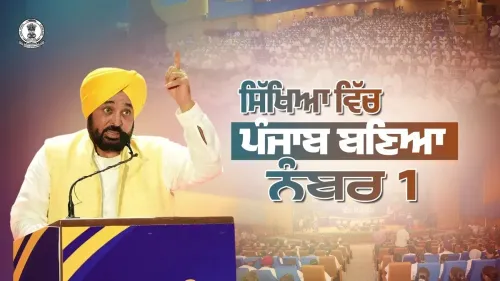
CM Bhagwant Mann announced at the 'Sitaare Zameen Te' event in Chandigarh on 1 June 2026 that Punjab aims to become India's top education destination.
359 students from Punjab government schools cleared JEE Main , cited as a key metric of the Sikhya Kranti programme's success.
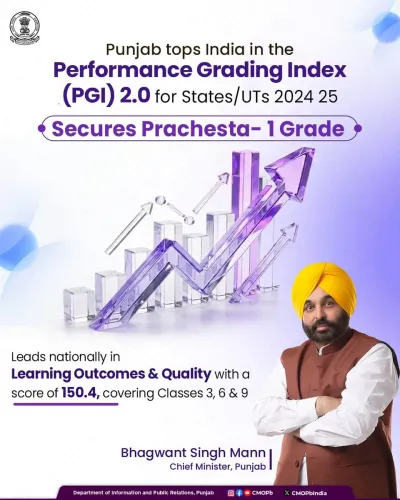
Punjab claims to have surpassed Kerala in national education rankings, a significant benchmark given Kerala's historically dominant position.
Girls have emerged as the dominant group among PSEB board toppers , reflecting gains in female academic performance at the secondary level.
The Aam Aadmi Party government has framed the initiative as a direct counter to Punjab families' long-standing preference for private or overseas education.
Future national quality indices and results in JEE Advanced and NEET will be key tests of whether current gains are scalable and sustained.
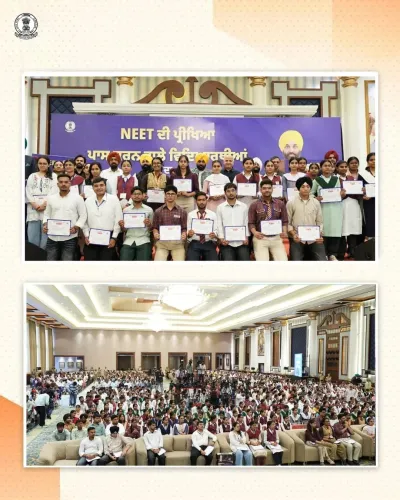
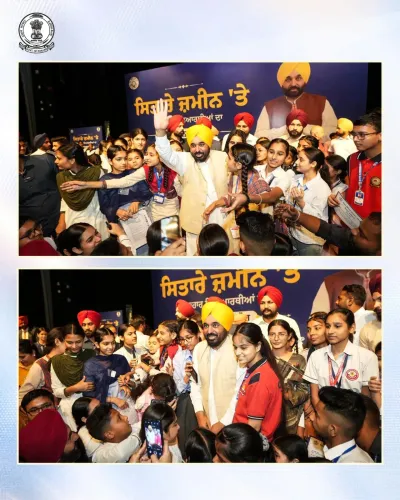
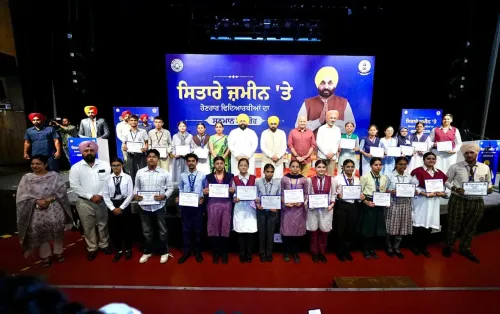
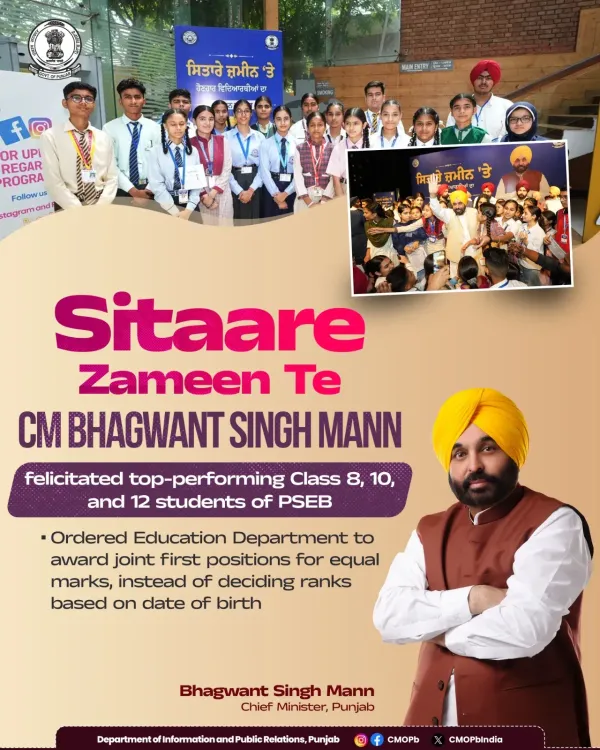
The Chief Minister's Office of Punjab announced on Monday, 1 June 2026 that the Bhagwant Mann-led state government is targeting a position as India's foremost education destination, four years into its Sikhya Kranti (Education Revolution). Speaking at the 'Sitaare Zameen Te' programme in Chandigarh, where top-performing students of Classes 8, 10 and 12 were felicitated, CM Mann said the transformation of government schools is now yielding measurable results.
Context
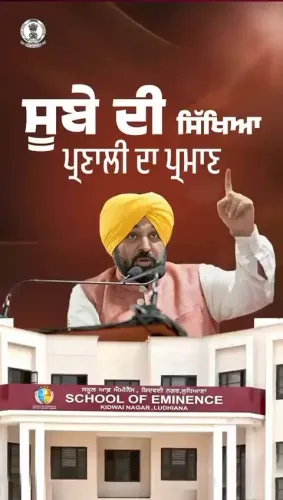
Addressing students and educators at the 'Sitaare Zameen Te' event, CM Bhagwant Singh Mann cited three headline achievements to argue that Punjab's public-school system has crossed a threshold. He pointed to the state surpassing Kerala in national education rankings, girls emerging as the dominant group among board toppers, and 359 government school students clearing JEE Main. 'Punjab's government schools are no longer struggling for recognition but are setting new benchmarks for excellence, confidence and opportunity across the country,' he said.
The programme honoured meritorious students from across the state, framing their success as evidence that quality learning is no longer the exclusive preserve of private institutions or foreign universities. The Chief Minister directly addressed the long-standing perception among Punjab families that credible education must be sought abroad, calling it a narrative the state intends to reverse.
Policy Backdrop
The Aam Aadmi Party government took office in Punjab in March 2022 with an explicit pledge to replicate and expand the school-infrastructure and learning-outcome model it had earlier pursued in Delhi from 2015 onwards. Budget allocations to government schools were increased, classroom infrastructure was upgraded, and the Punjab School Education Board (PSEB) was directed to raise academic standards at the secondary level.
The initiative, branded Sikhya Kranti, draws on the broader logic of National Education Policy 2020, which called on states to strengthen public schooling and reduce dependence on overseas institutions through domestic quality improvements. Punjab's emphasis on competitive-exam performance — particularly JEE Main results — marks an evolution from earlier phases that focused primarily on physical infrastructure and enrolment numbers.
Multiple Indian states, including Tamil Nadu and Maharashtra, have pursued similar strategies of using board results and entrance-exam data to build the credibility of government schools. Punjab's focus on girls' dominance among toppers also tracks wider regional gains in female enrolment and completion rates at the secondary level.
Stakeholders and Impact
The most direct beneficiaries are students enrolled in Punjab's government schools — a population that has historically faced a perception disadvantage relative to private-school peers when competing for higher-education seats. The 359 JEE Main qualifiers represent a concrete data point that school leaders and parents are likely to cite in assessing the programme's value.
Female students occupy a particularly prominent place in the government's narrative: the claim that girls now dominate board-topper lists signals progress on both academic quality and gender equity. For families weighing the cost of private schooling or overseas education against the government-school option, such outcomes carry practical weight.
The state's claim of surpassing Kerala — long the benchmark for Indian public-education performance — carries symbolic significance. Kerala has led national education indicators, including literacy and school-participation rates, for decades; any credible ranking shift would represent a structural change in how Punjab's schooling system is assessed nationally.
What's Next
The government's ambition to make Punjab the country's leading education destination will face scrutiny against forthcoming national assessments. Subsequent releases of national education quality indices and large-scale survey reports will test whether the ranking gains cited by CM Mann are sustained or widened. Performance in JEE Advanced, NEET, and civil-services examinations will further indicate whether school-level interventions are translating into outcomes at higher competitive stages.
If Punjab maintains its upward trajectory, the Sikhya Kranti model could become a reference point for other states seeking to reduce brain drain and reorient aspirational families toward domestic public education — a goal that aligns with national-level policy priorities for the coming decade.
Point of View
Budgets spent) to outcome-based accountability. Invoking Kerala as the benchmark being displaced is politically astute: it sets a nationally legible standard rather than a self-defined one. The emphasis on girls as board leaders simultaneously addresses a social equity argument and broadens the programme's appeal beyond urban constituencies. Whether the claims survive scrutiny from independent assessment bodies will determine if Sikhya Kranti becomes a durable policy model or a campaign talking point heading into future electoral cycles.
NationPress
15 Oct 2026
Frequently Asked Questions
What is Punjab's Sikhya Kranti programme?
Sikhya Kranti , or Education Revolution, is the Bhagwant Mann -led Punjab government's flagship initiative launched after the Aam Aadmi Party came to power in March 2022 . It focuses on upgrading government school infrastructure, improving board-exam results, and building competitive-exam readiness among public-school students.
How many Punjab government school students cleared JEE Main?
According to CM Bhagwant Mann , 359 students from Punjab government schools cleared JEE Main , a figure he cited at the 'Sitaare Zameen Te' programme in Chandigarh on 1 June 2026 as evidence of the Sikhya Kranti 's tangible impact.
Has Punjab overtaken Kerala in education rankings?
CM Mann claimed at the 'Sitaare Zameen Te' event that Punjab has risen past Kerala in national education rankings. Kerala has historically led Indian states on education indicators; the specific ranking cited by the Chief Minister is subject to verification by independent national assessments.
What is the 'Sitaare Zameen Te' programme?
'Sitaare Zameen Te' is a felicitation programme organised by the Punjab government to honour top-performing students from Classes 8, 10 and 12 . The event held in Chandigarh on 1 June 2026 was addressed by CM Bhagwant Mann , who used the occasion to outline Punjab's education ambitions.
Why is Punjab trying to stop students from going abroad for education?
CM Bhagwant Mann has identified the perception that quality education is only available abroad as a challenge the state must directly counter. By improving government school outcomes — including board results and JEE Main performance — the Punjab government aims to make domestic public education a credible and aspirational choice for families who might otherwise seek overseas options.