Punjab CMO: 59 government school students crack JEE Advanced 2026
Synopsis
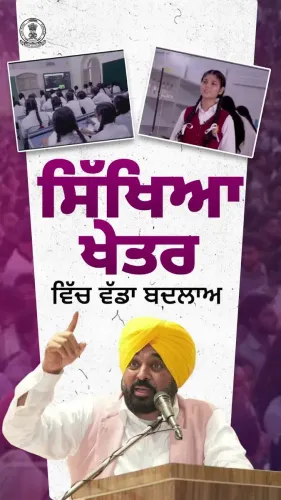
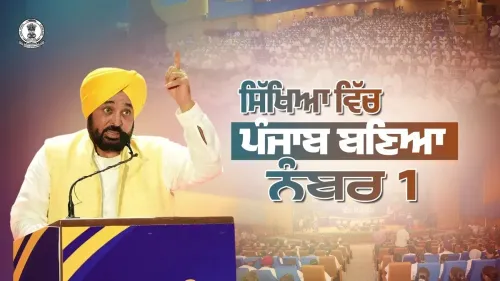
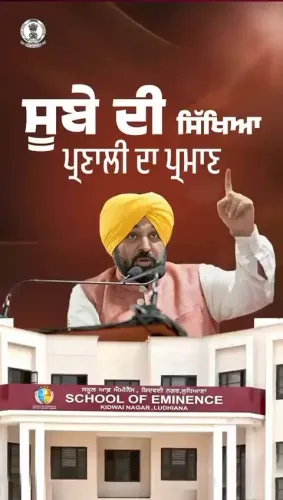
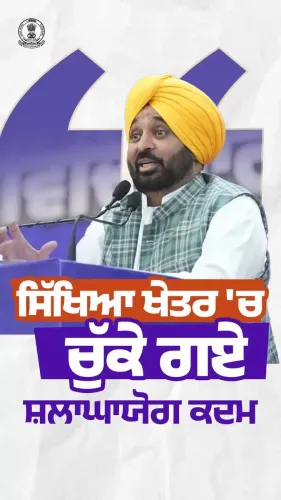
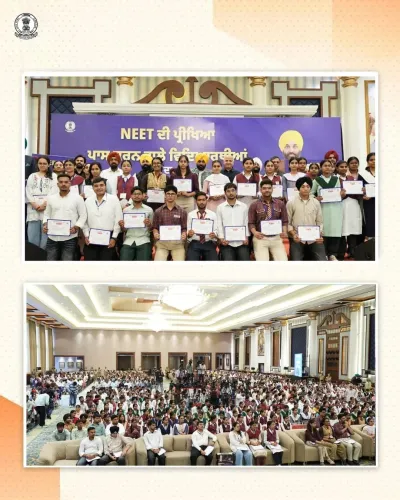
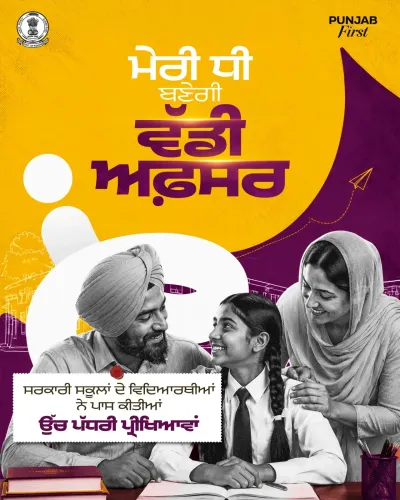
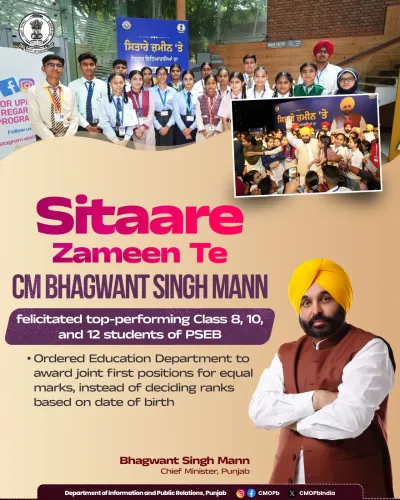
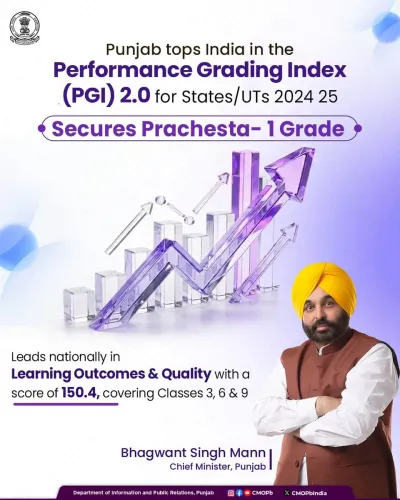
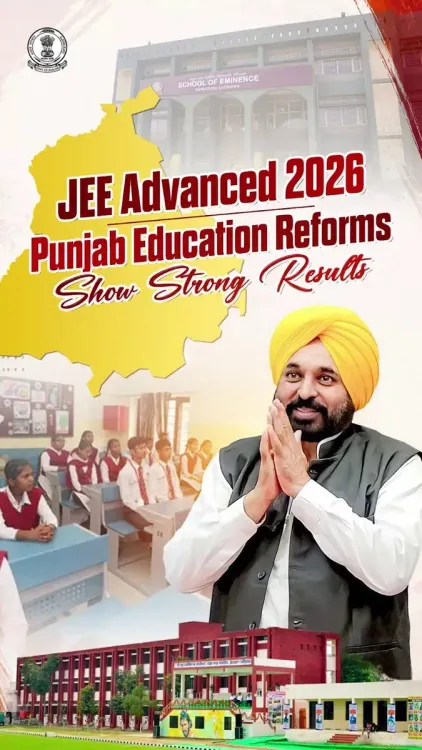
The Chief Minister's Office of Punjab announced that 59 students from state government schools qualified JEE Advanced 2026, a 34 percent rise over the 44 qualifiers in 2025. Education Minister Harjot Bains credited the Punjab Sikhya Kranti initiative, the state's flagship school reform programme launched after the 2022 assembly elections.
Key Takeaways
59 students from Punjab government schools qualified JEE Advanced 2026 , per the CMO.
The tally marks a 34 percent rise over 44 qualifiers in 2025.
Education Minister Harjot Bains credited the Punjab Sikhya Kranti initiative.
Sikhya Kranti focuses on infrastructure, teacher training and competitive-exam coaching in state schools.
Punjab runs roughly 13,000 government schools , largely serving rural students.
The announcement was made on 4 June 2026 via the CMO's X handle.
The Chief Minister's Office of Punjab on 4 June 2026 announced that 59 students from Punjab government schools have qualified the JEE Advanced 2026, marking what it called a 'resounding endorsement' of the state's flagship Punjab Sikhya Kranti education initiative. The figure represents a 34 percent rise over the 44 qualifiers recorded in 2025, according to Education Minister Harjot Bains, whose remarks were carried by the CMO on X.
Context
In its post, the CMO described JEE Advanced as 'India's toughest engineering entrance exam' and framed the year-on-year increase as evidence that classroom reforms in state-run schools are translating into measurable national outcomes. The announcement was made under the hashtags #CMOPunjab and #ਮੁੱਖ_ਮੰਤਰੀ_ਦਫ਼ਤਰ_ਪੰਜਾਬ (Chief Minister's Office Punjab).
JEE Advanced is the gateway to admission at the Indian Institutes of Technology and is widely considered the most competitive undergraduate test in the country. Historically, qualification has been dominated by students from private schools and dedicated coaching ecosystems, making the participation of government school students a closely tracked indicator of public-education quality.
Policy backdrop
Punjab Sikhya Kranti is the Punjab government's umbrella education reform programme, focused on upgrading school infrastructure, strengthening teacher training and embedding competitive-exam coaching within the state-run system. The initiative was rolled out after the Aam Aadmi Party took office in Punjab following the 2022 assembly elections, drawing on the party's earlier school-reform template.
A core component, branded Mission Excellence, was expanded in 2024 to deploy specialist faculty and curated study material for Classes 11 and 12 in roughly 350 senior secondary schools. The state operates a network of around 13,000 government schools, serving a predominantly rural and lower-income student base.
Stakeholders and impact
The most direct beneficiaries are government school students from small towns and villages who typically lack access to high-cost private coaching. For families in such households, an IIT seat can be a generational shift in economic mobility, and a higher qualifier count expands the pool of eligible candidates from the public system.
For Minister Harjot Bains and the Punjab government, the data point also serves a political purpose, offering a concrete metric to defend the budgetary outlay on Sikhya Kranti against the opposition's scrutiny. The CMO's framing positions government schools as competitive with private institutions on a marquee national benchmark.
Teachers and school administrators inducted into the coaching modules are likely to face heightened expectations in subsequent cycles, while peer states tracking similar reforms will study Punjab's claimed trajectory for replication.
What's next
Attention will now turn to the counselling rounds, where the 59 qualifiers will compete for seats across the IIT system, and to whether the state publishes a disaggregated breakdown by school, district and gender. A mid-term review of the Sikhya Kranti coaching modules by the Punjab education department, and the 2027 JEE Advanced results, will indicate whether the upward trend can be sustained.
The broader pattern is visible across several Indian states governed by regional parties, which have launched targeted interventions to lift government-school performance in national competitive examinations long dominated by private urban coaching. If Punjab's reported gains hold, they could strengthen the case for embedding structured exam preparation within the public schooling system rather than leaving it to the private market.
Point of View
Positioning Sikhya Kranti as a deliverable rather than a slogan ahead of the next electoral cycle. A 34 percent year-on-year jump, if sustained, would mark a meaningful inflection for a public-school system long bracketed below private and coaching-driven cohorts in IIT pipelines. It also slots Punjab into a wider arc, alongside earlier AAP claims in Delhi and parallel pushes in southern states, of regional governments seeking to reclaim competitive-exam outcomes as a public-sector metric. The credibility test will lie in disaggregated data and a third consecutive year of gains.
NationPress
18 Oct 2026
Frequently Asked Questions
How many Punjab government school students qualified JEE Advanced 2026?
According to the Chief Minister's Office of Punjab, 59 students from Punjab government schools qualified JEE Advanced 2026, up from 44 in 2025.
What is Punjab Sikhya Kranti?
Punjab Sikhya Kranti is the Punjab government's flagship education reform initiative covering school infrastructure upgrades, teacher training and competitive-exam coaching within state-run schools.
Who is Harjot Bains?
Harjot Bains is the Education Minister of Punjab and is responsible for implementing the Sikhya Kranti programme and reporting school-level JEE outcomes.
Why is JEE Advanced considered important?
JEE Advanced is the entrance examination for admission to the Indian Institutes of Technology and is widely regarded as India's most competitive undergraduate engineering test.
How does this compare with last year's Punjab government school results?
The CMO has reported 59 qualifiers in 2026 against 44 in 2025, a 34 percent year-on-year increase from government schools.