Punjab tops PGI 2.0 rankings under Sikhya Kranti
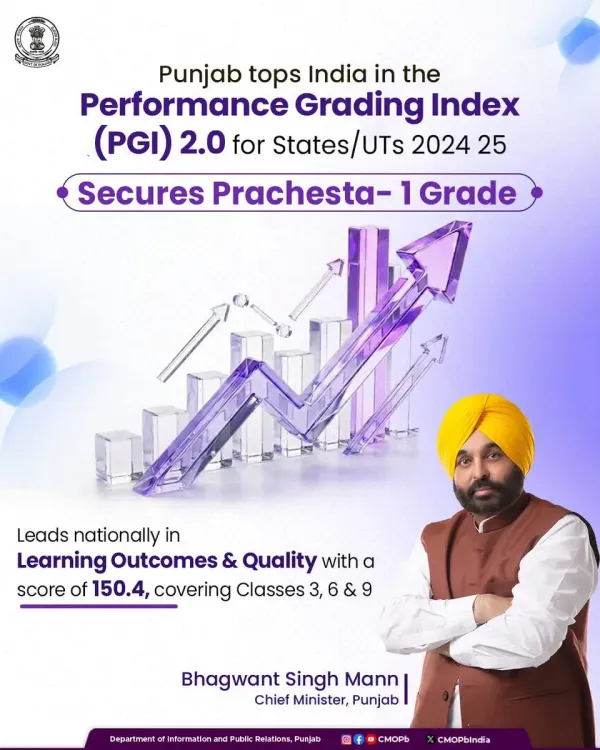
Synopsis
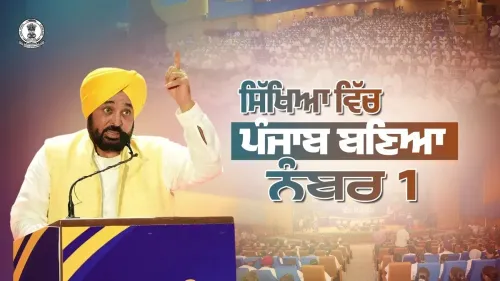
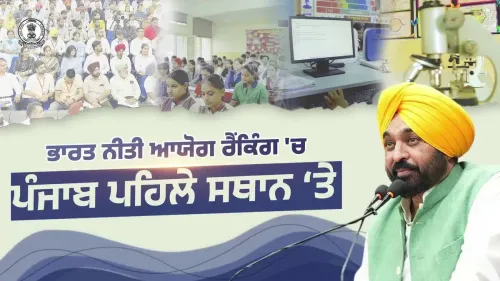
Punjab has ranked first in India in the Performance Grading Index 2.0 for 2024-25, released by the Union Ministry of Education. The Chief Minister's Office credited the state's Sikhya Kranti initiative for driving the improvement in school education quality, governance and learning outcomes.
Key Takeaways
Punjab has been ranked the top-performing state in the Performance Grading Index (PGI) 2.0 for 2024-25 , released by the Union Ministry of Education.
The ranking was announced by the Chief Minister's Office of Punjab on 25 May 2026 .
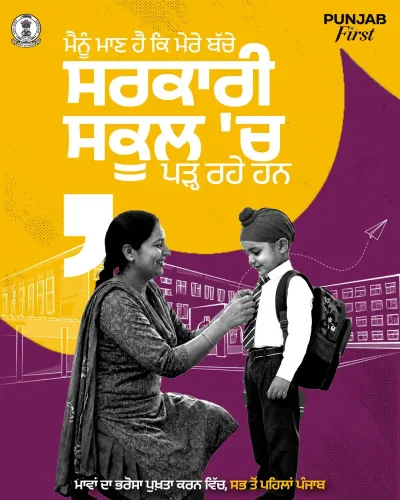
The achievement is attributed to Sikhya Kranti , Punjab's flagship school education reform programme covering infrastructure, teacher training and learning outcomes.
The PGI 2.0 framework, introduced after the original index launched in 2019-20 , aligns with the benchmarks set by the National Education Policy 2020 .
The index is published by the Department of School Education and Literacy under the Ministry of Education, Government of India , and covers all states and union territories.
The Chief Minister's Office of Punjab announced on Monday, 25 May 2026 that Punjab has emerged as the top-performing state in the country in the Performance Grading Index (PGI) 2.0 for States and UTs 2024-25, released by the Department of School Education and Literacy under the Ministry of Education, Government of India. The achievement is attributed to the state government's ongoing education reform drive, Sikhya Kranti.
Context
The PGI 2.0 is an annual index published by the Union Ministry of Education to assess the quality and reach of school education across all states and union territories. It evaluates performance across multiple domains including access, equity, infrastructure, governance and learning outcomes, providing a standardised national benchmark for comparing state-level educational progress.
Punjab's top ranking in the 2024-25 edition marks a significant milestone for a northern state that has historically trailed southern and western counterparts on several education metrics. The CMO's post credits the state's Sikhya Kranti — literally 'Education Revolution' — as the driving force behind the improvement.
Policy Backdrop
The Performance Grading Index was first introduced in 2019-20 to create a uniform, data-driven framework for evaluating school education systems nationwide. Its evolution into PGI 2.0 incorporated refined indicators aligned with the National Education Policy 2020, which set new national benchmarks for curriculum design, institutional governance and measurable learning outcomes.
Sikhya Kranti is Punjab's dedicated school education reform initiative, encompassing infrastructure upgrades, teacher training programmes and interventions aimed at improving student learning outcomes. The programme reflects a broader pattern of competitive federalism in which state governments use PGI rankings as a public accountability tool, channelling targeted investment into classrooms, digital learning tools and teacher capacity-building to climb the national ladder.
Stakeholders and Impact
The most direct beneficiaries of Punjab's improved ranking are the state's students and teachers, whose learning environments and professional development opportunities are central to the Sikhya Kranti framework. Improved PGI scores typically signal better infrastructure, higher enrolment rates, reduced dropout figures and stronger governance at the district and school level.
The result also carries weight for the Punjab state education department, which has been under pressure to demonstrate tangible returns on reform investments. A top national ranking provides the government with a credible, third-party validation of its education policy choices, and is likely to strengthen the case for continued or increased budgetary allocation to the sector.
What's Next
Attention will now turn to the granular data underlying Punjab's PGI 2.0 score — specifically which domains, such as learning outcomes, infrastructure or governance, drove the top ranking, and whether those gains are distributed equitably across rural and urban districts. State-level evaluation reports on individual Sikhya Kranti components are expected to provide that detail.
The next PGI cycle will be the real test of whether Punjab can sustain and consolidate its position. For now, the ranking sets a high bar and is likely to spur competing states to accelerate their own reform programmes, reinforcing the competitive dynamic that the index was designed to encourage.
Point of View
Providing independent, centrally-published validation of its Sikhya Kranti reforms ahead of future electoral cycles. The result fits into a wider pattern of competitive federalism where northern states have aggressively pursued education metrics to close the perception gap with traditionally higher-ranked southern counterparts. For the Ministry of Education, Punjab's rise demonstrates that the PGI framework is functioning as an incentive mechanism, prompting states to direct resources toward measurable outcomes. The durability of this ranking, however, will depend on whether gains are reflected in ground-level learning data rather than process indicators alone.
NationPress
22 Oct 2026
Frequently Asked Questions
What is the Performance Grading Index 2.0?
The Performance Grading Index 2.0 is an annual ranking published by the Ministry of Education, Government of India, that grades all states and union territories on the quality of their school education systems across domains such as access, equity, infrastructure, governance and learning outcomes. It is an evolved version of the original PGI launched in 2019-20.
Why has Punjab topped the PGI 2.0 rankings for 2024-25?
The Chief Minister's Office of Punjab has attributed the state's top ranking in PGI 2.0 for 2024-25 to its Sikhya Kranti initiative, a comprehensive school education reform programme focused on infrastructure improvement, teacher training and better learning outcomes.
What is Sikhya Kranti?
Sikhya Kranti, which translates to 'Education Revolution,' is the Punjab government's flagship school education reform drive. It encompasses upgrades to school infrastructure, capacity-building for teachers and targeted interventions to improve student learning outcomes across the state.
Who releases the PGI 2.0 rankings?
The PGI 2.0 rankings are released by the Department of School Education and Literacy under the Ministry of Education, Government of India.
How does the PGI ranking affect Punjab students and teachers?
A higher PGI ranking generally reflects improvements in school infrastructure, enrolment, governance and learning quality — all of which directly benefit students and teachers. For Punjab, the top ranking signals that ongoing investments in classrooms, digital tools and teacher development under Sikhya Kranti are yielding results.