CM Mohan Yadav: 25,892 tribal homes electrified in MP
Synopsis
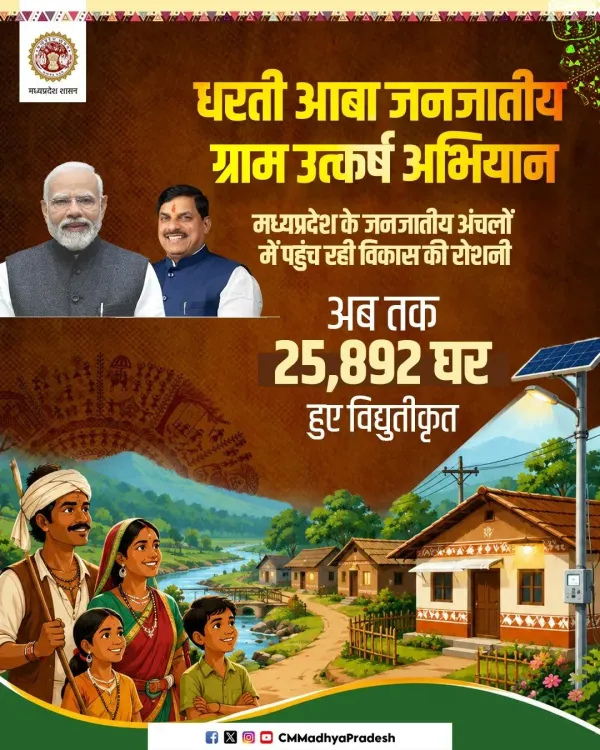
The Chief Minister's Office of Madhya Pradesh announced on 7 July 2026 that the Dharti Aaba Janjatiya Gram Utkarsh Abhiyan has electrified 25,892 tribal households in the state's Scheduled Tribe regions, reflecting progress under the Centre's 2024 convergence scheme for tribal village development.
Key Takeaways
The Dharti Aaba Janjatiya Gram Utkarsh Abhiyan has connected 25,892 tribal households to electricity in Madhya Pradesh as of 7 July 2026 .
The scheme was launched by the Government of India in 2024 to saturate basic services — including power, roads and livelihoods — in tribal villages.
Madhya Pradesh has one of India's largest Scheduled Tribe populations, with key tribal districts including Jhabua, Alirajpur, Dindori and Mandla .
The electrification push builds on the Pradhan Mantri Saubhagya scheme (2017) and is backed by the constitutional mandate under Article 275(1) .
The Tribal Welfare Department of Madhya Pradesh is the nodal state agency coordinating implementation with district administrations and power utilities.
Further rollout to remaining unelectrified hamlets and integration with livelihood components of the abhiyan is expected in coming quarters.
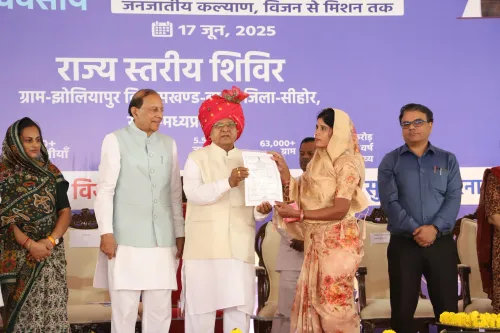
The Chief Minister's Office of Madhya Pradesh announced on Tuesday, 7 July 2026 that the Dharti Aaba Janjatiya Gram Utkarsh Abhiyan has brought electricity to 25,892 households in the state's tribal regions, marking a significant milestone in last-mile electrification under the centrally sponsored scheme.
Context
The post, shared by the official handle of the Chief Minister's Office and tagging Chief Minister Dr. Mohan Yadav and the Tribal Welfare Department, declared the campaign a 'new light of development' (vikas ki nayi roshni) in the tribal belts of Madhya Pradesh. The abhiyan targets villages with significant Scheduled Tribe populations, focusing on saturating basic amenities that have historically lagged in these areas.
Madhya Pradesh is home to one of India's largest tribal populations, concentrated in districts such as Jhabua, Alirajpur, Dindori and Mandla. Electrification of households in these Scheduled Areas remains a core metric for the state's welfare delivery.
Policy Backdrop
The Dharti Aaba Janjatiya Gram Utkarsh Abhiyan was launched by the Government of India in 2024 with the mandate to converge multiple central ministries' schemes in tribal villages — covering infrastructure, livelihood, and basic services in a single, saturated drive. The scheme is named after Birsa Munda, revered as 'Dharti Aaba' (Father of the Earth) among tribal communities.
The electrification push builds on the foundation laid by the Pradhan Mantri Sahaj Bijli Har Ghar Yojana (Saubhagya), launched in 2017, which aimed at universal household electrification including in remote tribal belts. The current abhiyan represents a convergence effort that goes beyond power connections to include roads, housing, and livelihood support in the same village clusters.
Under Article 275(1) of the Constitution, the Centre provides grants to states specifically for the welfare of Scheduled Tribes and raising the level of administration in Scheduled Areas — a constitutional mandate that underpins such schemes.
Stakeholders and Impact
The 25,892 tribal households now connected to the grid gain access to lighting, the ability to charge mobile phones, and the potential to use electric appliances — changes that carry downstream effects on education, health, and small enterprise in villages where darkness after sunset has long constrained daily life.
The Tribal Welfare Department of Madhya Pradesh is the nodal agency for state-level implementation, working in coordination with the power distribution companies and district administrations. Rural Scheduled Tribe communities in the targeted districts stand as the primary beneficiaries of this phase of the abhiyan.
What's Next
The announcement signals an ongoing rollout rather than a final count, with progress likely to be reported in subsequent quarters as the abhiyan expands to remaining unelectrified hamlets. Integration with livelihood components of the same scheme — including skill development and agricultural support — is expected to follow as electrification coverage widens.
Observers will watch whether the pace of household connections accelerates ahead of the next reporting cycle, and how the state leverages the power infrastructure to deliver complementary services such as solar home systems and digital connectivity in the same tribal clusters.
Point of View
But its political weight in Madhya Pradesh should not be underestimated — the state's tribal belt districts are electorally significant and have historically been contested on welfare delivery metrics. By publicly quantifying household-level electrification, CM Dr. Mohan Yadav's office is staking a visible accountability marker against which future progress will be measured. The convergence model of the Dharti Aaba abhiyan — bundling infrastructure, livelihood, and services in a single village-level drive — represents a structural shift from siloed scheme delivery, and Madhya Pradesh's reported momentum suggests the state is positioning itself as a model implementer. The key question going forward is whether last-mile connection translates into sustained power supply quality, a persistent gap between on-paper electrification and on-ground access in remote tribal areas.
NationPress
7 Jul 2026
Frequently Asked Questions
What is the Dharti Aaba Janjatiya Gram Utkarsh Abhiyan?
The Dharti Aaba Janjatiya Gram Utkarsh Abhiyan is a central government scheme launched in 2024 to saturate basic amenities — including electricity, roads, housing and livelihood support — in tribal villages across India. It is named after Birsa Munda, known as 'Dharti Aaba' among tribal communities.
How many tribal households have been electrified in Madhya Pradesh under this scheme?
According to the Chief Minister's Office of Madhya Pradesh, 25,892 tribal households have been connected to electricity under the Dharti Aaba Janjatiya Gram Utkarsh Abhiyan as of 7 July 2026.
Which tribal districts in Madhya Pradesh are covered under the Janjatiya Gram Utkarsh Abhiyan?
The scheme targets tribal regions across Madhya Pradesh, including districts with significant Scheduled Tribe populations such as Jhabua, Alirajpur, Dindori and Mandla, among others.
Who is implementing the Dharti Aaba scheme in Madhya Pradesh?
The Tribal Welfare Department of Madhya Pradesh is the nodal state agency responsible for implementing the scheme, working in coordination with district administrations and power distribution companies under the oversight of Chief Minister Dr. Mohan Yadav.
What is the Saubhagya scheme and how does it relate to tribal electrification?
The Pradhan Mantri Sahaj Bijli Har Ghar Yojana, known as Saubhagya, was launched in 2017 to achieve universal household electrification in India, including in remote tribal belts. The Dharti Aaba abhiyan builds on this foundation by converging power access with broader livelihood and infrastructure support in tribal villages.