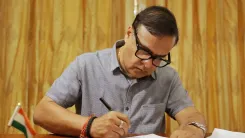
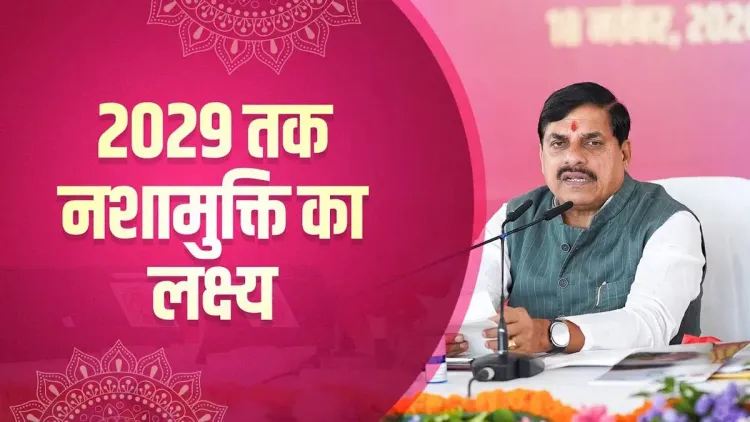
CM Mohan Yadav approves 6 special drug courts in MP
Synopsis
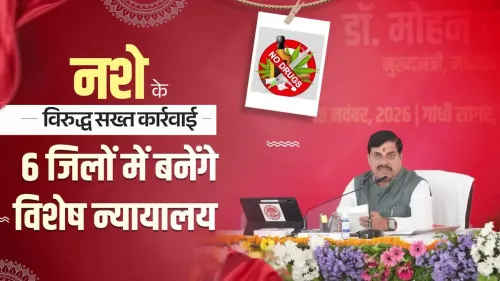
Madhya Pradesh CM Dr. Mohan Yadav has approved six new special courts to fast-track NDPS cases in Indore, Mandsaur, Neemuch, Singrauli, Bhopal and Rewa — announced at the Gandhi Sagar Cabinet meeting on November 18, 2026.
Key Takeaways
Six special courts approved for drug cases under expedited procedures in Madhya Pradesh.
Districts covered: Indore, Mandsaur, Neemuch, Singrauli, Bhopal and Rewa — spanning urban centres and known trafficking corridors.
Decision taken at the Gandhi Sagar Cabinet meeting on November 18, 2026 .
Courts will operate under the NDPS Act framework, designed to reduce case pendency and speed up convictions.
Operational readiness — judges, prosecutors, infrastructure — will determine real-world impact in coming months.
Madhya Pradesh Chief Minister Dr. Mohan Yadav has approved the establishment of six special courts to fast-track narcotics cases — a move that signals the state government's intent to match enforcement muscle with judicial speed. The decision, announced from the Gandhi Sagar Cabinet meeting on Wednesday, November 18, 2026, targets some of Madhya Pradesh's most drug-sensitive districts.
Posting on X, Chief Minister Yadav said: 'नशे के खिलाफ प्रभावी कार्रवाई और त्वरित न्याय सुनिश्चित करने के लिए' — 'to ensure effective action against drugs and swift justice' — six special courts have been approved for Indore, Mandsaur, Neemuch, Singrauli, Bhopal and Rewa.Why these six districts — and why now
The selection is not arbitrary. Mandsaur and Neemuch sit along trafficking corridors that have historically seen opium and synthetic-drug movement. Indore and Bhopal, as the state's largest urban centres, generate the highest volumes of narcotics prosecutions. Singrauli and Rewa in eastern Madhya Pradesh round out the geography, covering a region where enforcement agencies have flagged rising drug activity.
Indian states have long used the mechanism of designated special courts under the Narcotic Drugs and Psychotropic Substances (NDPS) Act to cut through the backlog that plagues ordinary sessions courts. The logic is simple: a dedicated bench, a focused docket, and faster disposal of cases — translating arrests into convictions without the years-long wait that often allows undertrial accused to remain in circulation.
A cabinet on the move — literally
The hashtag #GandhiSagarCabinetMP points to a practice the Yadav government has cultivated: holding cabinet meetings at symbolic or regionally significant locations outside the capital to signal administrative reach. Gandhi Sagar, the reservoir and dam site in the Nimad region, is both an engineering landmark and a geographic mid-point between the Malwa plateau and the northern districts — a fitting backdrop for decisions that span the state.
The optics reinforce the message: policy is being made in the field, not just in Mantralaya corridors.
What determines whether the courts actually deliver
Approval is the first step; execution is everything. The courts will need notified judges, dedicated prosecutors trained in NDPS procedure, adequate courtroom infrastructure, and a steady pipeline of well-investigated cases from enforcement agencies. Case disposal statistics in the first year will be the real test of whether the initiative cuts pendency or simply adds six more under-resourced benches to the system.
Analysts will also watch whether Madhya Pradesh follows up with de-addiction infrastructure — courts can punish, but supply-side interventions and rehabilitation programmes determine whether conviction rates translate into reduced drug prevalence on the ground.
Six courts, six districts, one clear signal: in Madhya Pradesh, the chase from arrest to verdict just got a dedicated lane.
Point of View
Particularly Mandsaur and Neemuch near historical opium-growing belts, suggests the government is targeting structural supply-chain nodes rather than purely urban demand centres. The Gandhi Sagar outstation cabinet format amplifies the political optics, projecting governance as dynamic and decentralised. The harder question — whether faster courts without commensurate prosecution quality and rehabilitation support actually reduce drug prevalence — remains the benchmark against which this initiative will ultimately be judged.
NationPress
18 Nov 2026
Frequently Asked Questions
Which cities will get the new special drug courts in Madhya Pradesh?
The six districts approved for special narcotics courts are Indore, Mandsaur, Neemuch, Singrauli, Bhopal and Rewa.
What is the Gandhi Sagar Cabinet meeting?
The Gandhi Sagar Cabinet is a Madhya Pradesh state cabinet meeting held at the Gandhi Sagar reservoir site rather than the capital Bhopal, part of the Yadav government's practice of holding outstation cabinet sessions.
What law will the new special courts in MP operate under?
The courts are designed to handle cases under the Narcotic Drugs and Psychotropic Substances (NDPS) Act through expedited trial procedures.
Why were Mandsaur and Neemuch chosen for special drug courts?
Mandsaur and Neemuch are located along drug trafficking corridors in Madhya Pradesh and have historically seen significant narcotics activity, making them priority targets for faster judicial processing.
When will the new drug courts in Madhya Pradesh start functioning?
The courts have received cabinet approval as of November 18, 2026; actual operational timelines depend on the notification of judges, appointment of prosecutors and readiness of court infrastructure.