MP fast-track courts to resolve exam paper leak cases within 3 months
Synopsis
Madhya Pradesh has moved from policy promise to judicial order: the High Court has formally designated four fast-track courts in Bhopal, Indore, Jabalpur, and Gwalior to try exam paper leak cases within three months — giving the state one of the most time-bound legal frameworks for examination offences in India, directly in the shadow of the NEET-UG controversy.
Key Takeaways
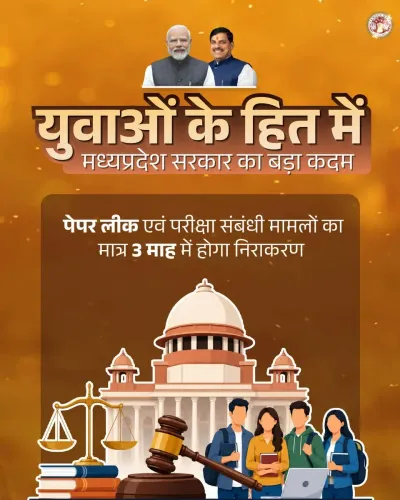
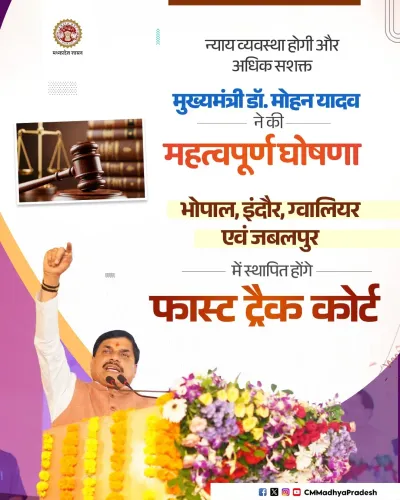
MP CM Mohan Yadav announced four fast-track courts on 25 July to try exam paper leak and malpractice cases within three months .
Courts will be located in Bhopal , Indore , Jabalpur , and Gwalior .
The Madhya Pradesh High Court , via Acting Chief Justice Vivek Rusia , issued the formal designation order on Friday night under the Lok Pariksha (Anuchit Sadhano Ka Nivaran) Adhiniyam, 2024 .
The three-month trial deadline runs from the date of charge sheet filing.
The move is linked to the NEET-UG paper leak controversy , after which PM Narendra Modi ordered an SIT probe.
Madhya Pradesh claims to be the first state to implement NEP 2020 and has set up three new government universities in the last two-and-a-half years .
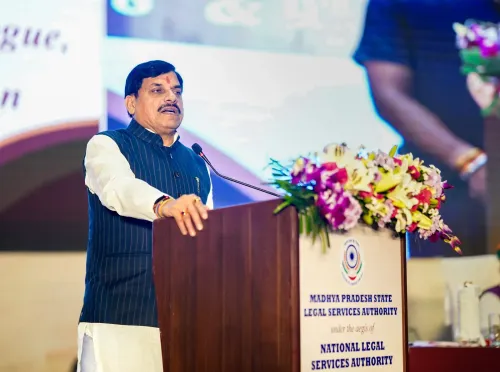
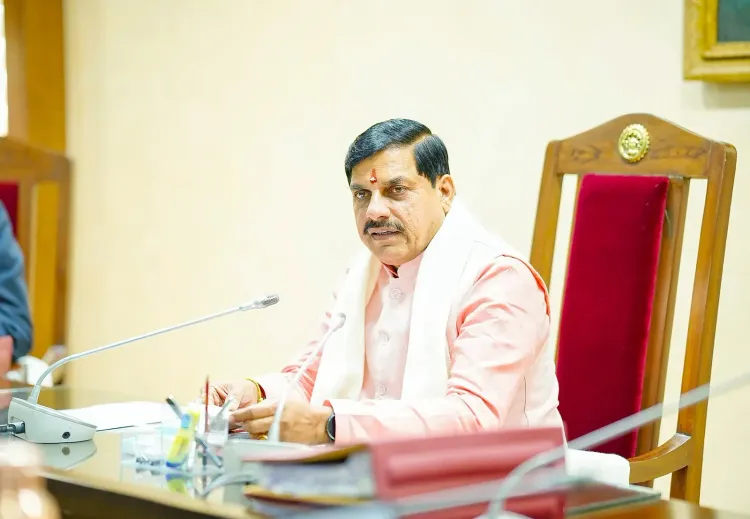
Madhya Pradesh Chief Minister Mohan Yadav on Saturday, 25 July announced that four fast-track courts would be established across the state to adjudicate examination paper leak and malpractice cases within three months, pledging that the government would not allow judicial delays to compromise students' futures. The announcement follows a formal order by the Madhya Pradesh High Court designating special courts under the Lok Pariksha (Anuchit Sadhano Ka Nivaran) Adhiniyam, 2024.
Key Developments
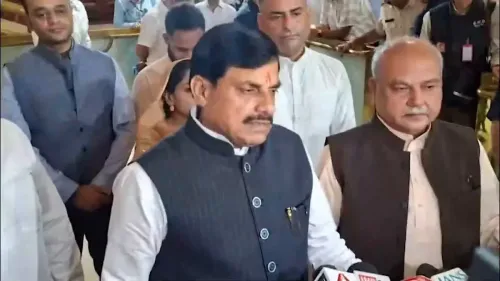
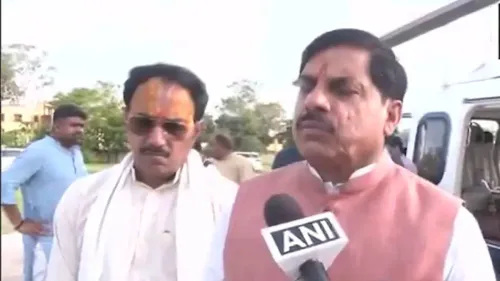
Speaking to media at the Central Hall of the Madhya Pradesh Legislative Assembly in Bhopal, Yadav confirmed that the four courts would be located in Bhopal, Indore, Jabalpur, and Gwalior. 'Cases related to paper leaks and examinations will be decided within three months,' he said. The courts will function as district and additional sessions courts designated specifically for examination-related offences.
The High Court's order, issued on Friday night by Acting Chief Justice Vivek Rusia, directed that trials be completed within three months from the filing of charge sheets — giving judicial force to what had until then been a policy commitment.
The NEET Backdrop
Chief Minister Yadav linked the initiative directly to the NEET-UG paper leak controversy, noting that Prime Minister Narendra Modi had ordered a Special Investigation Team (SIT) probe immediately after reports of irregularities emerged. The state government, he added, would also formulate standard operating procedures (SOPs) to ensure transparent and fair conduct of future examinations. This comes amid national pressure on both the Centre and state governments to demonstrate accountability in the wake of the NEET-UG episode, which triggered widespread protests and parliamentary debate.
What the Government Said
'The state government stands with students with full sensitivity. We will take every necessary step to protect their interests and ensure transparency in examinations,' Yadav said. He further noted that Madhya Pradesh was the first state in the country to implement the National Education Policy (NEP) 2020 and had established three new government universities in the past two-and-a-half years, positioning the state as a proactive actor in education reform.
Legal Framework and Scope
The fast-track courts draw their authority from the Lok Pariksha (Anuchit Sadhano Ka Nivaran) Adhiniyam, 2024 — a central legislation enacted specifically to address examination-related offences. The Centre's decision to provide for fast-track adjudication followed the NEET-UG controversy, and Madhya Pradesh is among the early states to operationalise the framework at the district court level. Notably, the High Court's designation order gives the three-month trial deadline binding legal weight rather than leaving it as an administrative target.
What Happens Next
With charge sheets expected to be filed in pending paper leak cases, the three-month clock will begin ticking upon filing. The state government is also expected to release SOPs for future examinations in the coming weeks. How swiftly the designated courts can clear the backlog of existing cases will be the first real test of the mechanism's effectiveness.
Point of View
The three-month trial window is ambitious — Indian district courts carry heavy dockets, and designating a court does not automatically clear the calendar. The real accountability test will come when the first charge sheets are filed and the clock starts. The NEET-UG episode has created political urgency, but urgency alone has not historically translated into faster trial completion in examination fraud cases, which often involve voluminous documentary evidence and multiple accused.
NationPress
24 Oct 2026
Frequently Asked Questions
What are the four fast-track courts announced in Madhya Pradesh for exam paper leaks?
The Madhya Pradesh High Court has designated district and additional sessions courts in Bhopal, Indore, Jabalpur, and Gwalior as special fast-track courts to try cases related to examination paper leaks and malpractices under the Lok Pariksha (Anuchit Sadhano Ka Nivaran) Adhiniyam, 2024. Trials must be completed within three months of charge sheet filing.
Why has Madhya Pradesh set up these fast-track courts?
The courts were set up in response to growing concerns over exam paper leaks and malpractices, accelerated by the national NEET-UG paper leak controversy. The Centre enacted the Lok Pariksha Adhiniyam, 2024 to address such offences, and Madhya Pradesh is among the first states to operationalise dedicated courts under that law.
What is the Lok Pariksha (Anuchit Sadhano Ka Nivaran) Adhiniyam, 2024?
It is a central legislation enacted to specifically address offences related to examination malpractices, including paper leaks. It provides for fast-track adjudication of such cases, and states can designate existing courts as special courts under its provisions.
What did the Madhya Pradesh High Court order say?
Acting Chief Justice Vivek Rusia issued an order on Friday night designating district and additional sessions courts in four cities as special courts for exam malpractice cases. The order directed that trials be completed within three months from the date charge sheets are filed.
How does this relate to the NEET-UG paper leak controversy?
CM Mohan Yadav explicitly linked the initiative to the NEET-UG paper leak episode, noting that Prime Minister Narendra Modi had ordered an SIT probe after irregularities surfaced. The national controversy created political pressure on state governments to demonstrate accountability, and Madhya Pradesh's fast-track court framework is partly a response to that pressure.