CM Mohan Yadav announces Fast Track Courts for 4 MP cities

Synopsis
Chief Minister Dr. Mohan Yadav has announced Fast Track Courts in Bhopal, Indore, Gwalior, and Jabalpur to accelerate justice delivery in Madhya Pradesh's four largest cities, building on a national model first introduced in 2000.
Key Takeaways
Mohan Yadav announced Fast Track Courts for Bhopal, Indore, Gwalior, and Jabalpur on 24 July 2026 .
The four cities are Madhya Pradesh's largest divisional headquarters and carry the highest share of the state's judicial caseload.
Jabalpur is the seat of the Madhya Pradesh High Court , adding institutional significance to the announcement.
Fast Track Courts were first launched nationally in 2000 following Eleventh Finance Commission recommendations to clear criminal case backlogs.
A 2019 Union government revival of 1,023 Fast Track Courts under the Nirbhaya Fund prioritised sexual offence cases and provided a template for state-level action.
Operationalisation will depend on Law Department notifications , budget allocations, and recruitment of presiding judicial officers.
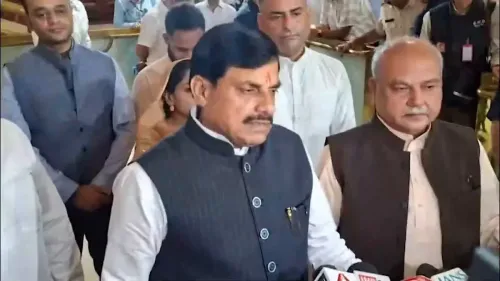
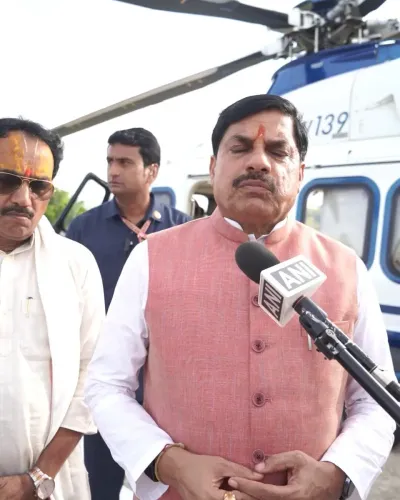
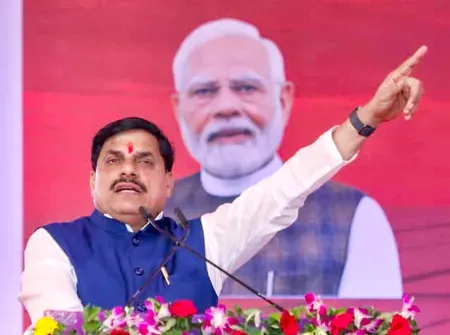
The Chief Minister's Office of Madhya Pradesh announced on Friday, 24 July 2026 that Chief Minister Dr. Mohan Yadav has made a significant declaration to strengthen the state's justice delivery system, with Fast Track Courts to be established in four major cities across the state.
The official post, shared by the CMO's verified account, states: 'न्याय व्यवस्था होगी और अधिक सशक्त' ('The justice system will become even stronger'), announcing that Fast Track Courts will be set up in Bhopal, Indore, Gwalior, and Jabalpur.
Context
Madhya Pradesh is among the states grappling with a substantial backlog of criminal cases pending in district courts. The four cities named — Bhopal, Indore, Gwalior, and Jabalpur — are the state's four largest divisional headquarters and account for a disproportionate share of the state's judicial caseload. Jabalpur is also the seat of the Madhya Pradesh High Court, making it a natural focal point for judicial reform efforts.
Chief Minister Dr. Mohan Yadav, who took office in December 2023, has positioned administrative and governance reforms as a priority of his tenure. This announcement signals a direct focus on the judicial infrastructure gap that affects litigants, crime victims, and the broader public seeking timely resolution of cases.
Policy Backdrop
Fast Track Courts as a concept were first introduced nationally in 2000 on the recommendation of the Eleventh Finance Commission, specifically to clear long-pending criminal trials. Central government funding for the scheme continued until 2011, after which several states, including Madhya Pradesh, sustained or expanded the model through their own state budgets.
A significant revival came in 2019, when the Union government approved the continuation of 1,023 Fast Track Courts over three years using Nirbhaya Fund resources, with priority given to cases of sexual offences against women and children. This national framework has provided a template that states have adapted to local judicial needs. Madhya Pradesh's move to establish courts in all four divisional headquarters follows a recurring pattern of decentralising speedy-trial mechanisms to high-volume districts.
Stakeholders and Impact
The primary beneficiaries of the new courts will be litigants and crime victims — particularly those involved in serious criminal cases — who currently face extended waiting periods for trial completion. The establishment of dedicated Fast Track Courts is intended to reduce judicial pendency and improve conviction rates in priority offences.
The judiciary, including presiding officers who will need to be recruited and infrastructure that will need to be built or allocated, will be central to operationalising the announcement. Legal practitioners and district court administrations in all four cities will also be directly affected by the reconfiguration of case loads that typically accompanies such a rollout.
What's Next
The immediate steps to watch include formal notifications from the Madhya Pradesh Law Department specifying which categories of cases will be transferred to the new courts, alongside state budget allocations for infrastructure and judicial appointments. The timelines for recruitment of presiding officers and readiness of court facilities will determine how quickly the announcement translates into operational relief for litigants.
If implemented across all four cities, the move could set a precedent for further expansion to other districts in the state, reinforcing the broader national push under programmes such as the e-Courts Mission Mode Project to modernise and expedite India's judicial system.
Point of View
Dr. Mohan Yadav signals ambition for state-wide impact rather than a pilot approach, though the credibility of the move will hinge entirely on the speed of follow-through from the Law Department. The choice to anchor the rollout in cities that already have established court infrastructure suggests a pragmatic attempt to minimise setup friction. Broader success will depend on whether the state can recruit and retain presiding officers — historically the weakest link in Fast Track Court expansions across India.
NationPress
23 Oct 2026
Frequently Asked Questions
What are Fast Track Courts in India?
Fast Track Courts are specialised courts created to expedite trials in serious criminal cases and reduce judicial pendency. They were first introduced nationally in 2000 on the recommendation of the Eleventh Finance Commission and have since been expanded through both central and state government funding.
Which cities will get Fast Track Courts in Madhya Pradesh?
Chief Minister Dr. Mohan Yadav announced that Fast Track Courts will be established in Bhopal, Indore, Gwalior, and Jabalpur — the four largest divisional headquarters of Madhya Pradesh.
Why is Jabalpur significant for this announcement?
Jabalpur is the seat of the Madhya Pradesh High Court, making it the apex judicial centre of the state. Establishing a Fast Track Court there adds institutional weight to the initiative and could facilitate faster coordination with the High Court on case transfers.
How are Fast Track Courts funded in Madhya Pradesh?
After central government funding ended in 2011, states including Madhya Pradesh maintained Fast Track Courts through state budgets. A 2019 Union government scheme revived central support using Nirbhaya Fund resources for sexual offence cases. The funding source for the July 2026 announcement has not yet been specified.
What types of cases will the new MP Fast Track Courts handle?
The specific categories of cases have not yet been notified. Historically, Fast Track Courts in India have prioritised serious criminal cases, including those involving sexual offences. A formal notification from the Madhya Pradesh Law Department is expected to define the scope.