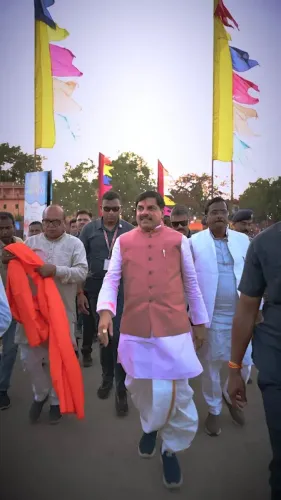
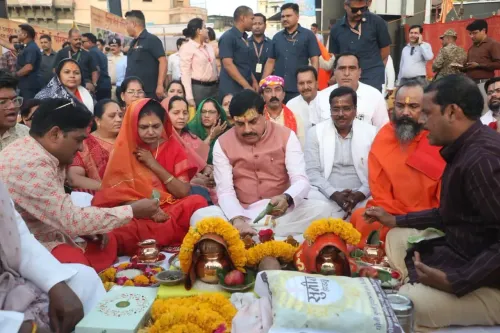
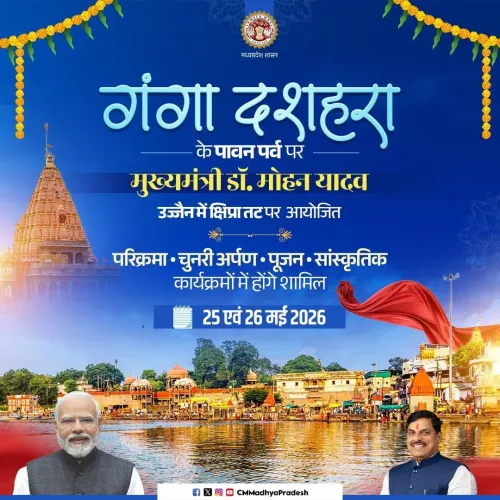
CM Mohan Yadav welcomes pilgrims at Shipra Tirth Parikrama 2026

Synopsis
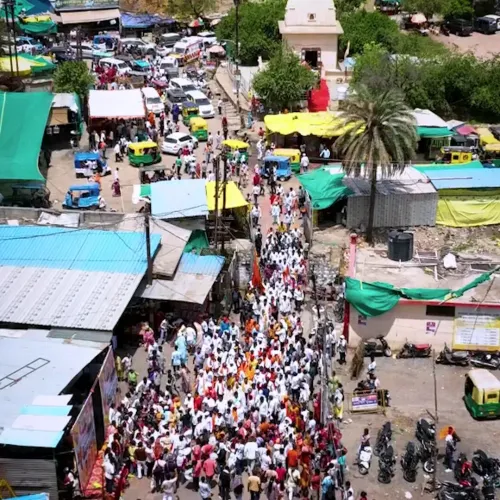
Madhya Pradesh Chief Minister Dr. Mohan Yadav welcomed devotees at the Shipra Tirth Parikrama-2026 in Ujjain on 25 May 2026, framing the two-day pilgrimage walk under the state's 'Vikas bhi, Virasat bhi' philosophy of blending development with heritage.
Key Takeaways
Mohan Yadav extended a public welcome to pilgrims attending the two-day Shipra Tirth Parikrama-2026 in Ujjain on 25 May 2026 .
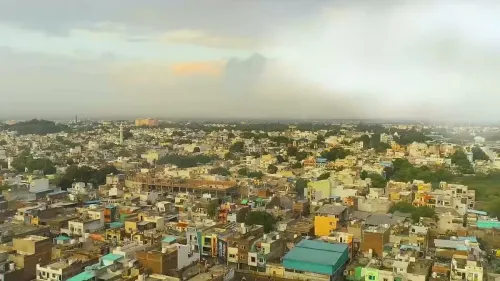
The event is held in Ujjain , home to the Mahakaleshwar Jyotirlinga , one of India's twelve sacred jyotirlingas on the banks of the Shipra river .
The Chief Minister invoked the 'Vikas bhi, Virasat bhi' (Development as well as Heritage) framework that has guided state cultural policy since 2023-24.
He highlighted that the pilgrimage would deepen spiritual, social, and environmental awareness among participants.
The event fits a broader BJP state-government pattern of linking religious tourism with infrastructure upgrades and environmental messaging at major tirtha sites.
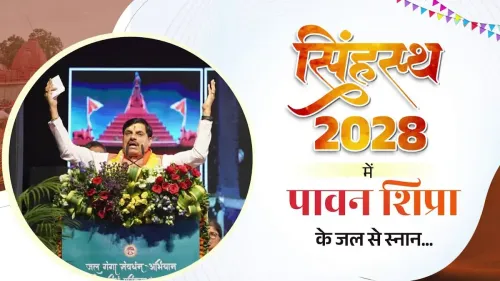
Ujjain's next Simhastha Kumbh Mela is expected in 2028 , making current investments in the city's pilgrim infrastructure strategically significant.
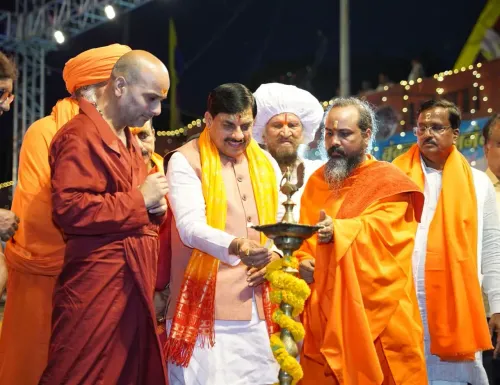
Madhya Pradesh Chief Minister Dr. Mohan Yadav on Monday, 25 May 2026 extended a warm welcome to all devotees attending the two-day 'Shipra Tirth Parikrama-2026' being held in Ujjain, the ancient city of Baba Mahakal on the banks of the sacred Shipra river. The Chief Minister invoked the state's spiritual identity, describing Madhya Pradesh as 'punya-dhara' (the land of merit), and framed the pilgrimage walk as an event that would deepen the spiritual, social, and environmental consciousness of participants.
Context
Ujjain is one of India's seven sacred Sapta Puri cities and is home to the Mahakaleshwar Jyotirlinga, one of the twelve jyotirlingas revered across the country. The Shipra river, which flows through the city, holds deep ritual significance and is the focal axis of the periodic Simhastha Kumbh Mela. The Shipra Tirth Parikrama is a circumambulatory pilgrimage along the river's banks, drawing devotees who seek both religious merit and a connection to the city's ancient heritage.
Dr. Yadav's message, posted on his official X account, quoted the state government's guiding philosophy: 'Vikas bhi, Virasat bhi' — meaning 'Development as well as Heritage.' He stated that the pilgrimage would 'further expand the spiritual, social and environmental awareness of the people.'
Policy Backdrop
The 'Vikas bhi, Virasat bhi' framework has been a consistent plank of the Madhya Pradesh BJP government since at least 2023-24, underpinning projects such as the Mahakaleshwar Heritage Corridor in Ujjain and Smart City investments in urban pilgrim infrastructure. The corridor project, modelled on similar developments at other major temple towns, significantly expanded the precinct around the Mahakaleshwar temple and upgraded ghats along the Shipra.
At the central level, the PRASAD Scheme — launched in 2014-15 for integrated development of pilgrimage destinations — has channelled funds into Ujjain's amenities, covering approach roads, lighting, and sanitation at key ghats. The 2016 Simhastha Kumbh Mela was an earlier milestone that prompted large-scale riverfront development in the city.
Stakeholders and Impact
The primary beneficiaries of the Shipra Tirth Parikrama-2026 are the thousands of pilgrims and devotees who undertake the parikrama route, along with Ujjain's resident population and the local tourism and hospitality sector. Events of this scale typically generate significant footfall at dharamshalas, hotels, and small businesses serving pilgrims along the ghats.
The Chief Minister's explicit mention of environmental consciousness alongside spiritual and social aims signals continued state messaging around Shipra river rejuvenation, an issue that has drawn public attention given the river's water quality and seasonal flow challenges in recent years.
What's Next
With the two-day Shipra Tirth Parikrama-2026 under way, attention will turn to any state announcements on further infrastructure investments or budget allocations for Shipra river restoration and expansion of the Mahakaleshwar temple corridor. Ujjain's next major pilgrimage cycle — the Simhastha Kumbh Mela — is expected in 2028, and preparations for that event are likely to shape near-term policy decisions around the city's riverfront and pilgrim facilities. Dr. Yadav's consistent public engagement with Ujjain's religious calendar underscores the city's centrality to the BJP-led state government's cultural and electoral narrative.
Point of View
Virasat bhi' framing is not merely rhetorical — it has translated into tangible projects like the Mahakaleshwar Heritage Corridor and Shipra riverfront upgrades, creating a feedback loop between pilgrimage promotion and infrastructure investment. The explicit mention of environmental consciousness is notable, as Shipra river pollution remains a live civic concern that the government must address ahead of the 2028 Simhastha Kumbh Mela. Together, these signals suggest Ujjain will remain a high-priority site for both state budget allocations and political capital in the coming electoral cycle.
NationPress
19 Sept 2026
Frequently Asked Questions
What is the Shipra Tirth Parikrama 2026?
The Shipra Tirth Parikrama-2026 is a two-day circumambulatory pilgrimage event held in Ujjain, Madhya Pradesh, along the banks of the sacred Shipra river, drawing devotees to the city of the Mahakaleshwar Jyotirlinga.
What is the 'Vikas bhi, Virasat bhi' slogan?
'Vikas bhi, Virasat bhi' — meaning 'Development as well as Heritage' — is the guiding philosophy of the BJP-led Madhya Pradesh government, used to frame projects that combine cultural preservation with modern infrastructure development, particularly at religious and heritage sites.
Why is Ujjain important for Hindu pilgrims?
Ujjain is one of India's seven sacred Sapta Puri cities and is home to the Mahakaleshwar Jyotirlinga, one of the twelve jyotirlingas. The Shipra river flowing through the city is central to Hindu pilgrimage rituals and is the site of the periodic Simhastha Kumbh Mela.
Who is Dr. Mohan Yadav?
Dr. Mohan Yadav is the Chief Minister of Madhya Pradesh, a BJP leader who assumed office in December 2023 succeeding Shivraj Singh Chouhan. He has focused on cultural, religious tourism, and infrastructure initiatives in the state.
When is the next Simhastha Kumbh Mela in Ujjain?
The next Simhastha Kumbh Mela in Ujjain is expected in 2028, making current investments in the city's riverfront and pilgrim infrastructure particularly significant for both the state government and devotees.