CM Mohan Yadav launches biodiversity report and cheetah brochure in Bhopal
Synopsis
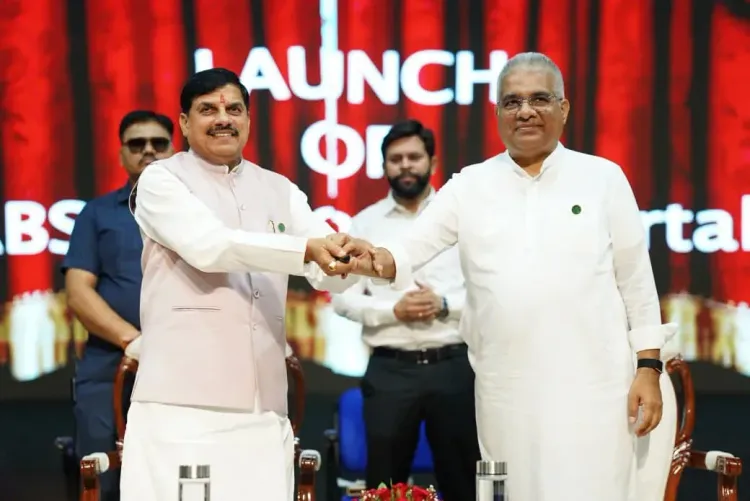
On International Day for Biological Diversity, Madhya Pradesh CM Dr. Mohan Yadav and Union Minister Bhupendra Yadav launched India's Biodiversity Report-2026, an ABS digital portal, and a cheetah conservation brochure in Bhopal, spotlighting the state's leadership in forest cover and Project Cheetah rewilding.
Key Takeaways
India's Biodiversity Report-2026 was launched at a state event in Bhopal on 22 May 2026 , on the occasion of International Day for Biological Diversity.
Union Minister Bhupendra Yadav joined Madhya Pradesh CM Dr.
Mohan Yadav for the joint launch of multiple biodiversity tools.
A new ABS End-to-End Portal and a data-driven laboratory were inaugurated to strengthen digital biodiversity governance.
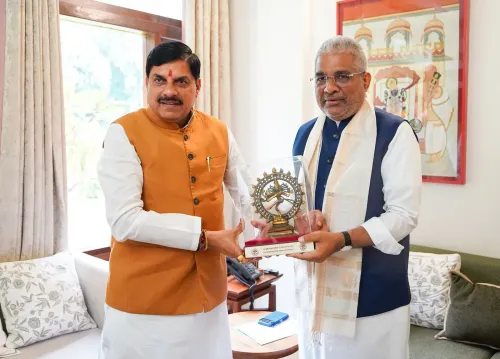
A Postal MyStamp and Cheetah Conservation theme-based brochure were released to promote public awareness of wildlife programmes.
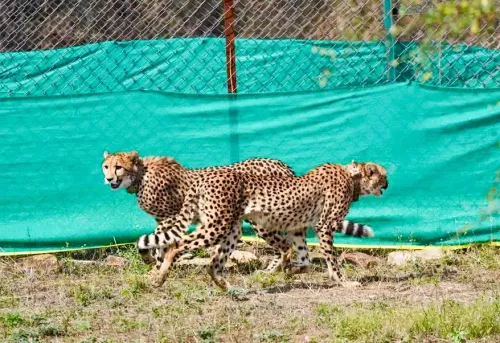
Project Cheetah , launched in September 2022 at Kuno National Park , was highlighted as a globally significant wildlife reintroduction model.
Madhya Pradesh holds the largest forest cover in India and was described by the CM as number one in preserving water, forest, and land fertility.
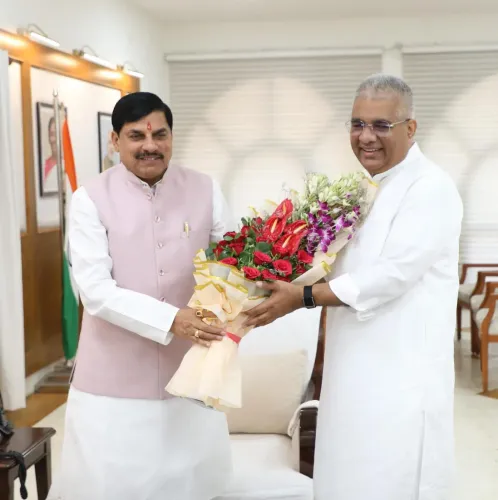
Madhya Pradesh Chief Minister Dr. Mohan Yadav on Friday, 22 May 2026, joined Union Environment Minister Bhupendra Yadav at a state-level event in Bhopal to mark International Day for Biological Diversity, releasing a suite of conservation tools including India's Biodiversity Report-2026, a cheetah conservation brochure, and a new digital portal for Access and Benefit Sharing compliance.
Context
Posting on X, Chief Minister Dr. Mohan Yadav described the diversity of flora and fauna as the state's capital, writing: 'वनस्पति और वन्यजीवों की विविधता हमारी पूंजी, इसे संजोकर रखना हमारा कर्तव्य' ('The diversity of plants and wildlife is our wealth; it is our duty to preserve it'). The occasion was the UN-observed International Day for Biological Diversity, held annually on 22 May to promote global awareness and action on biodiversity conservation.
At the Bhopal event, the two leaders jointly released a Postal MyStamp and a Cheetah Conservation theme-based brochure, alongside the launch of India's Biodiversity Report-2026, the ABS End-to-End Portal, and a new data-driven laboratory for biodiversity monitoring.
Policy Backdrop
Project Cheetah, India's flagship rewilding initiative, was formally launched in September 2022 when eight cheetahs were translocated from Namibia to Kuno National Park in Madhya Pradesh — making it one of the most ambitious wildlife reintroduction efforts in the world. Dr. Mohan Yadav called the project 'an extraordinary and innovative example of wildlife restoration in the world,' adding that Madhya Pradesh ranks number one in the country for preserving the fertility of water, forests, and land.
India ratified the Convention on Biological Diversity (CBD) in 1994 and established the National Biodiversity Authority in 2003. The country's Access and Benefit Sharing (ABS) framework, governed under the Biological Diversity Act, regulates the use of genetic resources and ensures equitable sharing of benefits with local communities. The new ABS End-to-End Portal launched at the event is intended to streamline compliance and digital tracking under this framework.
Madhya Pradesh holds the largest forest cover of any Indian state and hosts a dense network of protected areas, positioning it as a critical node in national biodiversity strategy. The launch of a dedicated data-driven laboratory reflects a broader national shift toward evidence-based conservation monitoring.
Stakeholders and Impact
The launches directly affect forest communities, wildlife researchers, and state forest departments across India, who will interact with the new digital tools for ABS compliance and biodiversity data. The cheetah conservation brochure and Postal MyStamp are also aimed at raising public awareness and building a cultural connection to the rewilding programme.
For Madhya Pradesh specifically, the event reinforces the state's identity as India's foremost wildlife conservation destination. The progress of Project Cheetah — including cheetah survival rates and potential breeding success at Kuno National Park — remains closely watched by conservationists and policymakers alike.
What's Next
The operationalisation of the ABS End-to-End Portal will be a key metric for measuring the event's policy impact, as states begin integrating the platform into their biodiversity governance workflows. Observers will also track whether the data-driven laboratory accelerates the publication of granular, state-level biodiversity assessments aligned with India's post-2020 global framework commitments under the CBD. The trajectory of Project Cheetah — including any announcements on new reintroduction sites — is expected to remain a focal point of Madhya Pradesh's conservation narrative in the months ahead.
Point of View
' Dr. Mohan Yadav is anchoring BJP's development narrative to ecological stewardship — a positioning that serves both domestic audiences and India's international commitments under the Convention on Biological Diversity. The simultaneous launch of a digital ABS portal and a data laboratory suggests the Centre is pushing states toward measurable, auditable conservation metrics rather than symbolic gestures alone. How effectively the new tools are adopted at the ground level will determine whether this event marks a genuine policy inflection or remains a high-profile ceremonial milestone.
NationPress
6 Oct 2026
Frequently Asked Questions
What was launched on International Day for Biological Diversity 2026 in Bhopal?
At the Bhopal event on 22 May 2026, India's Biodiversity Report-2026, an ABS End-to-End Portal, a data-driven biodiversity laboratory, a Cheetah Conservation brochure, and a Postal MyStamp were launched jointly by CM Dr. Mohan Yadav and Union Minister Bhupendra Yadav.
What is Project Cheetah and why is Madhya Pradesh important to it?
Project Cheetah is India's flagship wildlife rewilding programme, launched in September 2022, which translocated cheetahs from Namibia to Kuno National Park in Madhya Pradesh. The state hosts the primary reintroduction site and has the largest forest cover in India.
What is the ABS End-to-End Portal launched in India?
The ABS End-to-End Portal is a digital platform under India's Access and Benefit Sharing framework, which governs the use of biological and genetic resources. It is intended to streamline compliance and monitoring for researchers, industries, and state agencies.
Why does Madhya Pradesh claim to be number one in forest conservation?
Madhya Pradesh holds the largest forest cover of any Indian state and hosts a dense network of protected areas and wildlife reintroduction sites, including Kuno National Park. CM Dr. Mohan Yadav has cited the state's record in preserving water, forest, and land fertility as the basis for this claim.
When is International Day for Biological Diversity observed?
International Day for Biological Diversity is observed annually on 22 May. It is a UN-designated event aimed at raising global awareness about the importance of biodiversity conservation and promoting action under the Convention on Biological Diversity.