CM Mohan Yadav Launches Janjatiya Gaurav Saptah in Shahdol
Synopsis
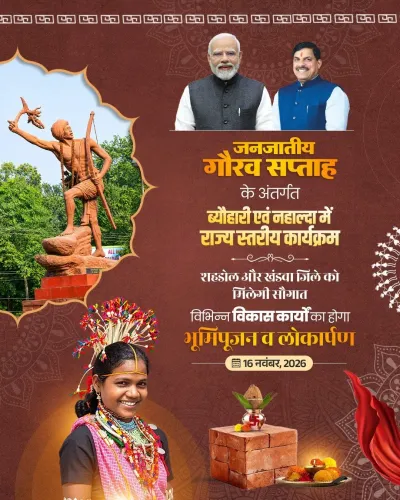
Chief Minister Dr. Mohan Yadav launched the state-level Janjatiya Gaurav Saptah at Byohri in Shahdol district on 16 November 2026, unveiling a Birsa Munda statue and triggering 82 development works worth ₹357.71 crore with a single digital click.
Key Takeaways
Mohan Yadav inaugurated the state-level Janjatiya Gaurav Saptah at Byohri, Shahdol on 16 November 2026 .
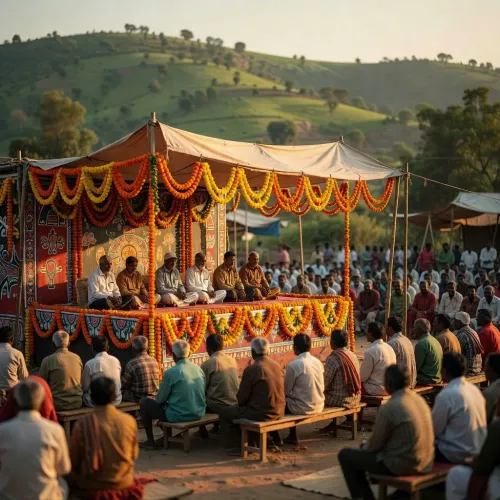
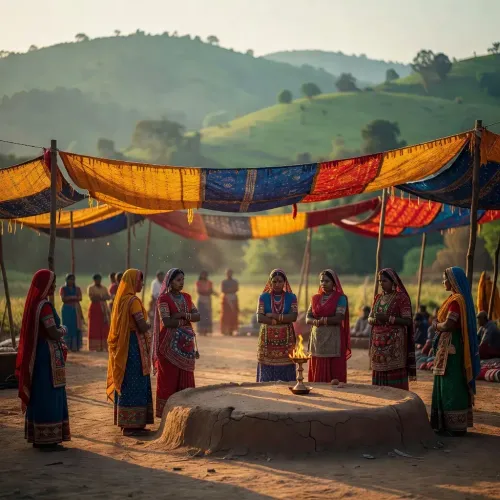
The ceremony followed traditional tribal customs , anchoring the state event in living indigenous culture.
Yadav unveiled a statue of Bhagwan Birsa Munda , the 19th-century Munda tribal leader and freedom fighter.
A single digital click simultaneously launched 82 development works worth ₹357.71 crore in Shahdol district.
The event aligns with the central government's Janjatiya Gaurav Divas observed annually on 15 November , Birsa Munda's birth anniversary.
Madhya Pradesh has followed a recurring pattern of pairing cultural recognition with infrastructure spending in tribal districts.
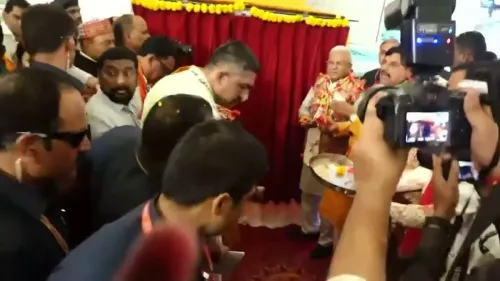
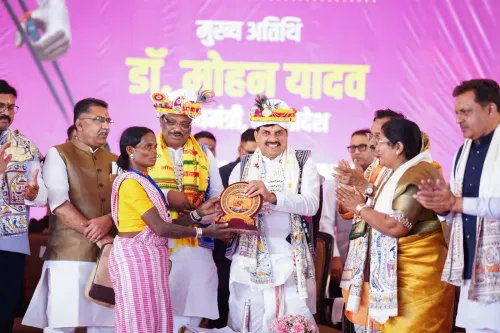
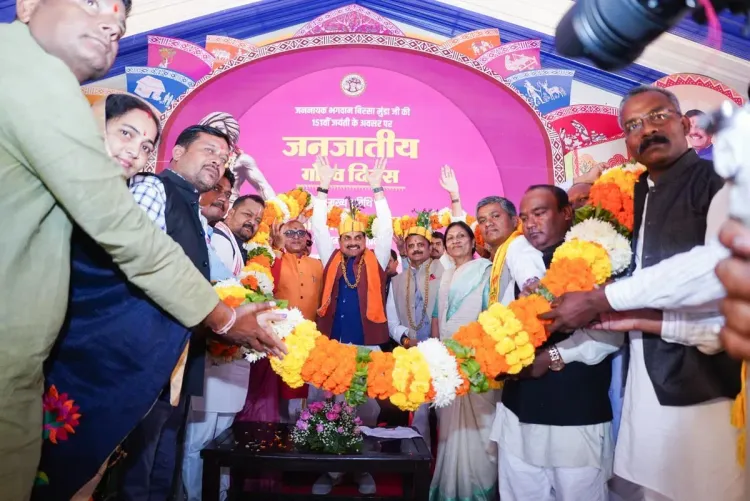
Honouring tribal heritage with one hand and laying the foundations of new infrastructure with the other, Chief Minister Dr. Mohan Yadav on Monday, 16 November 2026, inaugurated the state-level Janjatiya Gaurav Saptah (Tribal Pride Week) at Byohri in Shahdol district of Madhya Pradesh — combining cultural ritual with a single-click rollout of ₹357.71 crore worth of development projects.
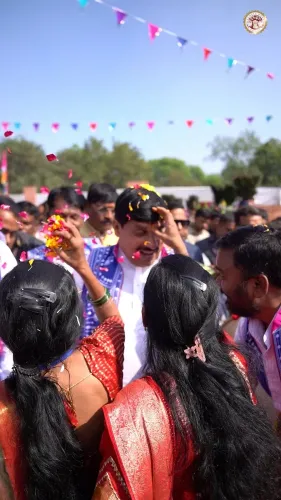
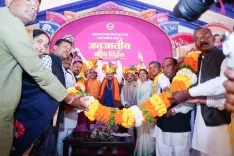
The Chief Minister's Office of Madhya Pradesh announced the event in a post, saying the occasion marks 'जनजातीय विरासत के सम्मान के साथ समृद्ध और विकसित मध्य प्रदेश की ओर एक और कदम' — 'another step towards a prosperous and developed Madhya Pradesh, with respect for tribal heritage.' The ceremony followed traditional tribal customs, anchoring the state occasion in the living culture it was meant to celebrate.
Birsa Munda's statue and ₹357.71 crore in a single click
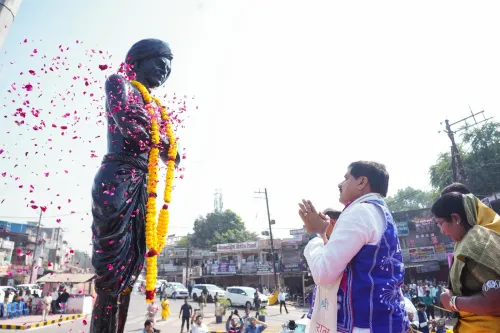
The centrepiece of the morning was the unveiling of a statue of Dhartī Āba Bhagwan Birsa Munda, the 19th-century Munda tribal leader and anti-colonial freedom fighter whose birth anniversary on 15 November anchors tribal pride observances across India. His image — a warrior, a healer, a mobiliser of the dispossessed — now stands in Byohri as a permanent fixture in Shahdol's public landscape.
Immediately after, Dr. Yadav used a single digital click to simultaneously perform bhoomi pujan (foundation-laying) and lokarpan (inauguration) for 82 development works worth ₹357.71 crore across the district. The gesture — one finger, dozens of projects — has become a signature format for the Madhya Pradesh administration, designed to signal scale and speed in regions that have historically waited longest for state spending to arrive.
Why Shahdol, why now
Shahdol, nestled in eastern Madhya Pradesh, carries a large Scheduled Tribe population and falls within the state's focus zones for tribal welfare spending. Choosing it as the venue for the state-level flagship event — rather than the capital Bhopal — sends a pointed geographic message: the celebration travels to the community, not the other way around.
The broader context is a national policy shift that has been building since 2021, when the central government instituted Janjatiya Gaurav Divas on 15 November to mark Birsa Munda's birth anniversary. Madhya Pradesh, home to one of India's largest tribal populations, has since paired that symbolic date with annual state-level observances. The pattern is deliberate: cultural recognition and capital expenditure land together, so that the pride of a statue and the promise of a road or a school are part of the same event.
A recurring formula — and what it needs to deliver
This is not the first time the state has staged this combination. Similar events have been held in previous years across other tribal-heavy districts, gradually extending the Janjatiya Gaurav Saptah format to new regions. The formula has political resonance, but its durability depends on what actually gets built. The 82 announced works now carry public timelines; utilisation certificates and physical progress will be the real scorecard in the months ahead.
For Shahdol's tribal communities, Monday's ceremony was both a moment of recognition and a set of concrete promises. Dr. Yadav's administration has now put a number — ₹357.71 crore, 82 projects — on the page. That number will be the measure by which the week's symbolism is eventually judged.
Point of View
Deepening the BJP's long-running outreach to Scheduled Tribe voters. Pairing a Birsa Munda statue with ₹357.71 crore in announced projects is a well-tested formula: symbolic legitimacy buys attention, while capital expenditure creates tangible stakes. The real test of this approach is delivery — the 82 announced works now carry public accountability, and any gap between announcement and completion risks eroding the credibility the ceremony was designed to build. Nationally, the event reinforces Madhya Pradesh's positioning as a model state for the Centre's post-2021 tribal pride policy architecture.
NationPress
16 Nov 2026
Frequently Asked Questions
What is Janjatiya Gaurav Saptah in Madhya Pradesh?
Janjatiya Gaurav Saptah is an annual state-level week-long observance in Madhya Pradesh that honours tribal heritage, customs, and contributions. It aligns with the central government's Janjatiya Gaurav Divas, celebrated on 15 November to mark the birth anniversary of tribal leader Birsa Munda.
What did CM Mohan Yadav inaugurate at Shahdol on 16 November 2026?
CM Dr. Mohan Yadav launched the state-level Janjatiya Gaurav Saptah at Byohri in Shahdol district, unveiled a statue of Bhagwan Birsa Munda, and used a single digital click to inaugurate and perform bhoomi pujan for 82 development works worth ₹357.71 crore.
Who was Birsa Munda and why is he significant to tribal communities?
Birsa Munda was a 19th-century leader of the Munda tribal community and a prominent freedom fighter who led resistance against British colonial rule and exploitation of tribal lands. He is widely revered as 'Dhartī Āba' (Father of the Earth) and is a symbol of tribal pride and rights across India.
How much money was announced for Shahdol district development projects?
Chief Minister Dr. Mohan Yadav announced ₹357.71 crore for 82 development works in Shahdol district, initiating them simultaneously via a single digital click during the Janjatiya Gaurav Saptah ceremony.
Why is Shahdol significant for tribal welfare in Madhya Pradesh?
Shahdol is a district in eastern Madhya Pradesh with a substantial Scheduled Tribe population and is part of the state's focus zones for tribal welfare and infrastructure spending, making it a key venue for the state-level tribal pride observance.