CM Mohan Yadav: MP Higher Education GER at 28.9%, Above National Average
Synopsis
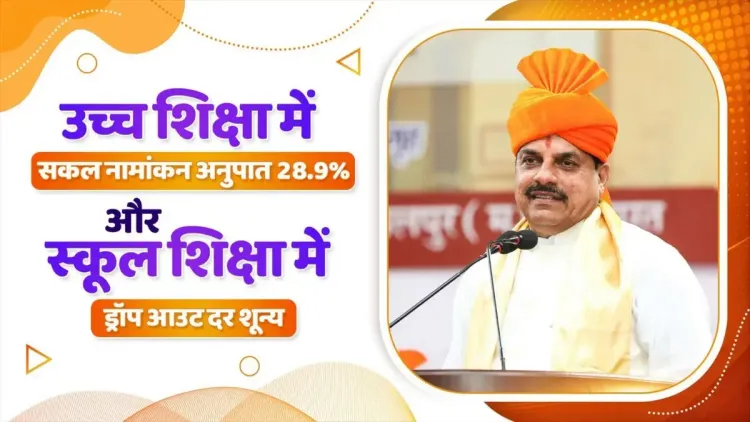
Madhya Pradesh CM Dr. Mohan Yadav announced on June 21, 2026 that the state's higher education Gross Enrolment Ratio stands at 28.9%, above the national average, and that primary-level school dropouts have reached zero — citing government policy as the driver.
Key Takeaways
Mohan Yadav announced Madhya Pradesh's higher education GER at 28.9% , claiming it exceeds the national average.
The Chief Minister stated the primary-level school dropout rate in MP has reached zero .
The NEP 2020 set a national GER target of 50% by 2035 ; India's tracked average was around 27% in the early 2020s.
AISHE and UDISE+ reports are the official benchmarks that will confirm or challenge these state-reported figures.
Madhya Pradesh has been under BJP rule continuously since 2003 and has cited education metrics as a governance priority post-NEP rollout.
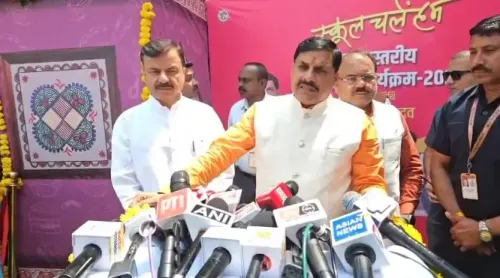
Madhya Pradesh Chief Minister Dr. Mohan Yadav on Sunday, June 21, 2026 claimed that the state's Gross Enrolment Ratio (GER) in higher education has reached 28.9%, surpassing the national average, and that the primary-level school dropout rate has fallen to zero.
Context
Posting in Hindi on X, Dr. Mohan Yadav stated: 'हमारी सरकार के प्रयासों से प्रदेश में उच्च शिक्षा का सकल नामांकन अनुपात (GER) 28.9% है, जो राष्ट्रीय औसत से भी अधिक है। स्कूल शिक्षा में प्राथमिक स्तर पर ड्रॉपआउट दर शून्य हो चुकी है।' — 'Through our government's efforts, the Gross Enrolment Ratio in higher education in the state is 28.9%, which is higher than the national average. At the primary level in school education, the dropout rate has become zero.' The Chief Minister attributed both achievements directly to the state government's policy interventions.
Policy Backdrop
The National Education Policy (NEP) 2020 set an ambitious target of raising India's higher education GER to 50% by 2035, making state-level progress on this metric a closely watched indicator. National surveys such as the All India Survey on Higher Education (AISHE) documented India's GER rising from 24.3% in 2014-15 to approximately 27% in the early 2020s, placing Madhya Pradesh's claimed figure of 28.9% above that tracked national trajectory. On the school side, the UDISE+ (Unified District Information System for Education) framework is the standard mechanism for tracking dropout rates across states. Madhya Pradesh has historically reported incremental gains in school retention through infrastructure investment and scholarship schemes targeting first-generation learners.
Stakeholders and Impact
The figures, if borne out by official survey data, carry direct implications for higher education students and primary school children across Madhya Pradesh. A GER above the national average would mean a proportionally larger share of the 18–23 age group in the state is enrolled in colleges or universities compared to the country as a whole. A zero primary-level dropout rate, if sustained and verified, would represent a significant equity milestone, particularly for girls and children from economically weaker sections who have historically faced the highest attrition. State governments under the BJP, which has governed Madhya Pradesh continuously since 2003, have increasingly foregrounded education metrics as evidence of governance outcomes in the post-NEP 2020 policy environment.
What's Next
The credibility of both claims will be tested when the next editions of the AISHE and UDISE+ reports are released, as these are the authoritative national benchmarks against which state-reported figures are validated. Observers will also watch the upcoming Madhya Pradesh assembly session's education budget allocations to assess whether financial commitments align with the enrolment and retention gains the Chief Minister has publicised. If official data corroborates the state's numbers, Madhya Pradesh could emerge as a reference model for other states working toward the NEP 2035 GER target.
Point of View
Framing education metrics as a scorecard of BJP governance in Madhya Pradesh ahead of potential political cycles. By anchoring the claim to GER — a measurable, NEP-linked indicator — the announcement plugs directly into the national policy narrative that the Centre has promoted since 2020, lending it institutional legitimacy. The zero-dropout claim is the bolder of the two figures and will face the sharpest scrutiny when UDISE+ data is published, since primary dropout elimination has eluded most large Indian states for decades. Taken together, the post signals that education outcomes, not just infrastructure spending, are becoming the new terrain of competitive political signalling among state governments.
NationPress
21 Jun 2026
Frequently Asked Questions
What is Madhya Pradesh's higher education GER in 2026?
According to Chief Minister Dr. Mohan Yadav, Madhya Pradesh's Gross Enrolment Ratio in higher education is 28.9% as of his June 2026 announcement, which he says is above the national average. This figure has not yet been independently verified by official national surveys.
What is India's national average GER in higher education?
National surveys tracked India's higher education GER rising from 24.3% in 2014-15 to approximately 27% in the early 2020s. The NEP 2020 has set a target of 50% GER by 2035.
Has Madhya Pradesh really achieved zero school dropout rate?
CM Dr. Mohan Yadav claimed the primary-level dropout rate in Madhya Pradesh has reached zero. This figure is yet to be confirmed by official UDISE+ data, which is the authoritative national source for school dropout statistics.
What is the NEP 2020 GER target for India?
The National Education Policy 2020 set a target of raising India's higher education Gross Enrolment Ratio to 50% by 2035 , up from around 27% in the early 2020s.
Who is Dr. Mohan Yadav and when did he become MP Chief Minister?
Dr. Mohan Yadav is the Chief Minister of Madhya Pradesh and a BJP leader who assumed office in December 2023 , succeeding Shivraj Singh Chouhan after the state assembly elections.