Sonowal hails tri-commissioning of 3 warships at Kolkata port
Synopsis
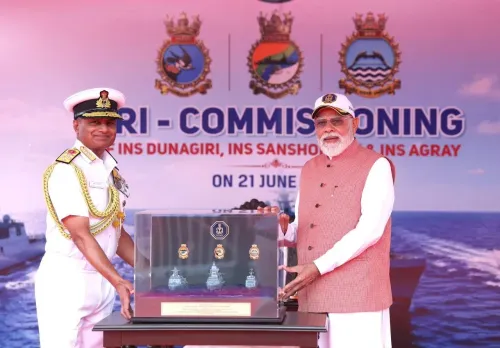
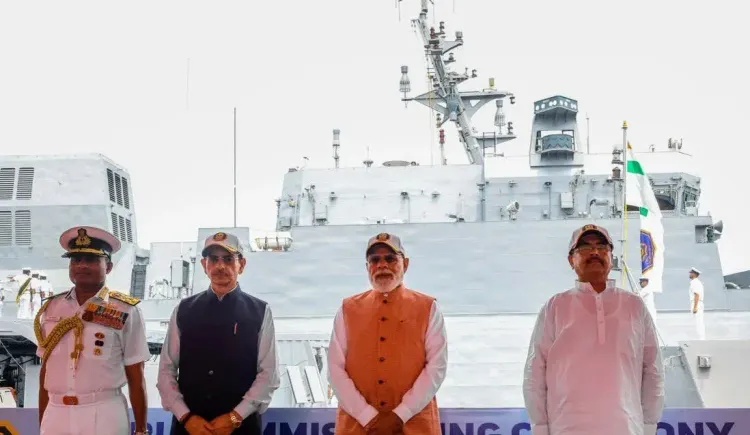
Prime Minister Modi commissioned three indigenously built warships into the Indian Navy at Kolkata's Syama Prasad Mookerjee Port on June 21, 2026. Minister Sonowal called it a historic milestone for Aatmanirbhar shipbuilding and India's maritime security, reflecting years of Make in India and self-reliance policy in defence manufacturing.
Key Takeaways
Three indigenously built warships were simultaneously commissioned into the Indian Navy by PM Narendra Modi on June 21, 2026 .
The ceremony was held at Syama Prasad Mookerjee Port, Kolkata , India's oldest major port.
Minister Sarbananda Sonowal described the event as a milestone for Aatmanirbhar Bharat and India's maritime security.
The commissioning reflects the combined thrust of the Make in India (2014) and Aatmanirbhar Bharat (2020) defence manufacturing policies.
Domestic shipbuilders such as Garden Reach Shipbuilders and Mazagon Dock Shipbuilders are central to India's naval indigenisation drive.
Further indigenous vessel commissionings and potential budget incentives for shipbuilding are expected in the near term.
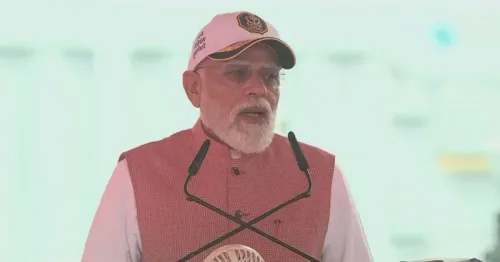
Union Minister of Ports, Shipping and Waterways Sarbananda Sonowal on Sunday, June 21, 2026, lauded the simultaneous commissioning of three indigenously built warships into the Indian Navy by Prime Minister Narendra Modi at Syama Prasad Mookerjee Port, Kolkata, calling it a historic milestone for India's maritime security and shipbuilding capabilities.
Context
In his post on X, Minister Sonowal described the event as 'Aatmanirbhar Shipbuilding, Anchoring Bharat's Maritime Might,' framing the tri-commissioning as a defining moment under India's self-reliance doctrine. The ceremony, presided over by Prime Minister Modi, saw three warships constructed domestically enter active service with the Indian Navy in a single event — a rare simultaneous commissioning that underscores the pace of India's indigenous naval production.
Syama Prasad Mookerjee Port — formerly known as Kolkata Port and renamed in 2021 — served as the backdrop for the event, lending symbolic weight to a ceremony that ties India's oldest major port to its newest naval assets.
Policy Backdrop
The commissioning is rooted in two overlapping policy frameworks: the Make in India campaign launched in 2014, which directed naval procurement toward domestic shipyards, and the Aatmanirbhar Bharat initiative announced in 2020, which explicitly targeted a reduction in defence import dependence. Together, these programmes have channelled orders to public sector shipbuilders and pushed for indigenous design and construction of naval platforms.
India has pursued steady indigenisation of naval platforms since the early 2000s, building strategic autonomy in the maritime domain across successive governments. The Kolkata event represents a visible acceleration of that trajectory, particularly as regional maritime security priorities in the Indian Ocean intensify.
Stakeholders and Impact
The Indian Navy stands as the primary beneficiary, adding three domestically built vessels to its fleet in a single ceremony — reinforcing operational capacity without reliance on foreign suppliers. Domestic shipbuilders, including public sector yards such as Garden Reach Shipbuilders and Engineers (GRSE) in Kolkata and Mazagon Dock Shipbuilders in Mumbai, are central to this indigenisation push and stand to gain from continued government orders.
For Minister Sonowal's ministry, the event also carries port-sector significance: hosting a high-profile naval commissioning at Syama Prasad Mookerjee Port highlights the port's role not just in commercial shipping but in India's broader maritime ecosystem. Workers, engineers, and designers employed across Indian shipyards represent the human capital dimension of the Aatmanirbhar vision.
What's Next
Attention will now turn to the pipeline of additional indigenous vessels expected from domestic yards, as well as any revisions to shipbuilding financial incentives in upcoming Union Budgets. The government has signalled intent to deepen the indigenisation mandate, and further commissioning events — potentially involving larger surface combatants or submarines built under domestic programmes — are anticipated over the coming years.
The tri-commissioning at Kolkata sets a precedent for multi-vessel induction events that project both industrial capacity and strategic confidence, and is likely to inform how India presents its naval modernisation story on the global stage.
Point of View
Not merely a slogan, ahead of a period of heightened maritime competition in the Indian Ocean region. For Minister Sonowal, amplifying the event ties his ports-and-waterways portfolio directly to the national security narrative, elevating the ministry's profile beyond commercial shipping. The choice of Kolkata — home to GRSE, one of India's foremost naval shipbuilders — reinforces the geographic and industrial logic of the indigenisation push. Cumulatively, the event advances a decade-long arc in which India has sought to convert import dependence in defence into domestic industrial capability.
NationPress
21 Jun 2026
Frequently Asked Questions
What happened at Syama Prasad Mookerjee Port on June 21 2026?
Prime Minister Narendra Modi commissioned three indigenously built warships into the Indian Navy at Syama Prasad Mookerjee Port in Kolkata on June 21, 2026, in a simultaneous tri-commissioning ceremony.
What is Aatmanirbhar Bharat in defence shipbuilding?
Aatmanirbhar Bharat, launched in 2020, is India's self-reliance initiative that includes a push to reduce dependence on imported defence equipment by building warships and other platforms domestically at Indian shipyards.
Which shipyards build warships for the Indian Navy?
Key public sector shipyards include Garden Reach Shipbuilders and Engineers (GRSE) in Kolkata and Mazagon Dock Shipbuilders in Mumbai, both of which have delivered multiple naval vessels under Make in India and Aatmanirbhar Bharat programmes.
What is Syama Prasad Mookerjee Port?
Syama Prasad Mookerjee Port, formerly Kolkata Port, is India's oldest major port located in Kolkata, West Bengal. It was renamed in 2021 and serves as a significant riverine and commercial port.
What did Sarbananda Sonowal say about the warship commissioning?
Minister Sonowal called the event 'Aatmanirbhar Shipbuilding, Anchoring Bharat's Maritime Might,' describing the tri-commissioning as a historic milestone for India's maritime security and indigenous shipbuilding capabilities.