Sonowal Flags Maritime Ecosystem Push for Shipbuilding
Synopsis
Union Ports and Shipping Minister Sarbananda Sonowal on 21 June 2026 outlined India's push for a world-class maritime ecosystem, citing aggressive port modernisation, river waterway expansion and multi-modal logistics development to boost shipbuilding and cut trade costs.
Key Takeaways
Minister Sonowal stated that a thriving shipbuilding industry requires a world-class maritime ecosystem encompassing ports, waterways and logistics networks.
The Sagarmala Project (2015) identified 574 port and coastal projects, many now being executed under PM Gati Shakti .
Maritime India Vision 2030 targets modernisation of all 12 major ports and a higher share of global shipbuilding output.
India's shipbuilding capacity currently accounts for under 1 per cent of global output, a gap the government is actively working to close.
The National Logistics Policy (2022) aims to integrate transport modes and reduce logistics costs, which currently exceed global averages as a share of GDP.
Coastal industries and exporters are the primary beneficiaries of reduced trade costs linked to port and waterway upgrades.
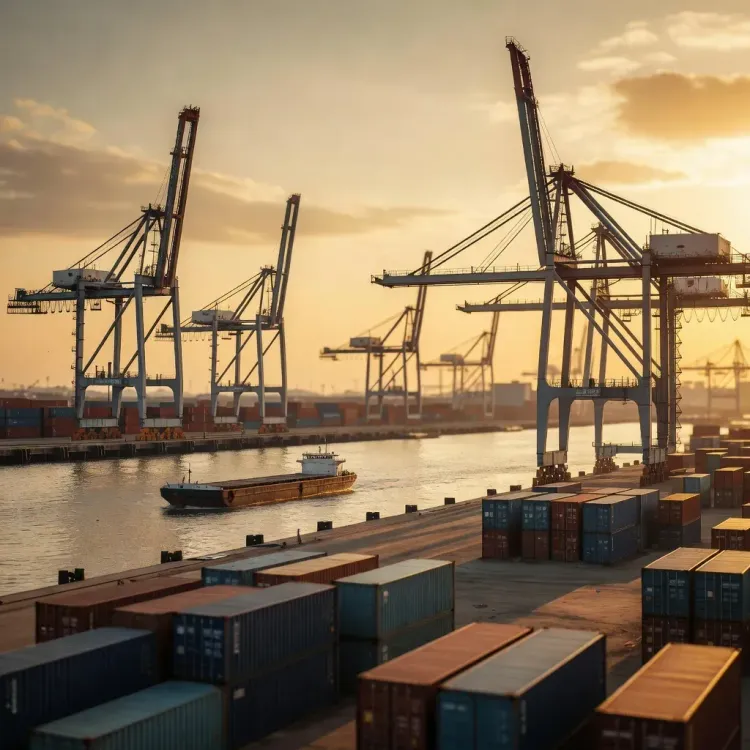
Union Ports and Shipping Minister Sarbananda Sonowal on Sunday, 21 June 2026, outlined the government's multi-pronged strategy to build a world-class maritime ecosystem, saying India is aggressively modernising ports, expanding river waterways and developing multi-modal logistics networks to support coastal industries and bring down trade costs.
Context
Responding to a post on X, Sonowal stated: 'A thriving shipbuilding industry requires a world-class maritime ecosystem. We are aggressively modernising our ports, expanding river waterways and building multi-modal logistics networks to empower coastal industries and reduce trade costs.' The statement frames port modernisation, inland waterways and logistics integration as a single, interlocked policy agenda rather than separate line items.
The minister's remarks come as the central government continues to push infrastructure investment across the maritime sector, with shipbuilding capacity and logistics efficiency identified as twin pressure points for India's trade competitiveness.
Policy Backdrop
The government's maritime ambitions are anchored in three overlapping frameworks. The Sagarmala Project, launched in 2015, identified 574 port and coastal projects spanning port modernisation, port-led industrialisation and last-mile connectivity, many of which are now being executed under the PM Gati Shakti National Master Plan.
The Maritime India Vision 2030, released in 2021, set explicit targets for raising India's share of global shipbuilding output and modernising all 12 major ports. Separately, the National Logistics Policy, notified in 2022, seeks to integrate road, rail, air and water freight corridors to reduce logistics costs — currently estimated to run above global benchmarks as a share of GDP.
India's domestic shipbuilding industry accounts for less than 1 per cent of world output, a gap that successive governments have flagged as both an economic vulnerability and a strategic liability. Multi-modal inland waterway expansion is seen as a cost-effective lever to shift freight off congested road and rail networks.
Stakeholders and Impact
The constituencies most directly affected by the minister's agenda include the shipbuilding industry, coastal industries dependent on port efficiency, and exporters who bear the burden of above-average logistics costs. Inland waterway expansion also has implications for river-adjacent communities and state governments that host national waterway corridors.
Lower trade costs translate into improved export competitiveness across sectors from textiles and engineering goods to agri-commodities, making the maritime push a cross-sectoral economic priority rather than a niche infrastructure story.
What's Next
Observers will watch for concrete project completion milestones under the Sagarmala and PM Gati Shakti frameworks, as well as any new shipbuilding incentive packages that may be announced at upcoming maritime summits or in the next Union Budget. Progress on operationalising additional national waterways and expanding multi-modal logistics parks will be key indicators of whether the stated ambition translates into measurable freight-cost reduction.
With India's trade volumes on a long-term growth trajectory, the pace at which port capacity, waterway depth and logistics integration are scaled up will determine how much of that trade flows through domestic infrastructure rather than foreign hubs.
Point of View
Inland waterways and logistics policy into a single 'maritime ecosystem' narrative ahead of what is likely a budget or summit cycle. The framing is deliberate: by linking shipbuilding to logistics costs, the ministry is building a political case for further fiscal support for an industry where India remains a marginal global player. The convergence of Sagarmala, Maritime India Vision 2030 and the National Logistics Policy under one rhetorical umbrella signals the government's intent to present maritime infrastructure as a coherent growth story rather than a collection of departmental projects. Whether the on-ground execution pace matches the ambition will be the real test.
NationPress
21 Jun 2026
Frequently Asked Questions
What is the Sagarmala Project and how does it relate to India's shipbuilding push?
The Sagarmala Project, launched in 2015, is the central government's flagship scheme for port modernisation, port-led industrialisation and coastal connectivity. It identified 574 projects across India's coastline and is a key vehicle for the maritime ecosystem push that Minister Sonowal referenced.
What is Maritime India Vision 2030?
Maritime India Vision 2030 is a government roadmap released in 2021 that sets targets for modernising India's 12 major ports, increasing shipbuilding capacity and improving multimodal connectivity to make India a leading maritime nation by the end of the decade.
Why are India's logistics costs considered high?
India's logistics costs as a share of GDP are estimated to be above global averages, largely because freight movement is heavily dependent on roads rather than cheaper rail and waterway options. The National Logistics Policy (2022) and inland waterway expansion are aimed at addressing this imbalance.
What is India's current share in global shipbuilding?
India's shipbuilding industry accounts for less than 1 per cent of global output, which the government has identified as both an economic gap and a strategic vulnerability that port and maritime infrastructure investments are intended to help close.
What should I watch for next on India's maritime infrastructure policy?
Key developments to track include project completion updates under Sagarmala and PM Gati Shakti, new shipbuilding incentive announcements in the Union Budget, and progress on operationalising additional national waterways and multi-modal logistics parks.