CM Mohan Yadav: No More Migration from Dhar-Jhabua
Synopsis
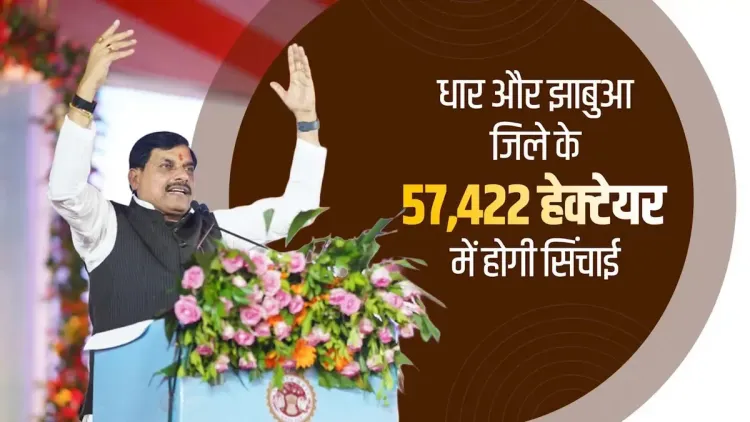
Madhya Pradesh Chief Minister Dr. Mohan Yadav announced that the Narmada-Jhabua-Petlawad-Thandla-Sardarpur Micro Lift Irrigation Project will irrigate 57,422 hectares in Dhar and Jhabua, directly addressing the long-standing problem of seasonal out-migration from these tribal districts.
Key Takeaways
Mohan Yadav declared on 24 October 2026 that seasonal migration from Dhar and Jhabua is no longer necessary.
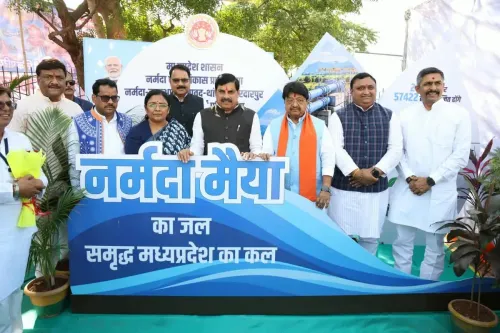
The Narmada-Jhabua-Petlawad-Thandla-Sardarpur Micro Lift Irrigation Project will cover 57,422 hectares across Dhar and Jhabua districts.
The scheme uses river-lift technology to carry Narmada water to upland areas unreachable by conventional gravity canals.
Dhar and Jhabua are historically tribal districts with a documented pattern of seasonal out-migration driven by rain-fed farming dependence.
Madhya Pradesh has pursued successive Narmada-based lift irrigation schemes in its western tribal belt since the early 2000s.
On-ground impact will depend on construction timelines, water delivery commissioning, and farmer adoption of micro-irrigation practices.
For generations, the tribal heartland of western Madhya Pradesh has bled its people every dry season — farmers and labourers from Dhar and Jhabua packing up and leaving because their fields simply could not hold water long enough to hold them. Madhya Pradesh Chief Minister Dr. Mohan Yadav declared on Saturday, 24 October 2026, that this cycle is coming to an end, pointing to a landmark irrigation scheme as the turning point.
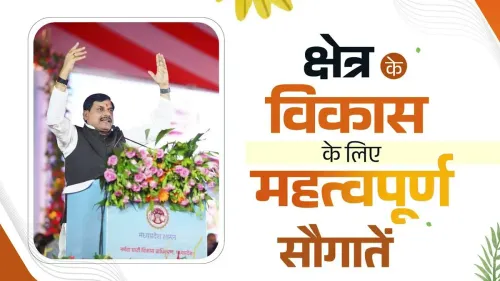
Posting on X, the Chief Minister stated — 'धार-झाबुआ से अब पलायन करने की जरूरत नहीं है' ('There is no longer any need to migrate from Dhar-Jhabua') — anchoring the claim in a concrete promise: the Narmada-Jhabua-Petlawad-Thandla-Sardarpur Micro Lift Irrigation Project will bring irrigation to 57,422 hectares spread across Dhar and Jhabua districts.
Drawing the Narmada uphill to reach tribal farmland
The scheme belongs to a category of river-lift projects that Madhya Pradesh has built progressively since the early 2000s to push Narmada water into the upland western belt — terrain that conventional canal gravity systems cannot easily reach. Dhar and Jhabua sit in this zone: ecologically significant, demographically tribal, and historically under-irrigated.
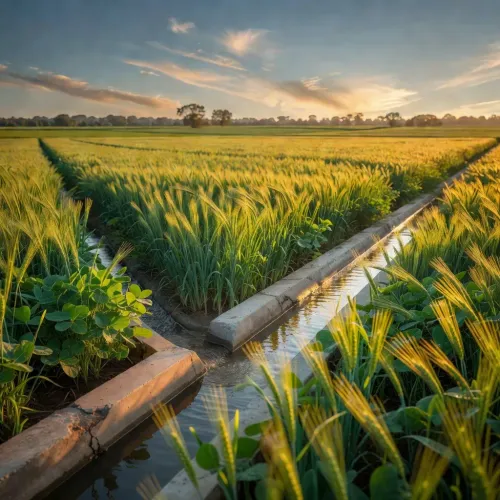
Lift irrigation technology pumps river water upward against gradient, distributing it through a micro-irrigation network that minimises water loss over the last mile. The project's footprint, spanning the towns of Jhabua, Petlawad, Thandla, and Sardarpur, signals an intent to stitch together a contiguous irrigated corridor across both districts rather than serve isolated pockets.
Migration as a policy problem — and irrigation as the answer
Seasonal out-migration from Dhar and Jhabua is not a new headline. Tribal farming households in these districts have historically moved to brick kilns, construction sites, and sugarcane harvests in Gujarat and elsewhere during the lean agricultural months, driven by a single structural deficit: rain-fed farming cannot guarantee year-round income. The state government's framing here is deliberate — linking an infrastructure project directly to the social crisis of displacement.
Madhya Pradesh's broader irrigation strategy has prioritised increasing the state's gross irrigated area, with the western tribal belt identified as a zone where investment in lift schemes can have outsized impact on both agricultural productivity and household stability. Dhar and Jhabua together carry a combined population in the millions, with farming as the primary livelihood.
57,422 hectares: what that number means on the ground
To put the figure in perspective: 57,422 hectares is roughly the size of a medium-sized Indian city's municipal jurisdiction — a substantial block of dryland that, once irrigated, can support a second or even third crop cycle annually. For farmers currently dependent entirely on the monsoon, reliable irrigation access is not merely an agricultural upgrade — it is the difference between staying and leaving.
The actual transformation will depend on project execution timelines, water delivery infrastructure being commissioned on schedule, and farmer uptake of micro-irrigation practices. Those on-ground progress markers remain the test this announcement must pass.
The Narmada river has long been the backbone of Madhya Pradesh's irrigation ambitions. Whether this project becomes the scheme that finally anchors Dhar and Jhabua's tribal workforce to their own land — that answer will be written in the seasons ahead.
Point of View
Framing an irrigation project as the solution to tribal displacement rather than presenting it as a purely agricultural metric. The explicit invocation of 'no more migration' is politically significant: it converts an infrastructure milestone into a welfare promise, raising the accountability bar. Madhya Pradesh's western tribal belt has also been a competitive electoral geography, making irrigation investments doubly strategic. The real test, as with earlier Narmada lift schemes, will be the pace of actual water delivery versus announcement momentum.
NationPress
24 Oct 2026
Frequently Asked Questions
What is the Narmada-Jhabua-Petlawad-Thandla-Sardarpur Micro Lift Irrigation Project?
It is a state government lift irrigation scheme that pumps water from the Narmada river uphill into the western Madhya Pradesh districts of Dhar and Jhabua, covering towns including Petlawad, Thandla, and Sardarpur, with the aim of irrigating 57,422 hectares of farmland.
Why do people migrate from Dhar and Jhabua in Madhya Pradesh?
Dhar and Jhabua are predominantly tribal districts with historically low irrigation coverage. Farmers dependent on rain-fed agriculture often migrate seasonally to other states for income during dry months, a pattern the state government aims to reverse through irrigation expansion.
How many hectares will the Jhabua lift irrigation project cover?
According to Chief Minister Dr. Mohan Yadav's announcement, the project will bring irrigation to 57,422 hectares across Dhar and Jhabua districts.
What is lift irrigation and how does it differ from canal irrigation?
Lift irrigation uses pumping systems to raise river water against gravity to reach upland or plateau areas that conventional gravity-fed canals cannot access. It is especially useful in western Madhya Pradesh's undulating tribal terrain.
What is Madhya Pradesh's broader irrigation strategy for tribal districts?
The state has pursued a series of Narmada-based lift irrigation schemes since the early 2000s, prioritising the western tribal belt to increase agricultural output, reduce drought vulnerability, and curb seasonal out-migration from districts like Dhar and Jhabua.