White House Touts Georgia Arrest, Hits Democrats on Safety
Synopsis
The White House on October 24, 2026, spotlighted a Georgia arrest from the prior week, directly accusing Democrats of wanting dangerous individuals to remain on American streets while crediting the Trump administration with targeting the worst offenders.
Key Takeaways
The White House posted on October 24, 2026 highlighting an arrest made the previous week in Georgia .
The post directly accused Democrats of wanting dangerous offenders to remain in communities.
The Trump administration has framed interior enforcement as a core public-safety mission since Executive Order 13768 in 2017 .
Specific identity and charges of the Georgia arrestee remain unverified from official public records.
The post reflects a recurring White House strategy of using individual arrest cases to reinforce broader anti-Democrat messaging on crime and immigration.
Official DHS and ICE arrest statistics for 2026 have not yet been publicly released to substantiate the broader claims.
The White House escalated its public messaging on interior immigration and criminal enforcement on Saturday, October 24, 2026, posting a pointed attack on Democrats while highlighting an arrest made the previous week in Georgia — framing it as proof that the Trump administration is removing the most dangerous individuals from American communities.
The Georgia arrest and what the White House is claiming
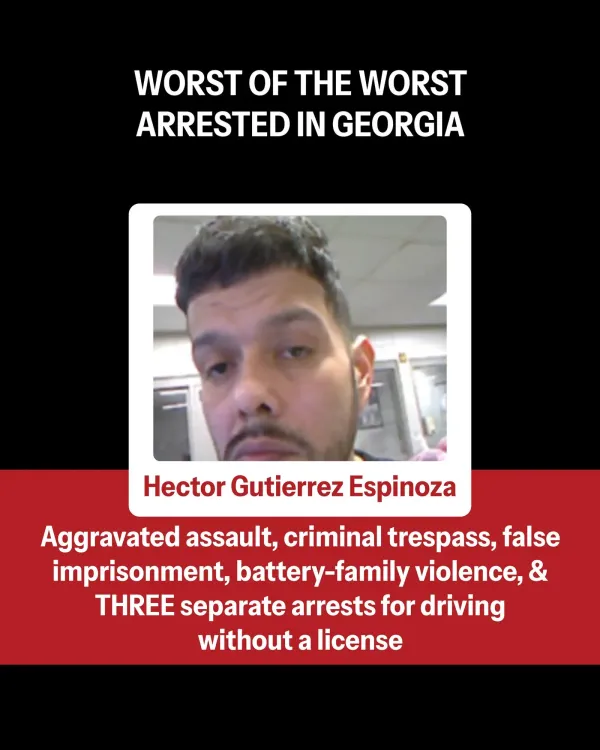
The post, shared on the official White House X account, declared: 'This is who Democrats want to keep on our streets. The Trump admin continues to arrest the worst of the worst and make American communities safer.' It pointed to an arrest carried out in Georgia without specifying the individual's identity or the precise charges involved. The accompanying image was offered as visual evidence of the enforcement action.
The specific details of the Georgia arrest — the individual's name, nationality, and criminal history — have not been independently confirmed. The White House framing positions the case as emblematic of a broader enforcement campaign targeting repeat or violent offenders.
Trump enforcement doctrine: from 2017 to today
The post sits squarely within a governance posture the Trump administration has maintained across both its terms. Back in 2017, President Trump signed Executive Order 13768, which dramatically widened the enforcement priorities of Immigration and Customs Enforcement (ICE), directing agents to pursue criminal noncitizens well beyond those convicted of aggravated felonies alone.
That order laid the legal and rhetorical groundwork for the kind of arrest-and-publicise strategy the White House now deploys routinely — using individual cases to illustrate systemic claims about community safety and Democratic opposition to enforcement.
Democrats as the target: sanctuary policy and the political battle
The direct naming of Democrats in the post is not incidental. The Trump administration has consistently framed Democratic support for sanctuary city policies and criminal justice reform as a political liability — arguing that limiting cooperation between local police and federal immigration authorities shields dangerous individuals from deportation or prosecution.
Democrats counter that broad enforcement dragnets ensnare people who pose no public safety threat and erode community trust in law enforcement. That argument, and the Republican rebuttal to it, has defined a central fault line in American politics for nearly a decade — and the White House shows no sign of stepping back from it.
The next concrete data point to watch: official DHS or ICE statistics on total arrests, criminal conviction rates among those detained, and any congressional oversight hearings examining enforcement funding and priorities in 2026.
One arrest, one post — but it is designed to carry the weight of an entire governing argument about who is safe, who is not, and who is to blame.
Point of View
The administration is not merely reporting a law-enforcement outcome; it is calibrating a midterm-cycle message around public safety, a domain where Republican messaging has historically polled well. The invocation of Georgia is also notable: a perennial swing-state battleground where crime and immigration enforcement carry outsized electoral weight. Whether the strategy moves public opinion depends heavily on whether the administration can produce verifiable aggregate data to back the 'worst of the worst' claim — something official DHS statistics, when released, will either confirm or complicate.
NationPress
24 Oct 2026
Frequently Asked Questions
Who was arrested in Georgia according to the White House post?
The White House did not name the individual arrested in Georgia. The post stated the arrest occurred the week before October 24, 2026, and included an image, but specific identity and charges have not been officially confirmed in public records.
What is the Trump administration's immigration enforcement policy?
The Trump administration has pursued broad interior enforcement since President Trump's first term, anchored by Executive Order 13768 signed in 2017, which expanded ICE priorities to criminal noncitizens beyond those convicted only of aggravated felonies.
Why is the White House criticising Democrats over immigration arrests?
The White House argues that Democratic support for sanctuary city policies and criminal justice reform limits federal cooperation with local police, allowing dangerous individuals to remain in communities rather than be detained or deported.
What is ICE and what role does it play in these arrests?
ICE — Immigration and Customs Enforcement — is the federal agency under the Department of Homeland Security responsible for interior immigration enforcement, including identifying, arresting, and deporting noncitizens with criminal records.
What should we watch for next in US immigration enforcement news?
Key data points include official DHS and ICE arrest statistics for 2026, the criminal conviction rates of those detained, and any congressional oversight hearings on enforcement funding and priorities.