CM Mohan Yadav pays tribute on Kakori Train Action anniversary
Synopsis
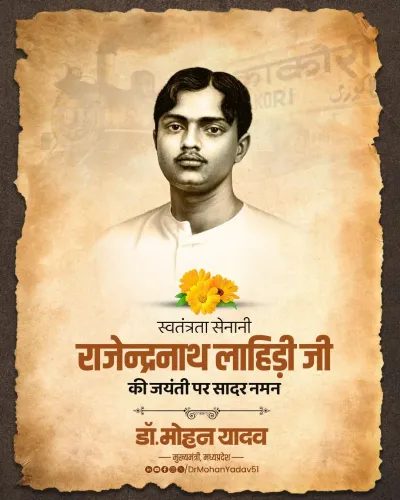
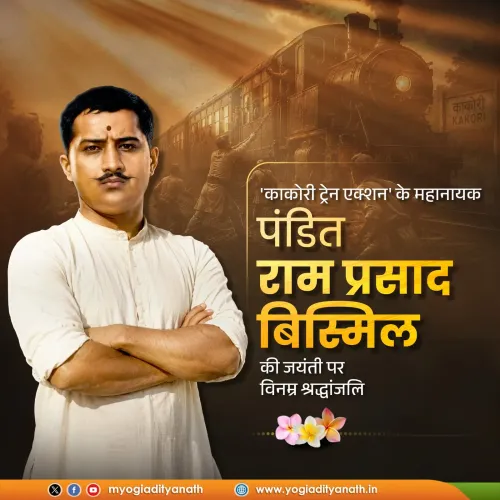
On the anniversary of the 1925 Kakori Train Action, Madhya Pradesh Chief Minister Dr. Mohan Yadav paid tribute to revolutionaries Ram Prasad Bismil and Ashfaqulla Khan, calling their courage and sacrifice an enduring source of national pride.
Key Takeaways
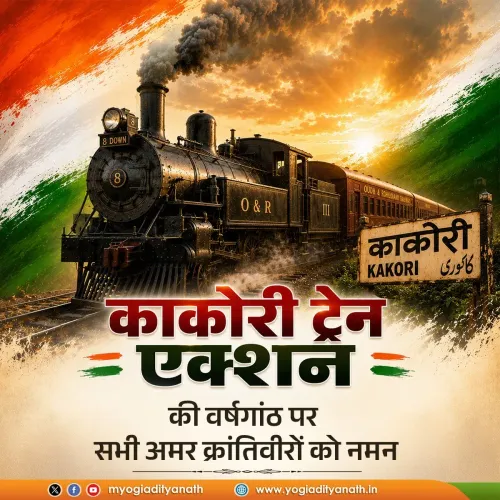
9 August 2026 marks the anniversary of the Kakori Train Action of 1925 , when HRA revolutionaries seized a British treasury train near Kakori, Uttar Pradesh.
MP Chief Minister Dr.
Mohan Yadav posted a Hindi tribute on X, saluting the 'immortal revolutionaries' for giving new energy to the anti-colonial struggle.
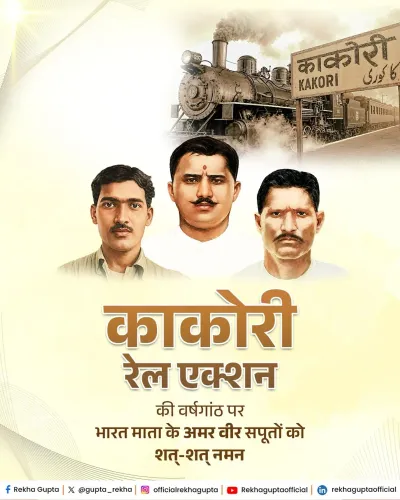
Key figures of the action, Ram Prasad Bismil and Ashfaqulla Khan , were executed by the British in 1927 following a high-profile trial.
The Hindustan Republican Association , founded in 1924 , organised the Kakori operation as part of a broader armed resistance strategy.
BJP leaders have consistently used Kakori's anniversary to underscore themes of revolutionary sacrifice and nationalism in public messaging.
A century after a handful of revolutionaries stopped a British treasury train and changed the course of India's freedom struggle, Madhya Pradesh Chief Minister Dr. Mohan Yadav paused on 9 August 2026 to salute the men who pulled it off — and the price they paid.
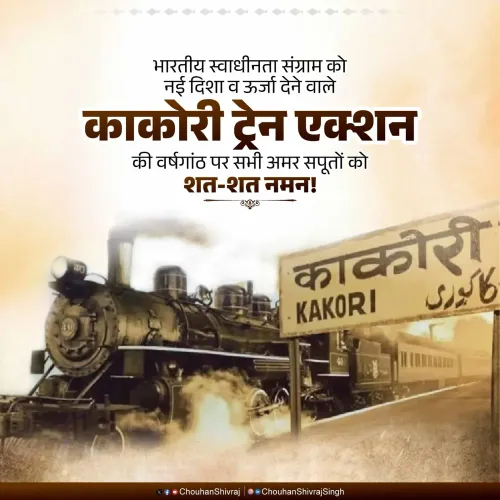
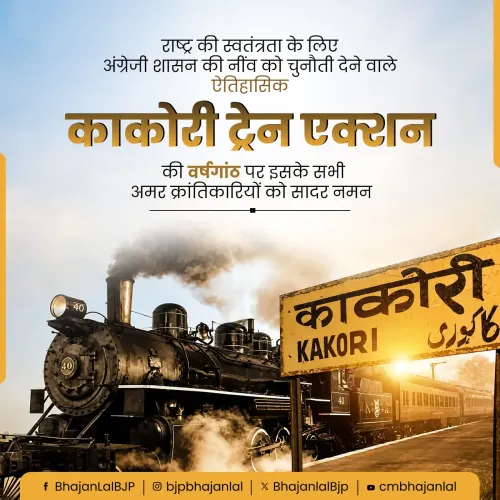
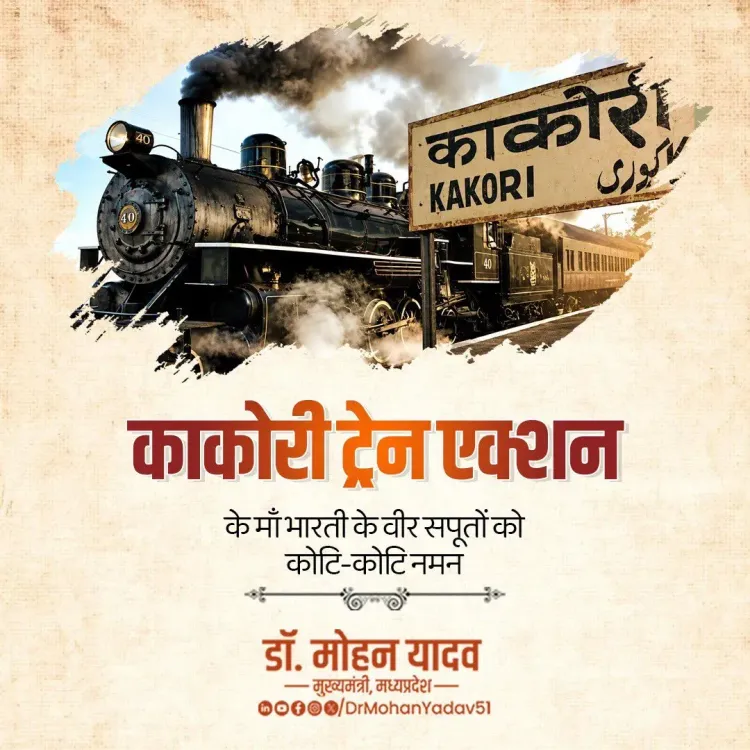
Posting in Hindi on the anniversary of the Kakori Train Action, Chief Minister Yadav wrote: 'काकोरी ट्रेन एक्शन स्वतंत्रता संग्राम का वह साहसिक अध्याय है, जब क्रांतिकारियों ने अंग्रेजी शासन के विरुद्ध संघर्ष को नई ऊर्जा दी।' ('The Kakori Train Action is that courageous chapter of the freedom struggle when revolutionaries gave new energy to the fight against British rule.') He added that the bravery, sacrifice, and patriotism of those heroes would remain a source of pride for every Indian, and offered his 'respectful salute to the immortal revolutionaries.'
What happened on the tracks near Kakori
On 9 August 1925, members of the Hindustan Republican Association (HRA) — formed just the previous year to channel revolutionary fervour into organised resistance — boarded the 8 Down Saharanpur-Lucknow passenger train near Kakori, Uttar Pradesh, and seized a British government cash chest. The operation was meticulously planned by Ram Prasad Bismil, the poet-revolutionary whose verse burned as bright as his politics, alongside Ashfaqulla Khan, his closest comrade across the communal divide. The British response was swift and ruthless: mass arrests, a high-profile trial, and, in 1927, the execution of Bismil and Khan. Their deaths did not silence the movement. They amplified it.The armed strand of India's independence story
The Kakori action occupies a particular place in how India remembers its freedom struggle — as proof that resistance was not only petitioned in legislative halls but also fought on dusty railway tracks. Indian political leaders across the spectrum mark this anniversary, but BJP figures have made it a consistent fixture in public messaging, drawing a direct line between revolutionary sacrifice and contemporary nationalism. For Dr. Yadav, a Chief Minister who regularly posts tributes to independence movement figures on key dates, the post fits a deliberate pattern of keeping that revolutionary memory in public view. The legacy of Bismil and Khan — a Hindu poet and a Muslim revolutionary, hanged together by a colonial power — also carries an implicit message about the composite character of India's freedom movement, one that transcends any single community or ideology. One hundred years on, the names carved at Kakori still demand to be read aloud.Point of View
Sacrificial strand of India's independence movement rather than solely to Gandhian non-violence. By invoking Bismil and Khan — figures who represent both revolutionary fervour and Hindu-Muslim solidarity in the freedom struggle — the post subtly stakes a claim to an inclusive patriotic heritage. For a Chief Minister of a large BJP-governed state, these anniversary posts serve a dual function: they signal ideological continuity and keep the party's nationalist credentials visible between major policy announcements. The Kakori centenary cycle, now in its second year of post-101st-anniversary observance, will likely see intensifying state-level commemoration as a durable political and cultural touchstone.
NationPress
9 Aug 2026
Frequently Asked Questions
What was the Kakori Train Action?
The Kakori Train Action was an armed operation on 9 August 1925 in which members of the Hindustan Republican Association stopped and looted a British government treasury train near Kakori in present-day Uttar Pradesh, aiming to fund revolutionary activities against colonial rule.
Who were the main revolutionaries involved in the Kakori case?
Ram Prasad Bismil and Ashfaqulla Khan were the most prominent leaders of the Kakori action. Both were subsequently arrested, tried, and executed by the British in 1927 .
Why did CM Mohan Yadav post about Kakori?
9 August is the anniversary of the 1925 Kakori Train Action. Chief Minister Dr. Mohan Yadav regularly marks anniversaries of key independence movement events on social media to pay tribute to freedom fighters.
What was the Hindustan Republican Association?
The Hindustan Republican Association (HRA) was a revolutionary organisation founded in 1924 to organise armed resistance against British colonial rule in India. It planned and executed the Kakori Train Action the following year.
When was Ashfaqulla Khan executed?
Ashfaqulla Khan was executed by the British in 1927 , following his conviction in the Kakori conspiracy case. His comrade Ram Prasad Bismil was also hanged the same year.