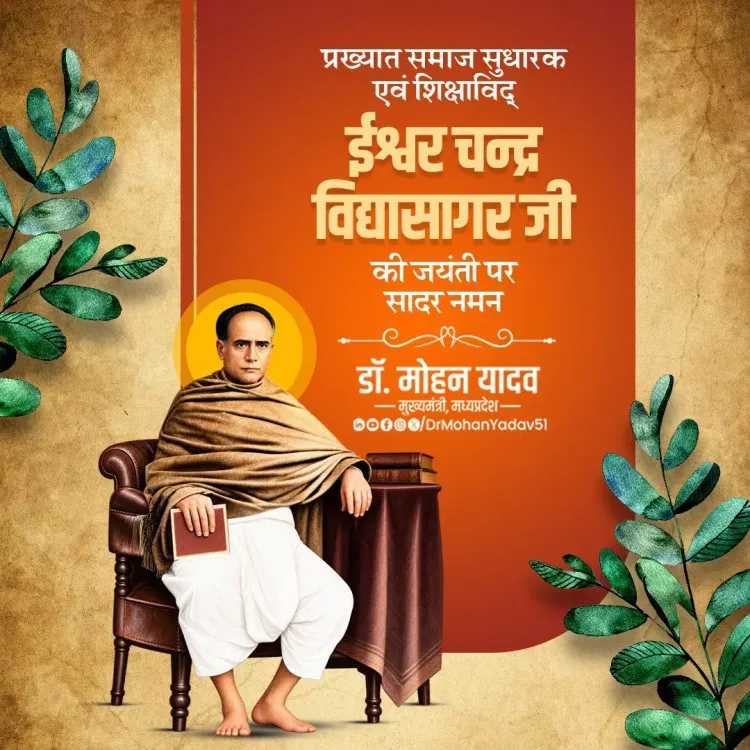
CM Mohan Yadav pays tribute to Ishwar Chandra Vidyasagar
Synopsis
Madhya Pradesh Chief Minister Dr. Mohan Yadav marked Ishwar Chandra Vidyasagar's birth anniversary on September 26, honouring the 19th-century reformer's pioneering work on widow remarriage, child marriage abolition, and girls' education as a lasting source of inspiration.
Key Takeaways
Mohan Yadav , Chief Minister of Madhya Pradesh, paid tribute to Ishwar Chandra Vidyasagar on his birth anniversary, September 26, 2026 .
Vidyasagar championed the Hindu Widows' Remarriage Act of 1856 , a landmark colonial-era legislation he campaigned hard to secure.
As principal of Sanskrit College, Calcutta , Vidyasagar opened its doors to non-Brahmin students, challenging entrenched caste barriers.
He co-founded the Bethune School , one of India's earliest institutions providing formal education to girls.
CM Yadav specifically highlighted Vidyasagar's contributions to women's empowerment and social reform , framing his legacy as an enduring inspiration.
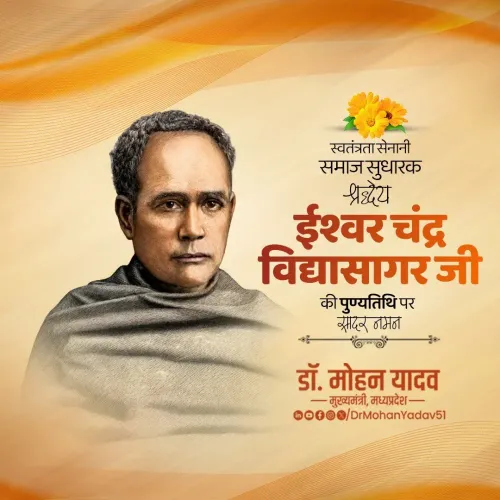
On the birth anniversary of one of the 19th century's most consequential social architects, Madhya Pradesh Chief Minister Dr. Mohan Yadav on Saturday, September 26, offered a respectful tribute to Ishwar Chandra Vidyasagar — the Bengali scholar whose lifelong battle against social orthodoxy changed the legal and educational landscape of colonial India.
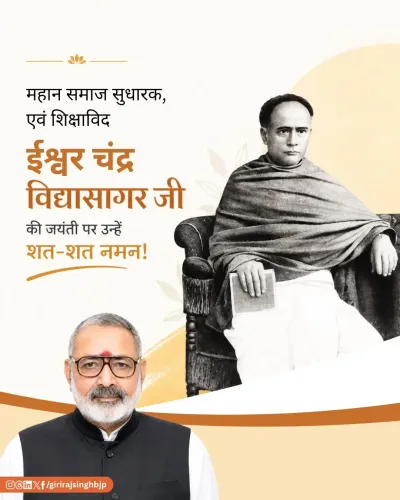
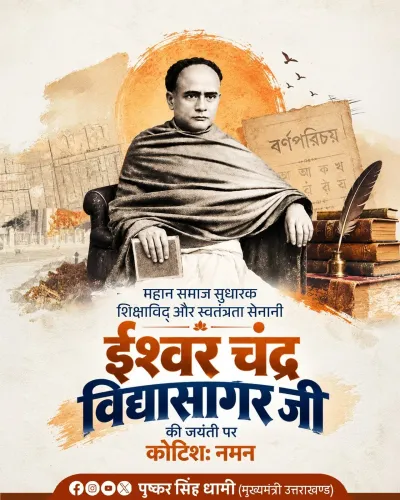
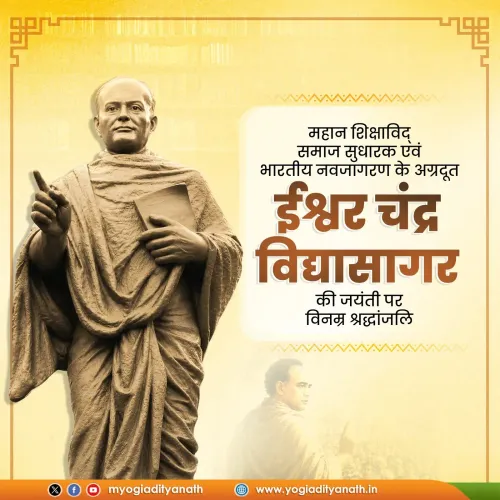
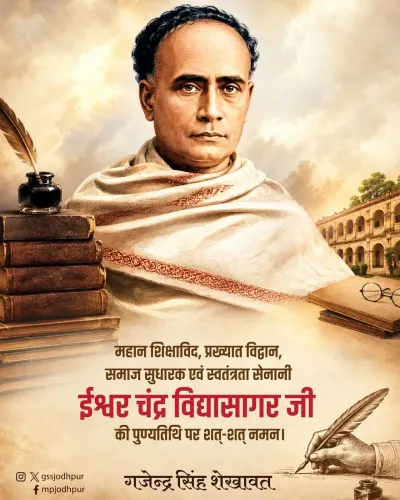
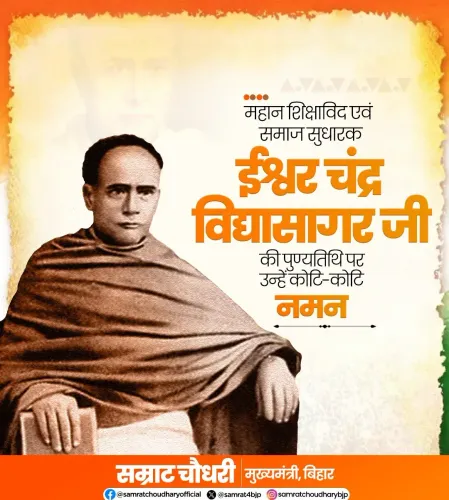
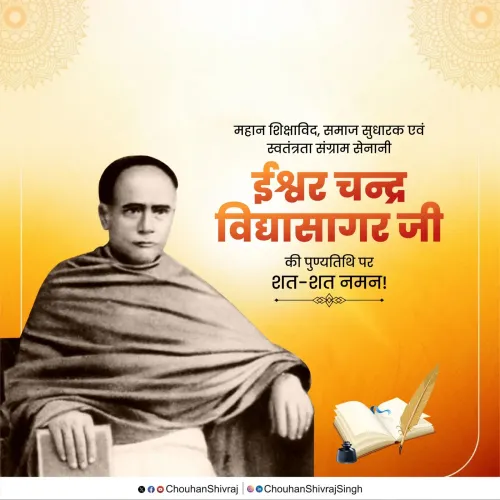
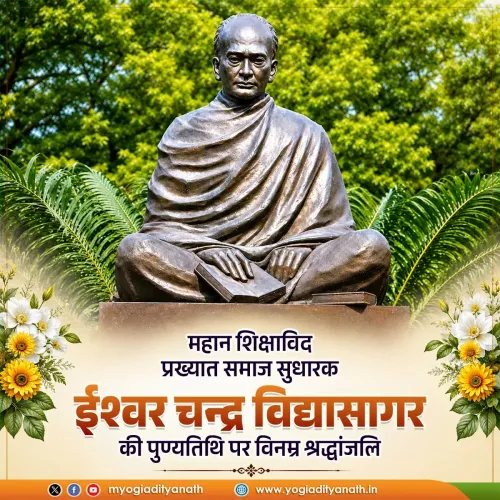
Posting in Hindi on X, the Chief Minister wrote: 'प्रख्यात समाज सुधारक, शिक्षाविद् एवं स्वतंत्रता सेनानी ईश्वर चंद्र विद्यासागर जी की जयंती पर सादर नमन करता हूं' ('I offer my respectful salutations on the birth anniversary of the eminent social reformer, educationist, and freedom fighter Ishwar Chandra Vidyasagar'). He called Vidyasagar's simple life, humanistic outlook, and dedication to society 'an eternal source of inspiration.'
The reformer who rewrote the rules for Indian women
Ishwar Chandra Vidyasagar — born in Bengal in the early 19th century — is remembered most sharply for two seismic interventions. His relentless campaign for widow remarriage culminated in the Hindu Widows' Remarriage Act of 1856, a legislative landmark that gave legal sanction to what orthodox society had long forbidden. He simultaneously fought to abolish child marriage, believing that the dignity of women could not be separated from the question of education.
As principal of Sanskrit College, Calcutta, Vidyasagar broke its gates open to non-Brahmin students — a quiet but revolutionary act inside an institution built on caste hierarchy. He also co-founded the Bethune School, one of the earliest institutions in India dedicated to formal education for girls. Across both battles — legal rights for widows and classrooms for girls — his method was the same: persistent, evidence-backed advocacy that ultimately moved colonial legislation.
Why political leaders across India mark this anniversary
Tributes to 19th-century reformers have become a consistent feature of Indian public life, with leaders across the political spectrum invoking figures like Vidyasagar to anchor contemporary messaging on education and gender equity. For a Chief Minister heading a state government, the invocation carries an implicit signal: that the values of women's empowerment and accessible education are part of the governing ethos, even when no new scheme or policy is attached to the tribute.
Dr. Yadav specifically cited Vidyasagar's contributions to women's empowerment and social reform — two policy areas that state governments across India frequently spotlight in budget allocations, education campaigns, and welfare schemes. The tribute, while ceremonial in form, lands against a backdrop in which girls' enrolment in schools and the legal status of women remain active governance conversations in Madhya Pradesh.
A man who once walked miles in worn sandals to serve the poorest families of Bengal still has something urgent to say to a country still building its social contract. That is precisely why anniversaries like this one refuse to stay ceremonial.
Point of View
Commemorating a Bengali reformer also underscores the party's aspiration to claim a pan-India reformist heritage. The real question is whether such ceremonial invocations translate into measurable state action on the education and gender-equity metrics where Madhya Pradesh still has ground to cover.
NationPress
26 Sept 2026
Frequently Asked Questions
Who was Ishwar Chandra Vidyasagar and why is he remembered?
Ishwar Chandra Vidyasagar was a 19th-century Bengali scholar, educationist, and social reformer best remembered for championing the Hindu Widows' Remarriage Act of 1856, opposing child marriage, and expanding girls' education through institutions like Bethune School.
When is Ishwar Chandra Vidyasagar's birth anniversary celebrated?
Ishwar Chandra Vidyasagar's birth anniversary falls on September 26, and is observed annually with tributes from political leaders, educational institutions, and cultural organisations across India.
What did CM Mohan Yadav say about Vidyasagar?
Madhya Pradesh Chief Minister Dr. Mohan Yadav described Vidyasagar as an eminent social reformer, educationist, and freedom fighter, noting his significant contributions to women's empowerment and social reform, and called his simple life and humanistic outlook an eternal inspiration.
What was the Hindu Widows' Remarriage Act of 1856?
The Hindu Widows' Remarriage Act of 1856 was a colonial-era law that legalised the remarriage of Hindu widows in India, largely achieved through Ishwar Chandra Vidyasagar's persistent advocacy against prevailing social orthodoxy.
What is Bethune School and what was Vidyasagar's role in it?
Bethune School in Calcutta was one of the earliest formal schools for girls in India. Vidyasagar was among its key founders, making it a cornerstone of his campaign to bring education to women who were largely excluded from formal learning in 19th-century India.