CM Sawant Pays Tribute to Father of Goan Nationalism
Synopsis
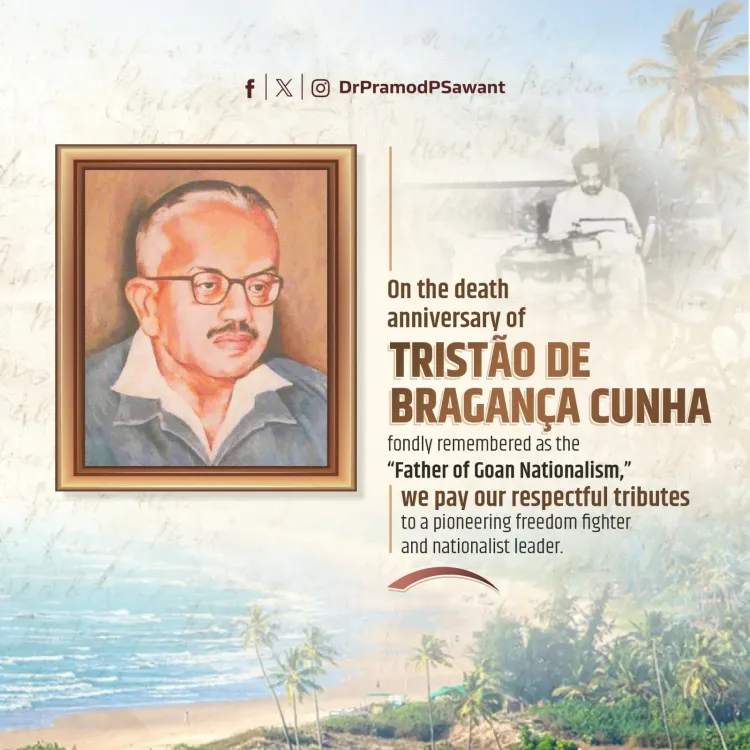
Goa Chief Minister Pramod Sawant marked the death anniversary of Tristão de Bragança Cunha, hailed as the Father of Goan Nationalism, honouring his resistance against Portuguese colonial rule and his role in awakening national consciousness among Goans.
Key Takeaways
Goa CM Pramod Sawant paid tribute to Tristão de Bragança Cunha on his death anniversary on September 26, 2026 .
Cunha is widely remembered as the 'Father of Goan Nationalism' for organising early resistance against Portuguese colonial rule .
Goa remained under Portuguese control until December 19, 1961 — fourteen years after Indian independence from British rule.
Annual state commemorations of Goan freedom fighters have been held regularly since 1961 to keep the region's distinct colonial history in public memory.
The next major commemoration is Goa Liberation Day on December 19 , marking the end of Portuguese rule.
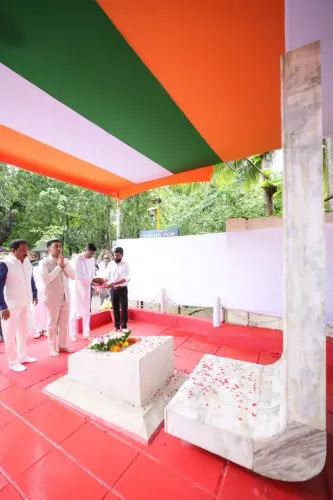
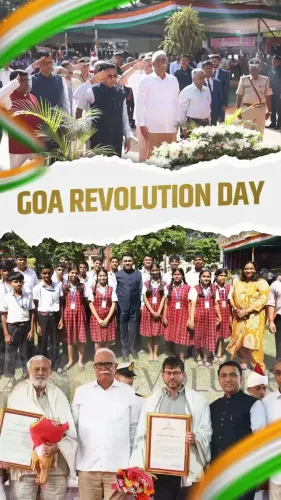
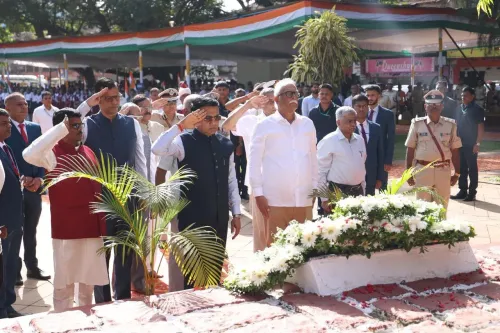
On the death anniversary of Tristão de Bragança Cunha — the man Goans call the 'Father of Goan Nationalism' — Goa Chief Minister Pramod Sawant on Saturday, September 26 offered the state's formal tribute to the pioneering freedom fighter whose defiance of Portuguese colonial rule helped ignite a liberation movement decades in the making.
Who was Tristão de Bragança Cunha?
Long before Goa's eventual liberation on December 19, 1961, Cunha was already organising resistance against nearly five centuries of Portuguese colonial presence on the Konkan coast. Born in Goa in the late nineteenth century, he devoted his adult life to building a national consciousness among Goans at a time when their struggle was largely invisible to the broader Indian independence movement. His work — agitating, organising, spending years in Portuguese prisons — earned him the enduring title that Chief Minister Sawant invoked on Saturday. CM Sawant wrote: 'His commitment to Goa's liberation and his efforts to awaken a spirit of national consciousness among Goans made a lasting contribution to Goa's freedom movement.'A distinct colonial legacy, an annual act of remembrance
Goa's colonial history sets it apart from the rest of India. While most of the subcontinent shook off British rule in 1947, Goa remained a Portuguese territory for another fourteen years, making its freedom fighters part of a separate — and sometimes overlooked — chapter of the national story. Annual state commemorations of figures like Cunha are Goa's deliberate way of keeping that chapter in public memory. For state leaders, these tributes serve a dual purpose: honouring a genuinely distinct regional freedom struggle while weaving it into the larger fabric of Indian nationalism. Cunha, in particular, represents the argument that Goan identity and Indian national identity were never in conflict — that demanding liberation from Lisbon was as patriotic an act as demanding it from London. The next major marker on the calendar is Liberation Day, December 19, when Goa marks the anniversary of the Indian military operation that ended Portuguese rule — a date that will bring fresh rounds of state commemoration and cultural events.Point of View
The BJP-led Goa government reinforces a narrative that folds Goan regional pride seamlessly into pan-Indian nationalism — a framing that has long-term electoral and cultural resonance. It also signals continued state investment in the annual Liberation Day commemorative cycle. For a party whose ideological core centres on unified national consciousness, Cunha's story — a Goan demanding to be Indian — is a near-perfect historical reference point.
NationPress
26 Sept 2026
Frequently Asked Questions
Who is Tristão de Bragança Cunha?
Tristão de Bragança Cunha was a Goan freedom fighter widely known as the 'Father of Goan Nationalism.' He spent decades organising resistance against Portuguese colonial rule in Goa and was imprisoned multiple times for his activism.
When was Goa liberated from Portuguese rule?
Goa was liberated on December 19, 1961, when Indian military forces ended nearly five centuries of Portuguese colonial presence. This date is now celebrated annually as Goa Liberation Day.
Why is Goa's freedom struggle considered distinct from the rest of India?
While most of India gained independence from British rule in 1947, Goa remained a Portuguese territory for another fourteen years, giving it a separate and distinct freedom movement with its own set of heroes, including Tristão de Bragança Cunha.
Who is Pramod Sawant?
Pramod Sawant is the Chief Minister of Goa and a leader of the Bharatiya Janata Party (BJP). He has served as Chief Minister since 2019.
When is Goa Liberation Day celebrated?
Goa Liberation Day is celebrated every year on December 19, marking the anniversary of the 1961 Indian military operation that ended Portuguese colonial rule over Goa.