CM Sawant Honours Father of Goan Nationalism at Azad Maidan
Synopsis
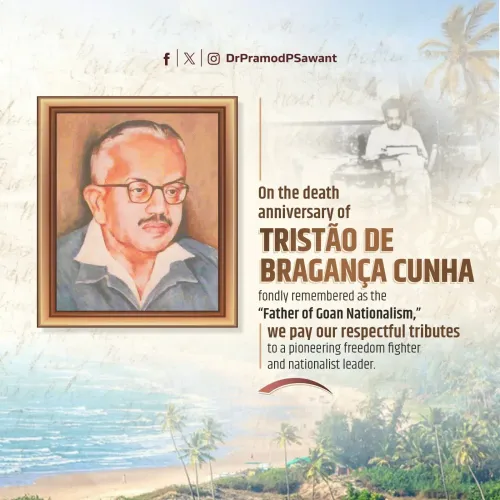
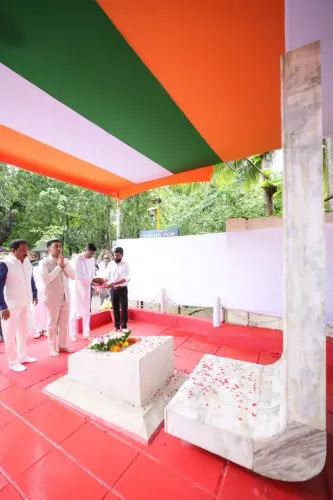
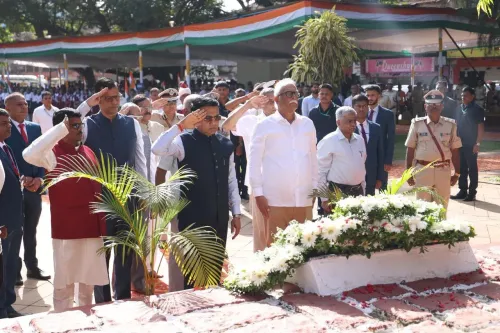
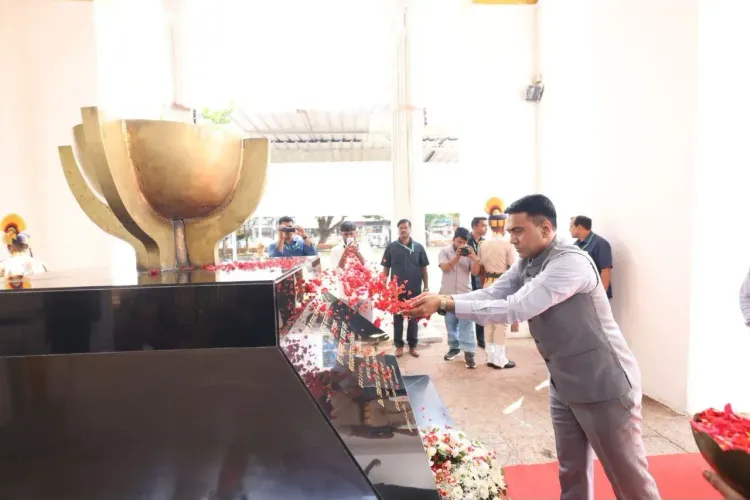
Goa CM Pramod Sawant paid tribute to Tristão de Bragança Cunha, the Father of Goan Nationalism, at Azad Maidan, Panaji on 26 September 2026, the 68th anniversary of the nationalist leader's death in 1958.
Key Takeaways
Goa CM Pramod Sawant attended the death anniversary tribute for Tristão de Bragança Cunha at Azad Maidan, Panaji on 26 September 2026 .
Tristão de Bragança Cunha , widely regarded as the Father of Goan Nationalism, died on 26 September 1958 — three years before Goa's liberation from Portuguese rule.
Cunha founded the Goa Congress Committee and led early resistance against Portuguese colonial authority despite repeated imprisonment.
Goa was liberated on 19 December 1961 , making its freedom struggle distinct from the rest of India's 1947 independence.
CM Sawant credited Cunha's legacy of 'courage, patriotism and love for Goa' as a continuing inspiration for generations of Goans.
Sixty-eight years after his death, Tristão de Bragança Cunha still draws the Chief Minister of Goa to Azad Maidan, Panaji, on a September morning. Goa Chief Minister Pramod Sawant paid heartfelt tributes to the 'Father of Goan Nationalism' on 26 September 2026, marking the death anniversary of the man whose decades of resistance against Portuguese colonial rule laid the moral groundwork for Goa's liberation.
The man behind the title
Tristão de Bragança Cunha founded the Goa Congress Committee and organised early, sustained resistance at a time when Goa's struggle was largely invisible to the rest of British India. He endured repeated imprisonment and exile, yet never wavered in demanding Goa's integration with India. He died on 26 September 1958 — three years before he could see the liberation he had spent his life working toward. When Indian forces ended Portuguese rule on 19 December 1961, his vision was finally realised, though he was not alive to witness it.
Why Goa's freedom story stands apart
Most of India's independence narrative ends in 1947. Goa's does not. The territory remained under Portuguese control for another fourteen years, giving it a distinct regional identity and a separate cast of heroes that the national mainstream has often overlooked. That gap is precisely why state-level commemorations like today's carry weight beyond ceremony: they anchor Goa's contribution to a broader national freedom story that rarely centres it. CM Sawant noted Cunha's 'unwavering commitment to Goan identity, dignity and liberation' — language that simultaneously honours the past and speaks to a living regional pride.
Azad Maidan as Goa's civic stage
Azad Maidan in Panaji is Goa's foremost public square for state commemorations, and Sawant has used it repeatedly for exactly this kind of civic remembrance. The choice of venue is itself a statement — an open, public setting rather than a government hall, signalling that the tribute belongs to Goan citizens as much as to the state administration. 'His legacy of courage, patriotism and love for Goa continues to inspire generations,' Sawant wrote, framing Cunha not as a figure frozen in history but as an active, living influence.
Point of View
Not 1947, its heroes occupy an awkward gap in mainstream Indian historiography, and annual commemorations like this one serve a corrective function. For CM Sawant, honouring Cunha also carries a subtle political logic: it grounds the ruling party in a distinctly Goan patriotism that transcends its mainland identity. Watch whether the state moves beyond annual tributes toward curriculum reforms or permanent memorials that embed Cunha more firmly in official Goan memory.
NationPress
26 Sept 2026
Frequently Asked Questions
Who is Tristão de Bragança Cunha?
Tristão de Bragança Cunha was a Goan nationalist leader widely regarded as the Father of Goan Nationalism. He founded the Goa Congress Committee and led resistance against Portuguese colonial rule, dying on 26 September 1958 before he could see Goa's liberation in 1961.
When did Tristão de Bragança Cunha die?
Tristão de Bragança Cunha died on 26 September 1958, three years before India militarily ended Portuguese rule over Goa on 19 December 1961.
Why is Goa's freedom struggle considered separate from India's 1947 independence?
While British India gained independence in 1947, Goa remained under Portuguese colonial control for another 14 years. It was only liberated on 19 December 1961 — now observed as Goa Liberation Day — giving the state a distinct freedom narrative and its own set of national heroes.
What is Azad Maidan in Panaji?
Azad Maidan is Goa's principal public square in the state capital Panaji, traditionally used for official state commemorations, civic gatherings, and tributes to historical figures.
Why did CM Pramod Sawant pay tribute at Azad Maidan on 26 September 2026?
CM Sawant attended the annual death anniversary tribute for Tristão de Bragança Cunha, honouring the Father of Goan Nationalism's contribution to Goa's freedom struggle and his legacy of regional identity and patriotism.