CM Mohan Yadav Pushes MP's 2029 Drug-Free Goal at Gotegaon Katha
Synopsis
Chief Minister Dr. Mohan Yadav addressed a Shrimad Bhagwat Katha in Gotegaon, Narsinghpur on 30 Oct 2026, confirming a liquor ban across 19 Madhya Pradesh religious towns and reaffirming the state's goal to become fully addiction-free by 2029.
Key Takeaways
Mohan Yadav , Chief Minister of Madhya Pradesh since December 2023, attended the Shrimad Bhagwat Katha in Gotegaon, Narsinghpur district on 30 October 2026 .
The Madhya Pradesh government has implemented a liquor prohibition in 19 religious towns across the state.
The state has set a target of becoming fully addiction-free by 2029 , and active efforts are ongoing toward that goal.
The announcement was made at a large religious gathering, framing the prohibition policy as a cultural and moral commitment.
Potential next steps include expansion of prohibition zones and rollout of supporting de-addiction schemes to meet the 2029 deadline.
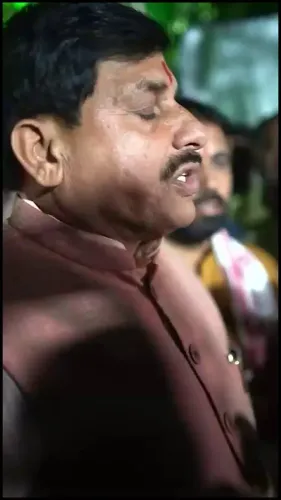
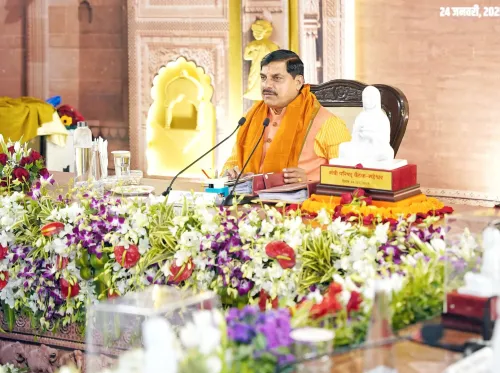
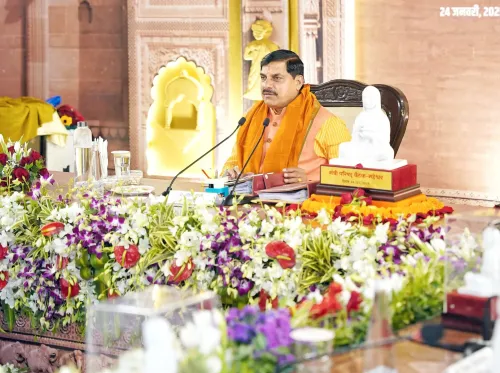
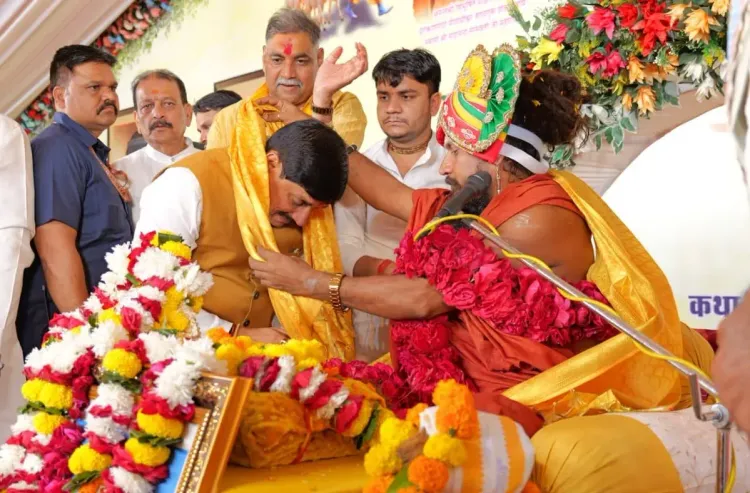
A grand Shrimad Bhagwat Katha in Gotegaon, Narsinghpur district, became a political pulpit on Friday, 30 October 2026 — Chief Minister Dr. Mohan Yadav used the religious gathering to restate his government's most ambitious social-reform commitment: a drug-free Madhya Pradesh by 2029.
Liquor Ban Across 19 Religious Towns
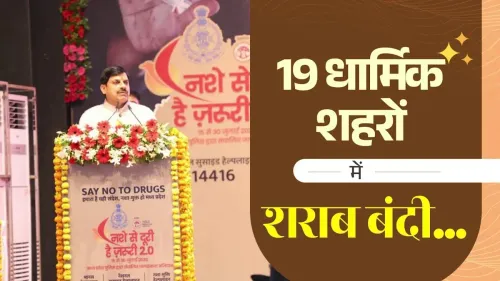
Standing before the congregation, Dr. Yadav announced that the state government has already enforced a liquor prohibition in 19 religious towns across Madhya Pradesh. The Chief Minister's Office shared the moment on X, quoting him: 'प्रदेश सरकार ने 19 धार्मिक नगरों में शराबबंदी लागू की है' — 'the state government has implemented a liquor ban in 19 religious towns.' The targeted approach ties alcohol prohibition directly to sites of cultural and spiritual significance, a deliberate policy signal to communities where such gatherings carry the deepest resonance.
The 2029 Addiction-Free Deadline
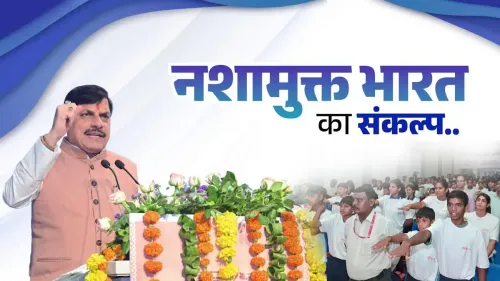
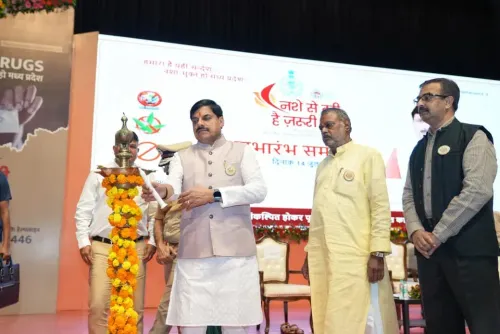
Beyond the existing ban, Dr. Yadav underlined that his administration is working continuously toward making the entire state addiction-free by 2029. The deadline is not new, but repeating it at a high-visibility religious event — and in front of an audience already primed by devotional sentiment — is a calculated reinforcement of intent. Madhya Pradesh's incremental prohibition strategy links public-health objectives with cultural identity, making the policy harder to roll back and easier to rally around.
Why Gotegaon, Why Now
The choice of a Shrimad Bhagwat Katha — a multi-day devotional recitation drawing large community audiences — as the venue for a governance announcement is anything but accidental. Narsinghpur district sits in central Madhya Pradesh, a region where agricultural communities and religious observance intersect closely. Embedding a prohibition message inside a devotional programme reaches families directly affected by addiction, and frames the policy as a moral compact rather than a bureaucratic mandate.
The next question the government will have to answer is concrete: what de-addiction infrastructure and enforcement mechanisms will bridge the gap between today's 19-town ban and a state-wide goal four years away. That answer is still outstanding.
Point of View
Verifiable first step, but the leap to a state-wide addiction-free status by 2029 will demand visible infrastructure — de-addiction centres, enforcement capacity, rehabilitation pipelines — that has yet to be fully detailed publicly. For opposition parties, the 2029 deadline is a hostage to fortune; for the ruling establishment, its visibility at gatherings like this one is half the political purpose. Whether the policy arc holds will depend less on the rhetoric and more on the quarterly numbers that religious audiences rarely see.
NationPress
30 Oct 2026
Frequently Asked Questions
Which 19 towns in Madhya Pradesh have a liquor ban?
The Madhya Pradesh government has implemented liquor prohibition in 19 religious towns across the state, as stated by Chief Minister Dr. Mohan Yadav. The exact list of all 19 towns has not been officially confirmed in this announcement.
What is Madhya Pradesh's 2029 drug-free target?
The Madhya Pradesh government has set a goal of making the entire state addiction-free by 2029, building on existing alcohol bans in religious towns and ongoing social reform measures.
Who is Chief Minister of Madhya Pradesh in 2026?
Dr. Mohan Yadav has been the Chief Minister of Madhya Pradesh since December 2023 and continues to lead the state government.
Where is Gotegaon and why was the Bhagwat Katha held there?
Gotegaon is a town in Narsinghpur district in central Madhya Pradesh. A grand Shrimad Bhagwat Katha was organised there, which Chief Minister Dr. Mohan Yadav attended on 30 October 2026.
What is Madhya Pradesh's policy on liquor prohibition?
Madhya Pradesh has adopted a targeted prohibition strategy, banning the sale of liquor in towns of religious and cultural significance, with a broader ambition to extend addiction-free policies across the entire state by 2029.