CM Naidu marks 3 years since release from Rajahmundry Jail
Synopsis
Andhra Pradesh Chief Minister N. Chandrababu Naidu has marked the third anniversary of his release from Rajahmundry Central Jail, recounting his 53-day detention in 2023 as a 'conspiracy' and expressing gratitude to millions of Telugu supporters across India and more than 60 countries.
Key Takeaways
Naidu was arrested in September 2023 at Nandyal without prior notice, in an alleged midnight operation by the Andhra Pradesh CID over a skill-development scheme.
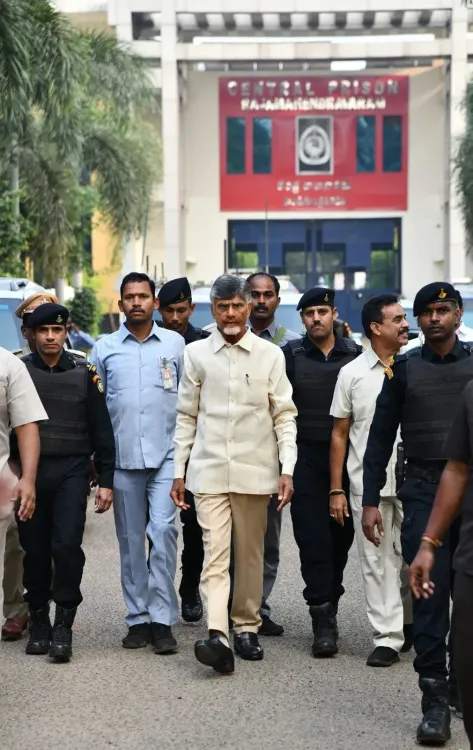
He was held at Rajahmundry Central Jail for 53 days before a court ordered his release, an event he now marks as a personal anniversary.
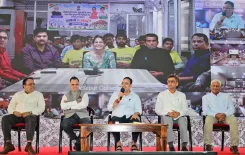
The 'CBN Gratitude' solidarity programme at Gachibowli Stadium , Hyderabad drew youth, software professionals and executives while Naidu remained in custody.
Telugu-speaking communities and democracy advocates in more than 60 countries publicly expressed solidarity, according to Naidu's post.
Naidu's wife, described as having always avoided politics, joined the public campaign during his detention.
He has reiterated his pledge to make the Telugu people ' Number 1 by 2047 ' on the strength of the support shown during his imprisonment.
Three years to the day, Andhra Pradesh Chief Minister N. Chandrababu Naidu stood before his memories and counted every one of them — the midnight knock in Nandyal, the 53 days behind the walls of Rajahmundry Central Jail, and the roar of a people who refused to let him disappear. On Saturday, 31 October 2026, he marked the third anniversary of his court-ordered release with a deeply personal message on X, directed not at his adversaries but at the millions who stood with him when the state machinery, he says, tried to break him.
The arrest that Naidu calls a conspiracy
In September 2023, the Andhra Pradesh CID arrested Naidu without prior notice at Nandyal — a midnight operation he describes as akrama nirbandham (unlawful detention). The case alleged irregularities in a skill-development programme run during his earlier tenure as Chief Minister. Naidu has consistently rejected the charges as politically motivated, framing the then-ruling government's move as a bid to silence the principal opposition voice in the state.
Writing now, as a Chief Minister himself, he calls those 53 days 'the most difficult of my four-and-a-half-decade political life.' The weight of that sentence lands harder knowing he spent the years before and after fighting for — and then reclaiming — the office he holds today.
Gachibowli, and the solidarity that crossed continents
The post's most vivid passage is reserved for the people. Naidu describes how youth, software professionals and corporate executives converged on Gachibowli Stadium in Hyderabad for the 'CBN Gratitude' programme — a spontaneous show of solidarity while he remained in custody. He writes that what moved him most was not party workers reporting for duty, but citizens who had 'always stayed away from politics' choosing, that one time, to walk out onto the street.
The solidarity was not confined to Andhra Pradesh or even India. Naidu notes that Telugu-speaking communities and democracy advocates in more than 60 countries publicly expressed support, staging protests against what he characterises as a conspiratorial arrest. 'From ordinary village women to global corporate CEOs, from farmers to software engineers, from students to the Telugu diaspora,' he writes — every section of society, he insists, responded.
A family that stepped out of the wings
One line in the post breaks from political register entirely. Naidu acknowledges that his wife — whom he describes as someone who 'has always kept her distance from politics' — joined the public campaign alongside his family members, appealing for truth to prevail. 'Nijam gelavaali' — 'Let the truth win' — was the message she carried to supporters. For a leader whose persona is built on spreadsheets and governance metrics, the public surfacing of that private support clearly carries lasting significance.
From gratitude to a pledge for 2047
Naidu closes not with grievance but with a vow. He reiterates his goal of making the Telugu people 'Number 1 by 2047' — a reference to the centenary of Indian independence — with the solidarity shown during his detention as the foundation for that ambition. 'Your trust and affection are my strength. Your future is my resolve,' he writes, addressing supporters directly.
Three years on from the day a court order opened those jail gates, Chandrababu Naidu is back in power, back at his desk, and making sure no one forgets either half of that sentence.
Point of View
He transforms a legal episode into a founding myth for his current administration. The '2047 vision' coda stitches the trauma of detention into a long-arc developmental promise, anchoring personal suffering to state ambition. Watch whether this anniversary framing intensifies as his government approaches its midterm, particularly if legal proceedings linked to the 2023 case are revived or resolved.
NationPress
31 Oct 2026
Frequently Asked Questions
Why was Chandrababu Naidu arrested in 2023?
The Andhra Pradesh CID arrested Naidu in September 2023 in a case alleging financial irregularities in a skill-development programme implemented during his earlier tenure as Chief Minister. Naidu and the TDP have consistently described the arrest as politically motivated.
How long was Chandrababu Naidu in Rajahmundry Jail?
Naidu was held at Rajahmundry Central Jail for 53 days before a court ordered his release. He has called this the most difficult period of his four-and-a-half-decade political career.
What was the CBN Gratitude programme at Gachibowli?
The CBN Gratitude programme was a public solidarity event held at Gachibowli Stadium in Hyderabad during Naidu's detention. It drew large numbers of youth, software professionals and supporters who rallied in his defence.
What is Chandrababu Naidu's 2047 vision for Telugu people?
Naidu has pledged to make the Telugu people 'Number 1 by 2047', the centenary of Indian independence, through governance reforms, technology investment and skill development — a goal he reiterated in this anniversary post.
How did the Telugu diaspora respond to Naidu's arrest?
According to Naidu's post, Telugu-speaking communities and democracy advocates in more than 60 countries staged public demonstrations of solidarity and protested against his detention during the 53-day period.