CM Chandrababu Reviews RTGS, Calls for Business Rule Reform

Synopsis
Chief Minister Chandrababu Naidu reviewed Andhra Pradesh's Real-Time Governance System on 25 May 2026, directing officials to amend business rules so procedural norms do not obstruct technology-enabled public service delivery. Chief Secretary Sai Prasad and senior departmental officers attended the meeting.
Key Takeaways
CM Naidu chaired a review of the Real-Time Governance System (RTGS) and field-level programme implementation on 25 May 2026 .
He stated that technology must make government services easier for citizens, and business rules that act as barriers must be amended.
Chief Secretary Sai Prasad and senior officers from multiple departments participated in the review.
The directive covers rule rationalisation across departments, not a single scheme or ministry.
Follow-up orders on specific business rule changes and RTGS-linked departmental progress reports are expected next.
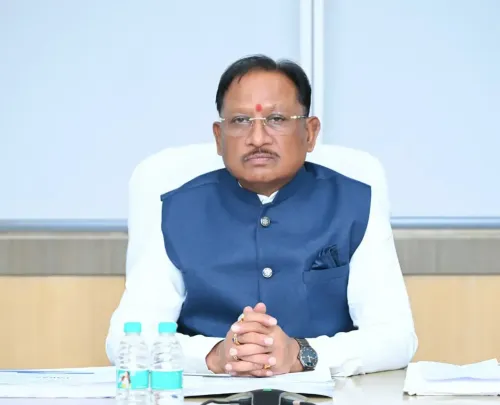
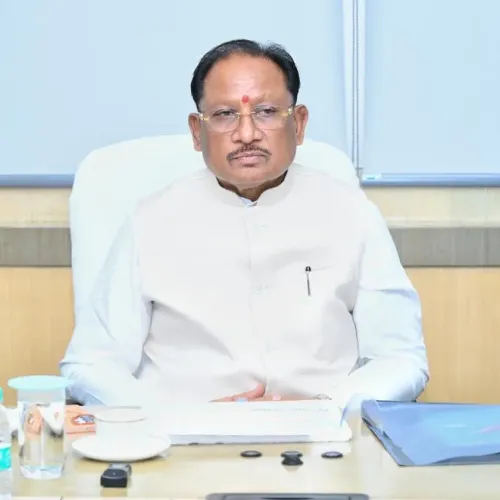
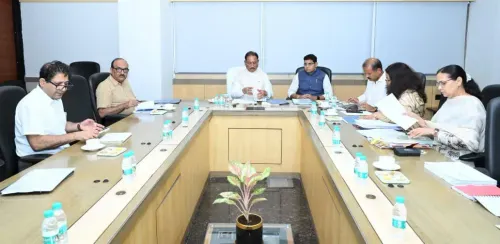
Chief Minister Nara Chandrababu Naidu on Monday, 25 May 2026 chaired a high-level review of the Real-Time Governance System (RTGS) and field-level implementation of various state department programmes, stressing that technology should simplify — not complicate — the delivery of public services to citizens.
Context
Speaking at the review meeting, CM Naidu said that now that technology has become widely accessible, government services must reach people with ease and procedural rules must not become obstacles. He directed officials to amend business rules wherever necessary to align with the technology-first delivery model the state is pursuing.
The meeting was attended by Chief Secretary Sai Prasad and senior officers from multiple state departments, who presented updates on ground-level execution of ongoing programmes.
Policy Backdrop
Andhra Pradesh's RTGS is a technology-enabled platform designed to give the state administration real-time visibility into the delivery of public services and the progress of schemes across departments. It is part of a broader digital governance architecture that Naidu has championed across his tenures as Chief Minister, dating back to the introduction of platforms such as e-Seva (electronic service delivery) in earlier years.
The current review reflects the state's consistent approach of coupling digital tools with periodic procedural updates — ensuring that back-end rules keep pace with front-end technology so that citizen-facing services are not held up by outdated administrative norms.
Stakeholders and Impact
The directive to revise business rules has direct implications for citizens seeking government services, businesses navigating state regulatory processes, and the departments responsible for executing welfare and development schemes at the field level. Smoother rule frameworks are expected to reduce discretionary delays and improve accountability in service delivery.
Senior officials from various departments participated in the review, signalling that the push for rule rationalisation spans the entire state machinery rather than being confined to a single ministry or portfolio.
What's Next
The immediate focus will be on follow-up orders specifying which business rules are to be amended and within what timeframe. Departments are expected to submit field-level progress reports linked to RTGS monitoring, allowing the Chief Minister's Office to track whether service delivery improvements materialise on the ground.
If implemented effectively, the rule amendments could set a template for other states looking to bridge the gap between digital infrastructure and the procedural frameworks that govern its use — reinforcing Andhra Pradesh's positioning as a laboratory for technology-led public administration in India.
Point of View
Creating bottlenecks that negate the efficiency gains technology promises. By explicitly directing rule amendments alongside a performance audit of RTGS, Naidu is signalling that hardware and software upgrades alone are insufficient — administrative law must be updated in parallel. This approach, if followed through with time-bound orders, could distinguish Andhra Pradesh's model from states that invest in platforms without reforming the rules that constrain them. The broader implication is a governance philosophy that treats regulation as a variable to be optimised, not a fixed constraint.
NationPress
10 Oct 2026
Frequently Asked Questions
What is the Real-Time Governance System (RTGS) in Andhra Pradesh?
RTGS is an Andhra Pradesh government platform that uses technology to monitor the delivery of public services and track the field-level progress of schemes across state departments in real time.
What did CM Chandrababu Naidu say about business rules on 25 May 2026?
CM Naidu said that since technology is now widely available, government services must reach citizens easily, and business rules that obstruct this must be amended to the extent necessary.
Who attended the RTGS review meeting chaired by CM Naidu?
Chief Secretary Sai Prasad and senior officers from various state government departments attended the review meeting.
How does Andhra Pradesh use technology for governance?
Andhra Pradesh has built platforms such as RTGS to give the administration real-time visibility into service delivery and scheme implementation, continuing a digital governance tradition that includes earlier initiatives like e-Seva.
What happens after the CM's directive to amend business rules?
Departments are expected to identify specific rules for amendment and submit field-level progress reports linked to RTGS monitoring so the Chief Minister's Office can verify on-ground improvements.