CM Chandrababu Naidu Directs Officials to Handle Petitions Humanely
Synopsis
Chief Minister Chandrababu Naidu directed Andhra Pradesh officials on 22 June 2026 to handle public petitions with a humane approach and build soft skills, conducting a multi-department performance review from the RTGS Centre at the state secretariat, attended by Chief Secretary Sai Prasad and DGP Harish Kumar Gupta.
Key Takeaways
CM Chandrababu Naidu held a departmental performance review on 22 June 2026 from the RTGS Centre inside the Andhra Pradesh state secretariat.
He directed officials to resolve citizens' petitions with a humane and sensitive approach .
The Chief Minister called on government employees and officers to develop soft skills in public interactions.
Chief Secretary Sai Prasad and DGP Harish Kumar Gupta attended the review alongside senior officials from multiple departments.
The review continues a pattern of real-time governance monitoring first institutionalised by Naidu during his 2014–2019 tenure.
Follow-up action on soft-skills training modules and public petition-disposal dashboards is expected from the administration.
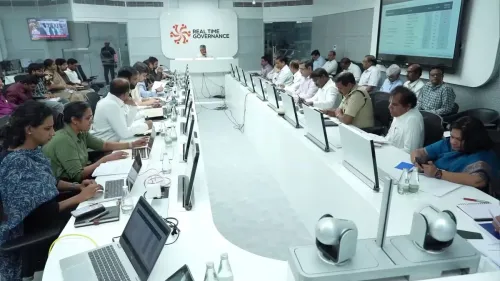
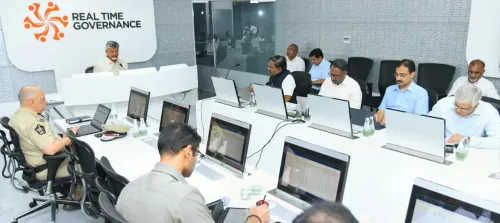
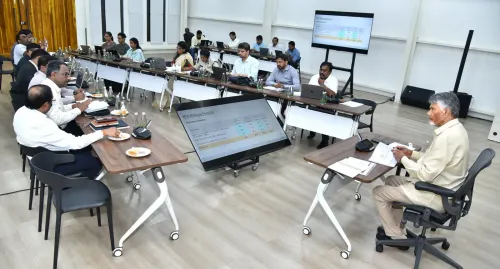
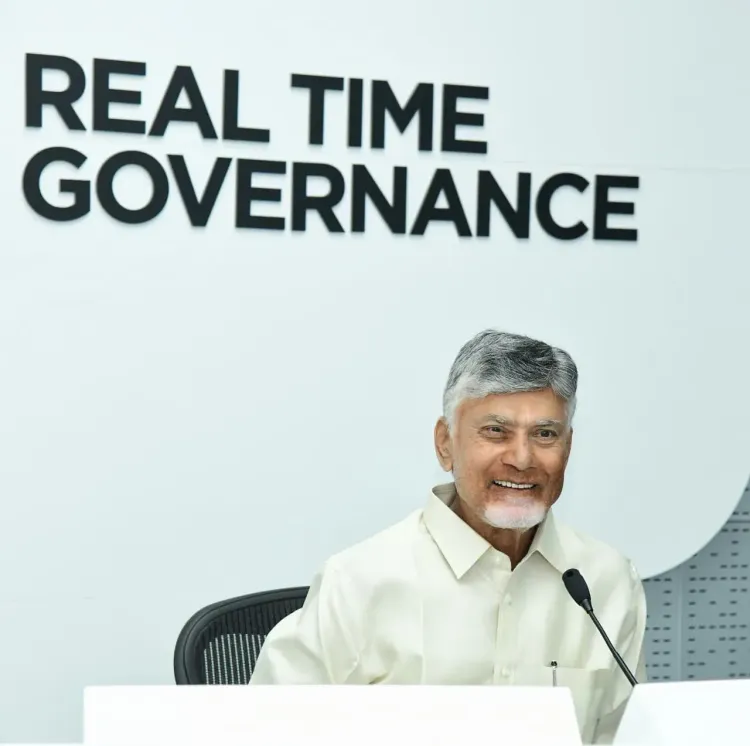
Chief Minister Nara Chandrababu Naidu of Andhra Pradesh on Monday, 22 June 2026 directed state officials to resolve public petitions with a humane approach, conducting a comprehensive departmental performance review from the RTGS Centre inside the state secretariat in Amaravati.
What the CM Said
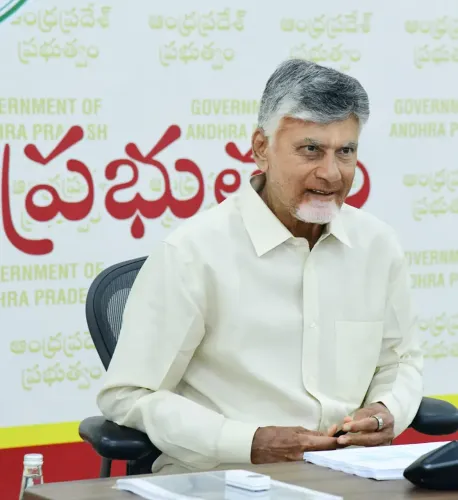
Addressing officials during the review meeting, CM Chandrababu Naidu stressed that petitions submitted by citizens must be handled with sensitivity and a human touch. He called on government employees and officers to develop and practise soft skills in their day-to-day dealings with the public. The directive signals a push to move bureaucratic culture beyond procedural compliance toward citizen-centric responsiveness.
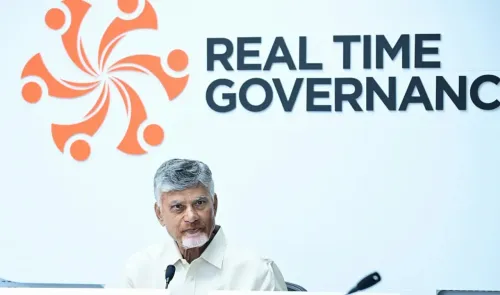
The Chief Minister's Office stated that Naidu reviewed the functioning of various departments from the RTGS Centre — a real-time governance monitoring facility housed within the state secretariat — underscoring his administration's preference for data-driven performance oversight.
Context
The review was attended by State Chief Secretary Sai Prasad and Director General of Police Harish Kumar Gupta, along with senior officials from multiple departments. The presence of both the top civil servant and the police chief indicates the review spanned law-and-order as well as general administrative functions.
The RTGS Centre has served as a nerve centre for departmental accountability under Naidu's governance model, enabling the Chief Minister to monitor real-time data on service delivery and grievance disposal without leaving the secretariat complex.
Policy Backdrop
This meeting is consistent with a governance philosophy Naidu first institutionalised during his earlier tenure from 2014 to 2019, when he established Real Time Governance mechanisms and e-Seva centres to track citizen grievance redressal across departments. Following the TDP-led coalition's return to power in 2024, the administration has renewed its focus on bureaucratic responsiveness and technology-enabled monitoring.
The emphasis on soft skills is a notable addition to this framework — acknowledging that technological systems alone cannot ensure dignified treatment of citizens at the point of service delivery. It reflects a broader recognition that Andhra Pradesh's administrative reform agenda must address human behaviour alongside process efficiency.
Stakeholders and Impact
The directive directly affects state government employees and officers across all departments who interact with citizens filing petitions and grievances. For ordinary residents of Andhra Pradesh — particularly those navigating bureaucratic processes for land records, welfare entitlements, or police matters — the instruction could translate into more respectful and timely resolution of their applications.
Civil society observers have long noted that the manner in which frontline officials handle petitions is as important as the outcome, and Naidu's explicit instruction on soft skills brings this dimension into formal administrative discourse.
What's Next
The immediate follow-up will be watched closely: whether the state government issues formal orders on soft-skills training modules for officials, and whether the RTGS Centre begins publishing public dashboards tracking petition disposal rates by department. CM Naidu's past tenures have seen such reviews translate into measurable accountability frameworks, and the administration is expected to formalise the directions given on 22 June 2026 into actionable guidelines for the bureaucracy.
Point of View
Back in power since 2024, is keen to differentiate itself on citizen experience, not just on infrastructure or technology metrics. By combining the RTGS Centre's data-monitoring apparatus with a behavioural mandate around soft skills, the Chief Minister is trying to close the gap between process reform and frontline service quality. The inclusion of the DGP in a review that is ostensibly about petition redressal also suggests the administration views law-and-order grievances as a critical subset of citizen satisfaction. Whether this translates into institutionalised training or remains a verbal directive will determine its long-term impact.
NationPress
21 Sept 2026
Frequently Asked Questions
What did CM Chandrababu Naidu say about public petitions on 22 June 2026?
CM Chandrababu Naidu directed Andhra Pradesh officials to resolve public petitions with a humane approach and instructed government employees to develop soft skills in their dealings with citizens.
What is the RTGS Centre in the Andhra Pradesh secretariat?
The RTGS Centre is a real-time governance monitoring facility inside the Andhra Pradesh state secretariat that allows the Chief Minister to review departmental performance and service delivery data.
Who attended the departmental review chaired by CM Naidu on 22 June 2026?
Chief Secretary Sai Prasad and Director General of Police Harish Kumar Gupta attended, along with senior officials from various state government departments.
What is Chandrababu Naidu's track record on e-governance in Andhra Pradesh?
During his 2014–2019 tenure, Naidu established Real Time Governance mechanisms and e-Seva centres to monitor citizen grievance redressal. After returning to power in 2024, his administration has revived this focus on technology-enabled accountability.
What soft skills training is expected for Andhra Pradesh government officials?
While CM Naidu has directed officials to develop soft skills for citizen interactions, specific training modules or formal orders have not yet been announced and are being watched as a follow-up to the 22 June review.