CM Chandrababu Seeks Central Push for AP Horticulture Fibre
Synopsis
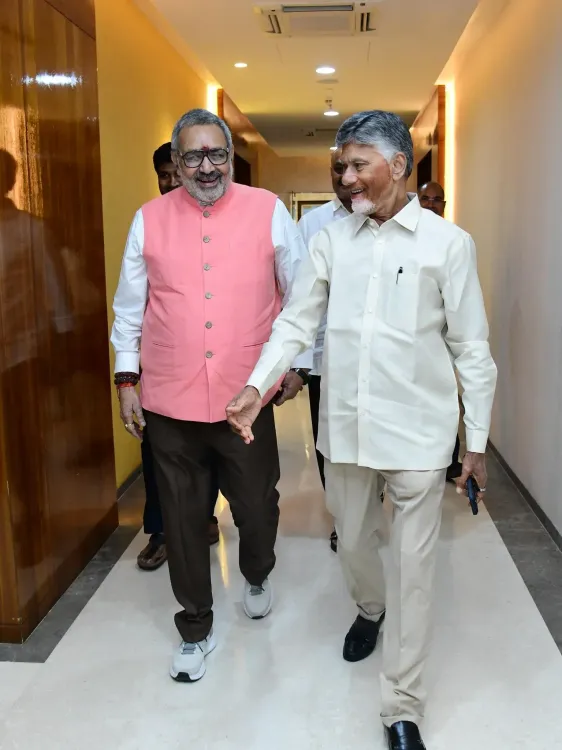
Chief Minister Chandrababu Naidu has urged Union Textiles Minister Giriraj Singh to support banana stem fibre extraction centres across six AP districts, mechanised coir processing in coastal districts, a PM MITRA Park at Kuppam, and a handloom museum at Amaravati, positioning agro-textile value chains as a rural employment driver.
Key Takeaways
CM Chandrababu Naidu submitted a formal report on horticulture-based fibre crops to Union Textiles Minister Giriraj Singh on 29 May 2026 .
Banana stem fibre extraction centres requested in Kadapa, Anantapur, Nandyal, West Godavari, Krishna, and East Godavari districts.
Cluster-based mechanical decorticator units sought for self-help groups through the state Horticulture Department.
Mechanised coir husk processing units and coir geo-textile industries sought for AP's coastal districts via the Coir Board–DWACRA network .
A PM MITRA Park at Kuppam proposed to leverage proximity to Tamil Nadu and Karnataka textile clusters.
Central support sought for a handloom and handicrafts museum at Amaravati .
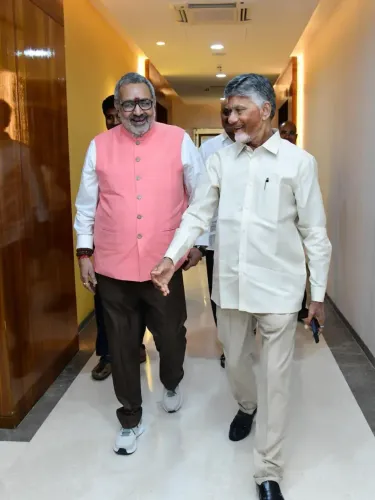
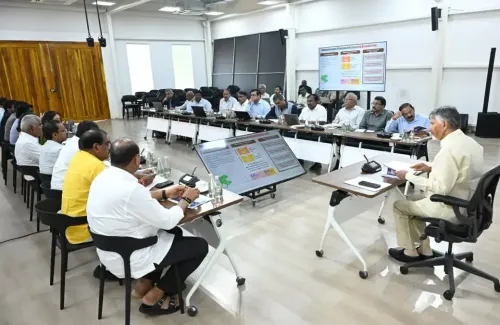
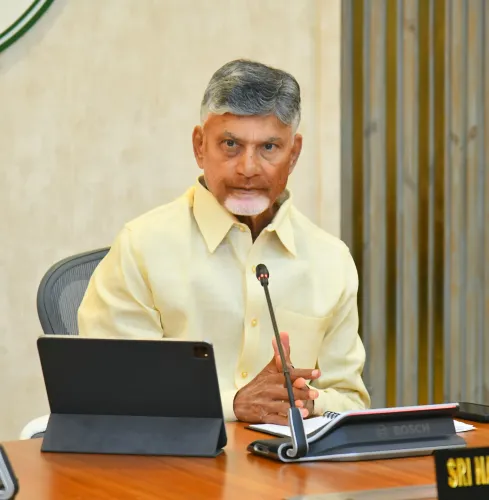
Chief Minister Nara Chandrababu Naidu of Andhra Pradesh has urged Union Textiles Minister Giriraj Singh to promote fibre produced from horticultural crops grown across the state, according to a post by the Chief Minister's Office of Andhra Pradesh on 29 May 2026. The CM submitted a detailed report on horticulture crops useful for fibre extraction and the textile industry, seeking central support to develop commercial-scale value addition.
Context
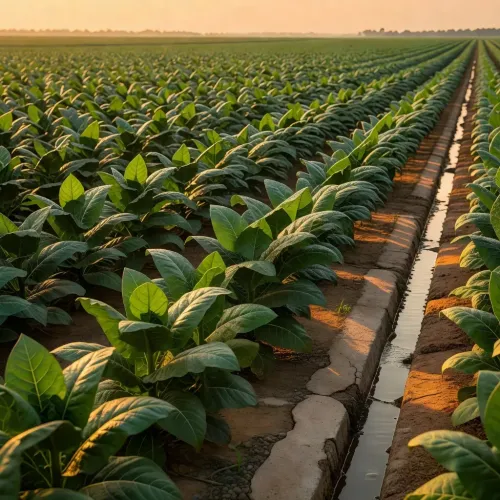
Andhra Pradesh's districts of Rayalaseema and Coastal Andhra produce significant quantities of fibre, yarn, and natural fibre from diverse horticultural crops. CM Naidu told the Union Minister that opportunities exist to add commercial value to this output, which currently lacks organised industrial processing infrastructure. The CM's office stated that a formal report on these opportunities was submitted directly to Giriraj Singh.
Among the most prominent requests was the establishment of banana stem fibre extraction centres in major banana-growing districts — Kadapa, Anantapur, Nandyal, West Godavari, Krishna, and East Godavari — as a post-harvest value-addition process. The CM also sought promotion of cluster-based mechanical decorticator units for self-help groups, to be coordinated through the state's Horticulture Department.
Policy Backdrop
The request fits within the broader national textile policy framework anchored by the PM MITRA (Mega Integrated Textile Region and Apparel) scheme, approved by the central cabinet in 2021 to establish integrated textile parks with state participation. CM Naidu specifically requested that a PM MITRA Park be set up at Kuppam, a town in Chittoor district that sits near textile clusters in Tamil Nadu and Karnataka, making it a strategically viable location for a multi-state textile hub.
For the coconut fibre sector, the CM sought Textiles Ministry support for setting up mechanised husk processing units and coir geo-textile industries in AP's coastal districts through the existing Coir Board–DWACRA network. The Coir Board, a statutory body under the Union Textiles Ministry, already runs processing and marketing programmes that could be extended to strengthen AP's coir industry.
Stakeholders and Impact
The proposals, if implemented, would directly benefit horticulture farmers and self-help groups across banana and coconut-growing belts who currently derive limited income from crop residues. Cluster-based mechanical decorticator units would allow rural women's groups to participate in fibre processing with reduced capital investment. Southern states have repeatedly sought central assistance for agro-textile value chains, and AP's outreach continues that pattern.
Beyond rural employment, the request for a handloom and handicrafts museum at Amaravati — the state's planned capital — signals an effort to anchor craft heritage infrastructure in the emerging city. This would complement the industrial fibre proposals with a cultural-economy dimension tied to the state's weaving traditions.
What's Next
The immediate focus will be on whether the Union Textiles Ministry includes banana fibre extraction centres or coconut husk processing units in upcoming Coir Board programmes or central textile budget allocations. The Kuppam PM MITRA Park proposal will require formal project submission and central approval before any site development can begin. CM Naidu's direct engagement with the Union Minister signals that Andhra Pradesh intends to press these requests at the highest level, positioning agro-textile value chains as a pillar of the state's rural industrial strategy.
Point of View
Coconut husks — into an industrial raw material base, reducing post-harvest waste while creating rural employment. The Kuppam PM MITRA proposal is particularly strategic: by citing proximity to Tamil Nadu and Karnataka clusters, the state frames itself as a regional textile hub rather than a standalone petitioner. Linking SHG clusters to mechanised fibre units also reflects a deliberate effort to route central textile schemes through AP's existing rural welfare infrastructure. The overall ask signals that AP under Naidu is pursuing a value-chain approach to agriculture rather than treating horticulture and textiles as separate policy silos.
NationPress
12 Oct 2026
Frequently Asked Questions
What did CM Chandrababu Naidu ask the Union Textiles Minister for?
CM Chandrababu Naidu asked Union Textiles Minister Giriraj Singh to support banana stem fibre extraction centres in six AP districts, mechanised coir processing units in coastal districts, a PM MITRA Park at Kuppam, cluster-based decorticator units for self-help groups, and a handloom museum at Amaravati.
What is the PM MITRA Park proposed for Kuppam?
PM MITRA stands for Mega Integrated Textile Region and Apparel. The central government approved the scheme in 2021 to set up large integrated textile manufacturing parks. CM Naidu has proposed Kuppam in Chittoor district as a site because it is close to textile clusters in Tamil Nadu and Karnataka.
Which districts in Andhra Pradesh are targeted for banana fibre extraction centres?
The CM's office identified Kadapa, Anantapur, Nandyal, West Godavari, Krishna, and East Godavari as the banana-growing districts where post-harvest banana stem fibre extraction centres are proposed.
How does the Coir Board fit into AP's coconut fibre plans?
The Coir Board is a statutory body under the Union Textiles Ministry that supports coir processing and marketing. CM Naidu sought its existing DWACRA network to set up mechanised husk processing units and coir geo-textile industries in AP's coastal districts.
What is the significance of a handloom museum at Amaravati?
CM Naidu requested central support for a handloom and handicrafts museum at Amaravati, the state's planned capital. It is intended to anchor craft heritage and promote AP's weaving traditions alongside the industrial fibre proposals.