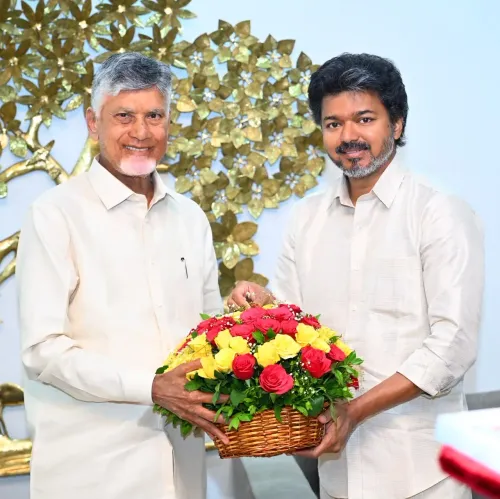
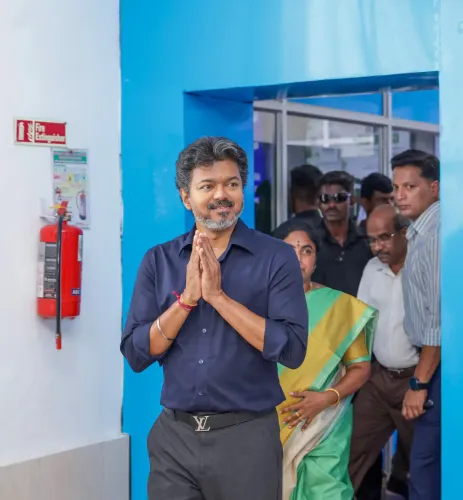
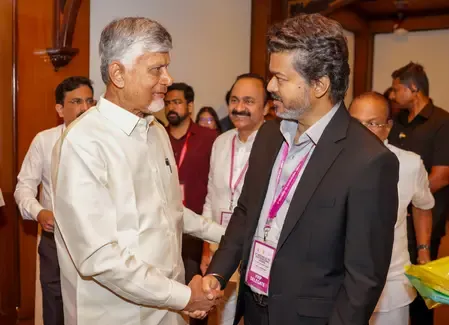
CM Naidu, Tamil Nadu CM meet in Vijayawada on water sharing
Synopsis
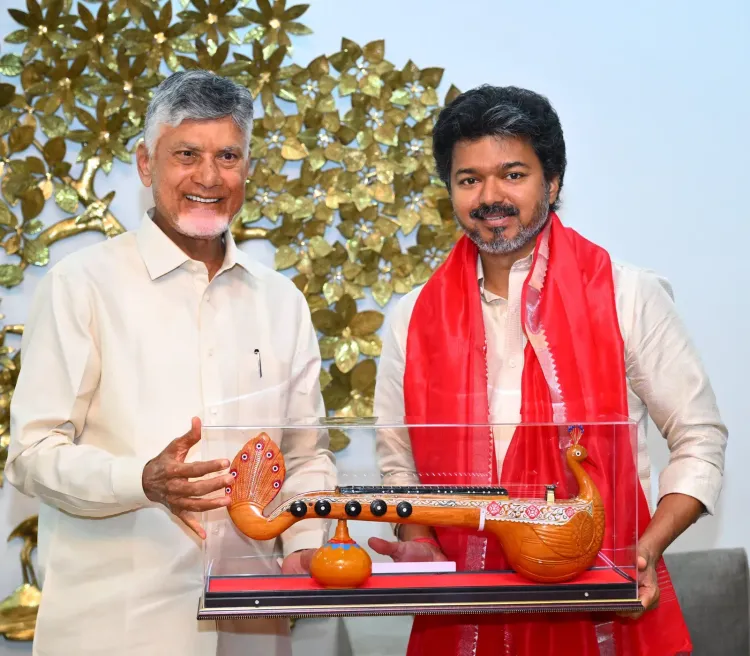
AP CM N. Chandrababu Naidu hosted Tamil Nadu CM C. Joseph Vijay in Vijayawada on October 13, 2026, discussing the Telugu Ganga Project — under which 4.08 TMC has been released to Chennai this year — and advancing the Godavari–Cauvery river interlinking initiative as a lasting solution to South India's water scarcity.
Key Takeaways
Andhra Pradesh has released 4.08 TMC of water to Chennai in 2026 under the Telugu Ganga Project .
Chandrababu Naidu and Tamil Nadu CM C.
Joseph Vijay met in Vijayawada on October 13, 2026 for bilateral water-sharing talks.
The two leaders discussed the Godavari–Cauvery river interlinking project , a component of India's National River Linking Project approved in principle in 2002 .
Naidu stressed the need for Union Government support alongside inter-state coordination to advance the river-linking initiative.
The Telugu Ganga Project was conceived in the 1970s–80s to transfer Krishna basin water from Andhra Pradesh to meet Chennai's drinking water needs.
Both CMs framed water as an instrument of shared prosperity for farmers across South India rather than a source of conflict.
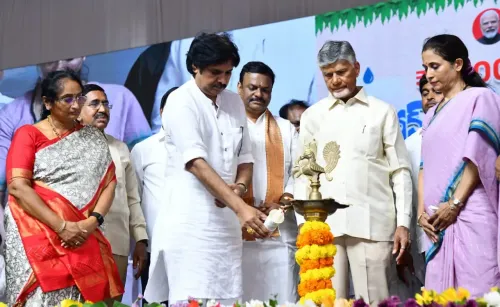
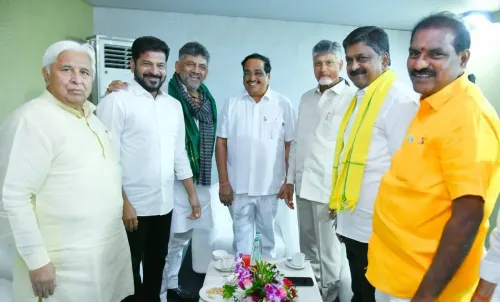
Water — a resource that has sparked disputes across South India for decades — became the centrepiece of diplomacy in Vijayawada on Tuesday, October 13, 2026, as Andhra Pradesh Chief Minister N. Chandrababu Naidu welcomed Tamil Nadu Chief Minister C. Joseph Vijay for high-level talks on inter-state water cooperation and a transformative river-linking ambition that could reshape agriculture across the peninsula.
4.08 TMC already flowing to Chennai
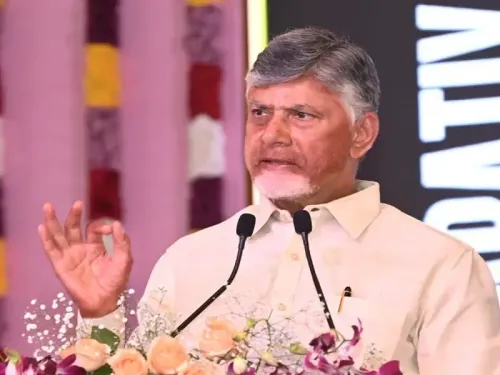
The immediate deliverable on the table was concrete: Andhra Pradesh has already released 4.08 TMC (thousand million cubic feet) of water to Chennai this year under the Telugu Ganga Project. Conceived in the 1970s and formalised through 1980s agreements between the two states, the project was designed to divert Krishna basin water from Andhra Pradesh to meet Chennai's chronic drinking-water deficit. That this transfer has continued despite Andhra Pradesh facing its own water constraints signals a deliberate political choice — one Naidu framed in plain terms: 'Water should be a source of cooperation, not conflict.'
The Godavari–Cauvery link: from blueprint to bilateral agenda
Beyond the immediate relief of Telugu Ganga releases, the two leaders discussed the far larger ambition: the Godavari–Cauvery river interlinking project, a proposed component of India's National River Linking Project that would carry surplus Godavari basin water southward to the Cauvery basin. The Union Government gave the broader river-linking programme in-principle approval in 2002, and technical studies on peninsular links — including this corridor — have continued across successive governments since then.
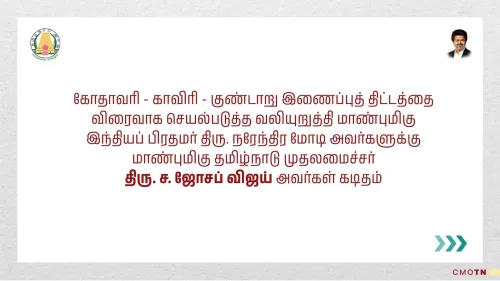
Naidu called the project a 'lasting solution to water scarcity' with the potential to 'transform agriculture and bring prosperity to lakhs of farmers across South India.' The pitch was explicitly directed at the Union Government, whose support he identified as essential alongside state coordination for the project to move from detailed project reports to groundbreaking.
Why this meeting matters beyond the handshake
Inter-state water politics in southern India has historically oscillated between tribunal battles and cooperative agreements brokered under central pressure. The sight of two chief ministers — from states that have occasionally been on opposing sides of water-sharing rows — framing a shared, proactive agenda is itself a signal. It shifts the conversation away from scarcity-as-grievance toward scarcity-as-engineering-problem, which is precisely the logic underpinning the National River Linking Project's peninsular components.
For Chennai's residents, the 4.08 TMC release is immediate and tangible. For South Indian farmers — in both states — the Godavari–Cauvery corridor, if it advances, promises a structural end to dependence on monsoon variability. The next test will be whether this bilateral momentum translates into a joint representation to the Union Ministry of Jal Shakti for accelerated technical clearances.
Naidu closed his post with a line that doubles as a governing philosophy and a political dare to all remaining sceptics: 'Together, we can turn shared water resources into shared prosperity.'
Point of View
Publicly quantifying the 4.08 TMC release serves a dual purpose — demonstrating Andhra Pradesh's goodwill while positioning the state as a responsible upstream partner deserving reciprocal central support for its own irrigation ambitions. The Godavari–Cauvery framing also elevates what could be a routine bilateral visit into a statement of federal-level intent, essentially inviting the Ministry of Jal Shakti into the conversation. Whether this diplomatic momentum converts into joint technical submissions will be the real measure of the meeting's significance.
NationPress
13 Oct 2026
Frequently Asked Questions
What is the Telugu Ganga Project and how does it help Chennai?
The Telugu Ganga Project is an inter-state water transfer scheme formalised through 1980s agreements between Andhra Pradesh and Tamil Nadu to divert Krishna basin water from Andhra Pradesh to meet Chennai's drinking water requirements. Andhra Pradesh has released 4.08 TMC of water to Chennai under this arrangement in 2026.
What is the Godavari–Cauvery river interlinking project?
The Godavari–Cauvery river interlinking project is a proposed component of India's National River Linking Project that would transfer surplus Godavari basin water southward to the Cauvery basin for irrigation and drinking water. The broader river-linking programme received in-principle Union Government approval in 2002, with technical studies on peninsular links continuing since.
Why did Tamil Nadu CM visit Vijayawada on October 13, 2026?
Tamil Nadu Chief Minister C. Joseph Vijay visited Vijayawada on October 13, 2026 to hold bilateral talks with Andhra Pradesh Chief Minister N. Chandrababu Naidu on issues of mutual interest, primarily Chennai's drinking water supply through the Telugu Ganga Project and the Godavari–Cauvery river interlinking initiative.
How much water has Andhra Pradesh released to Tamil Nadu in 2026?
Andhra Pradesh has released 4.08 TMC (thousand million cubic feet) of water to Chennai in 2026 under the Telugu Ganga Project, according to Chief Minister Naidu's statement.
What is India's National River Linking Project?
India's National River Linking Project is a large-scale engineering initiative to connect the country's major rivers through canals and reservoirs to transfer water from surplus to deficit regions. It received in-principle approval from the Union Government in 2002, with peninsular links including the Godavari–Cauvery corridor studied in the years since.