CM Dhami Pushes World-Class Infrastructure for Haridwar Kumbh 2027

Synopsis
Uttarakhand CM Pushkar Singh Dhami has declared that the BJP's double-engine government is connecting Haridwar with world-class facilities ahead of Kumbh 2027, promising a divine, grand, and safe experience for millions of pilgrims.
Key Takeaways
CM Pushkar Singh Dhami announced on 13 October 2026 that infrastructure work for Haridwar Kumbh 2027 is underway.
The stated goal is a 'divine and grand' event with world-class, future-ready facilities for pilgrims.
The 'double-engine government' framing signals coordination between the Uttarakhand state government and the Modi -led central government for funding and execution.
Key focus areas include pilgrim safety, smooth access, and organised crowd management at Haridwar .
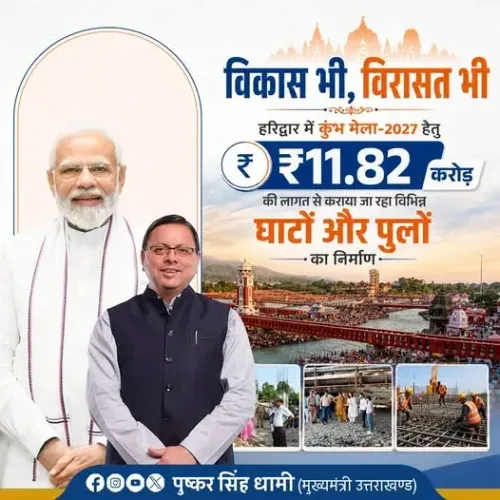
Specific project costs, timelines, and budget allocations have not yet been made public.
A well-managed Kumbh 2027 carries major economic upside for Uttarakhand 's pilgrimage and tourism sector.
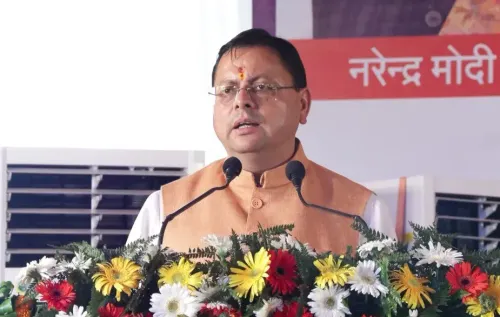
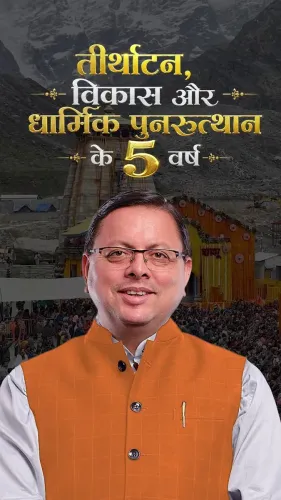
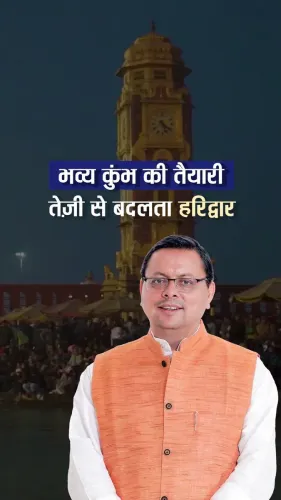
With Haridwar Kumbh 2027 on the horizon, Uttarakhand Chief Minister Pushkar Singh Dhami has signalled that the state's 'double-engine government' — aligned with Prime Minister Narendra Modi at the centre — is actively upgrading the sacred city's infrastructure to deliver a pilgrimage experience that is, in his words, seamless, safe, and well-organised.
Posting on Tuesday, 13 October 2026, CM Dhami wrote: 'Aadaraniya Pradhanmantri Shri Narendra Modi ji ke kushal netritva mein hamari double engine sarkar Haridwar Kumbh-2027 ko divya-bhavya swaroop pradaan karne ke saath hi bhavishy ki avashyaktaon ke anurup kshetra ko vishwa-stariya suvidhaon se jod rahi hai' — ('Under the able leadership of respected Prime Minister Shri Narendra Modi, our double-engine government is giving Haridwar Kumbh-2027 a divine and grand form, while simultaneously connecting the region with world-class facilities suited to future needs, so that devotees can have a smooth, safe and well-organised experience.')
Haridwar's Scale — and Why Infrastructure Is the Real Challenge
Haridwar, one of Hinduism's holiest cities, sits on the banks of the Ganga in Uttarakhand and serves as the gateway to the Char Dham pilgrimage circuit. The Kumbh Mela held here draws tens of millions of devotees, making crowd management, sanitation, transport connectivity, and emergency response among the most demanding logistical challenges any state administration faces. Past editions required sweeping temporary infrastructure — pontoon bridges, tent cities, water treatment — layered over whatever permanent base the city already had.
The 'world-class facilities' language from Dhami points to a now-familiar BJP governance signature: framing pilgrimage infrastructure as both religious service and development opportunity. Central and state governments have coordinated on sanitation, transport and crowd-control systems for Haridwar's Kumbh and Ardh Kumbh events going back over a decade, each iteration attempting to raise the baseline permanently rather than just erect temporary scaffolding.
The 'Double Engine' Frame and What It Signals
The phrase 'double engine sarkar' — a BJP formulation meaning aligned BJP governments at both the state and centre — is doing real policy work here, not just rhetorical work. It signals that Uttarakhand intends to leverage central ministry funding and coordination, not just state budgets, for Kumbh 2027 preparations. Successive BJP administrations have applied this model across Kumbh locations in Uttar Pradesh, Madhya Pradesh, and Uttarakhand, emphasising technology-enabled crowd control and improved road and rail connectivity.
What the government has yet to detail publicly is the specific portfolio of projects — their costs, timelines, and the division of central versus state funding. Budget allocations and joint review meetings between Uttarakhand and central ministries will be the real measure of how the stated ambition translates into concrete preparation.
Pilgrims, Tourism, and the Stakes for Uttarakhand
For the Uttarakhand economy, a well-executed Kumbh 2027 carries significant upside. Pilgrim footfall generates revenue for local hospitality, transport and trade across the region. A smooth event also burnishes the state's reputation as a managed pilgrimage destination — directly relevant to the broader Char Dham and Rishikesh tourism corridor. Any infrastructure shortfall, conversely, tends to generate national headlines that linger beyond the event itself.
The clock is now firmly ticking: with just over a year before the 2027 gathering, the pace of ground-level execution will say more than any post.
Point of View
Haridwar 2027 becomes a prestige project that Uttarakhand cannot afford to underdeliver on. The absence of specific project announcements so far means this post marks the beginning of a communication campaign, not the end of a policy announcement.
NationPress
13 Oct 2026
Frequently Asked Questions
When is Haridwar Kumbh 2027?
Haridwar Kumbh 2027 is the upcoming major Kumbh Mela scheduled to be held in Haridwar, Uttarakhand. Exact dates for the event's key bathing festivals have not been officially confirmed in public records as of October 2026.
What infrastructure is being built for Haridwar Kumbh 2027?
Uttarakhand CM Pushkar Singh Dhami has stated the government is connecting Haridwar with world-class, future-ready facilities. Specific project details, costs, and timelines have not yet been publicly announced.
What does 'double engine government' mean in the context of Kumbh 2027?
'Double engine government' is a BJP phrase referring to aligned BJP governments at both the state (Uttarakhand) and central (Modi government) levels, enabling coordinated funding and policy execution for major projects like Kumbh 2027 infrastructure.
Who is responsible for Haridwar Kumbh 2027 preparations?
The Uttarakhand state government, led by Chief Minister Pushkar Singh Dhami, is responsible for preparations, with coordination and funding support expected from the central government under Prime Minister Narendra Modi.
Why is Haridwar Kumbh important for Uttarakhand?
Haridwar Kumbh draws tens of millions of pilgrims, making it one of the world's largest religious gatherings. It is a major economic driver for Uttarakhand through pilgrim spending on hospitality, transport, and local trade, and shapes the state's broader reputation as a pilgrimage destination.