CM Nayab Saini Dedicates ₹337 Cr Projects to Narayangarh

Synopsis
Haryana CM Nayab Singh Saini on 1 July 2026 dedicated seven health projects worth ₹114 crore to Narayangarh and 325 Amrit Sarovars costing ₹223 crore to the state, marking a combined infrastructure outlay of ₹337 crore in health and water conservation.
Key Takeaways
Haryana CM Nayab Singh Saini dedicated 7 health projects worth ₹114 crore to residents of Narayangarh, Ambala district on 1 July 2026 .
325 Amrit Sarovars built at a cost of ₹223 crore were simultaneously handed over to the people of Haryana.
The combined infrastructure outlay across both announcements stands at ₹337 crore .
Mission Amrit Sarovar , launched in April 2022 , mandates at least 75 water bodies per district nationwide.
The health projects are part of Haryana's accelerated programme to upgrade facilities in aspirational blocks, including Narayangarh .
Utilisation of the new health facilities and the next quarterly Amrit Sarovar progress review will be key indicators of on-ground impact.
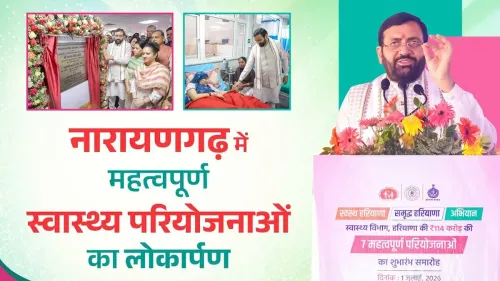
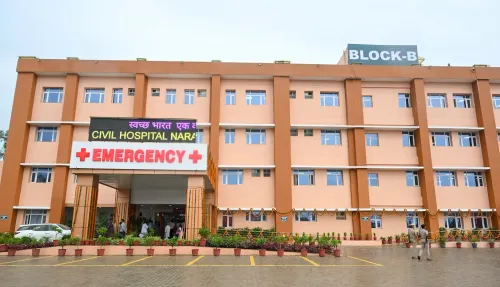
Haryana Chief Minister Nayab Singh Saini on Wednesday, 1 July 2026, dedicated seven major health projects worth ₹114 crore to the residents of Narayangarh in Ambala district, alongside handing over 325 Amrit Sarovars built at a cost of ₹223 crore to the people of Haryana — bringing the combined infrastructure outlay to ₹337 crore.
Context
Posting on X, Chief Minister Saini wrote: '₹114 करोड़ लागत की 7 महत्वपूर्ण स्वास्थ्य परियोजनाएं आज नारायणगढ़ के परिवारजनों को समर्पित की।' ('Seven important health projects costing ₹114 crore were dedicated today to the families of Narayangarh.') He added that 325 Amrit Sarovars constructed at ₹223 crore were simultaneously handed over to the state's residents. The announcements were accompanied by a video shared on the platform.
Narayangarh is a sub-divisional town in Ambala district that has been part of Haryana's push to upgrade primary and secondary health infrastructure in aspirational blocks. The seven health projects fall under the Haryana Health Department's accelerated programme announced in 2023–24 to strengthen facilities in such areas.
Policy Backdrop
Mission Amrit Sarovar was launched by the central government in April 2022 with a mandate to construct or rejuvenate at least 75 water bodies per district across India, focusing on rural water conservation and community use. Haryana has aligned its state spending with the mission since its inception, with the Rural Development Department overseeing quarterly progress reviews.
The state's health infrastructure drive runs parallel to this water conservation push. Haryana has, since 2014, consistently channelled funds into centrally sponsored schemes on both fronts, and district-level dedication ceremonies — such as today's event in Narayangarh — have become a recurring feature of governance communication under successive BJP administrations in the state.
Stakeholders and Impact
The primary beneficiaries of the seven health projects are the rural and semi-urban residents of Ambala district, particularly those dependent on public primary and community health centres for outpatient care, maternal health services, and diagnostics. Improved infrastructure at this level typically reduces referral pressure on district hospitals.
The 325 Amrit Sarovars are spread across Haryana and are expected to benefit farming communities and rural households by improving local water availability, supporting irrigation, and aiding groundwater recharge — concerns that are acute in the state's semi-arid western and northern belts.
What's Next
Attention will now turn to the physical utilisation of the seven health facilities — whether staffing, equipment, and medicines match the capital investment — as well as the next quarterly progress review of Amrit Sarovar targets by the Haryana Rural Development Department. Civil society groups tracking public health outcomes in Ambala are likely to assess whether the new infrastructure translates into measurable improvements in healthcare access. The pace of similar dedications across other districts will indicate whether this is part of a broader pre-review push statewide.
Point of View
A sub-divisional town rather than a district headquarters, the Saini administration signals a deliberate reach into smaller constituencies. The ₹337 crore combined outlay is substantial for a single event but its impact will hinge on whether operational readiness — doctors, nurses, medicines, and pond maintenance — keeps pace with capital spending. This dual-sector push also underscores the BJP's broader strategy of linking rural water security with primary healthcare as twin pillars of grassroots governance ahead of any future electoral cycle in Haryana.
NationPress
1 Jul 2026
Frequently Asked Questions
What health projects did CM Nayab Saini dedicate in Narayangarh?
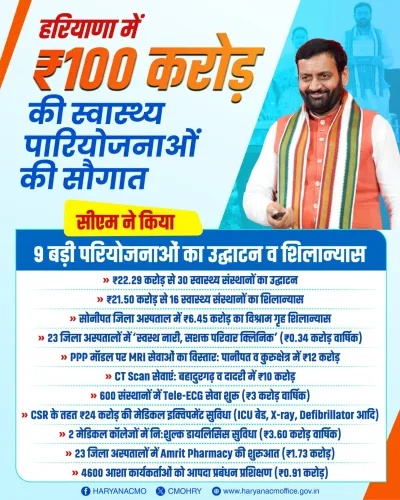
Haryana Chief Minister Nayab Singh Saini dedicated seven health projects worth ₹114 crore to the residents of Narayangarh in Ambala district on 1 July 2026. The specific list of facilities has not been officially itemised in public records available at this time.
What is Mission Amrit Sarovar and how many were dedicated in Haryana?
Mission Amrit Sarovar is a central government scheme launched in April 2022 to build or rejuvenate at least 75 ponds and water bodies per district across India. CM Saini dedicated 325 Amrit Sarovars built at ₹223 crore to the people of Haryana on 1 July 2026.
What is the total cost of infrastructure dedicated by CM Saini on 1 July 2026?
The combined cost of the seven health projects (₹114 crore) and 325 Amrit Sarovars (₹223 crore) dedicated by CM Nayab Singh Saini on 1 July 2026 totals ₹337 crore.
Where is Narayangarh located in Haryana?
Narayangarh is a town and sub-divisional headquarters in Ambala district, Haryana. It has been part of the state's push to upgrade health and civic infrastructure in aspirational blocks.
Who is Nayab Singh Saini?
Nayab Singh Saini is the Chief Minister of Haryana and a senior BJP leader who assumed office in March 2024, succeeding Manohar Lal Khattar.