CM Odisha Mohan Majhi Drives 21,473 km Rural Road Push
Synopsis
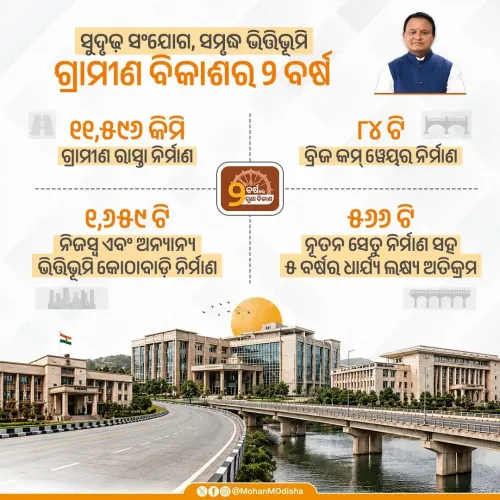
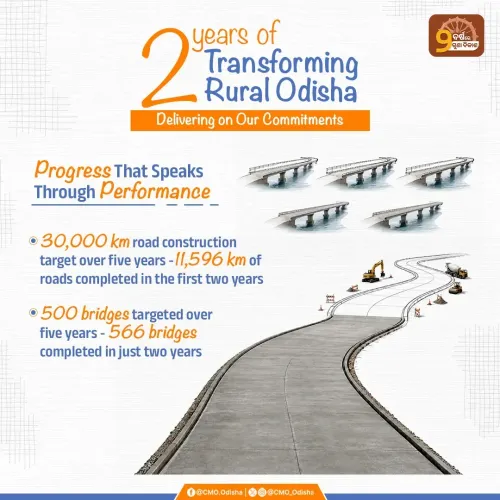
The Chief Minister's Office of Odisha says the Majhi government has initiated 21,473 km of new roads, 1,044 bridges, and 262 Bridge-cum-Weir projects in two years, aiming to transform rural connectivity and last-mile access across the state.
Key Takeaways
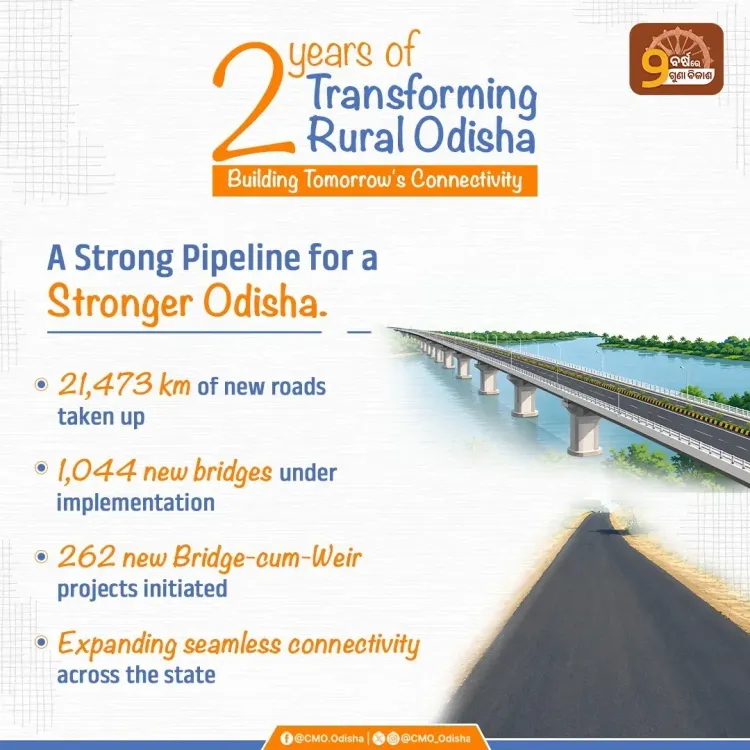
The Odisha government has taken up construction of 21,473 km of new roads in the two years since CM Mohan Majhi took office in June 2024.
1,044 new bridges have been initiated to improve connectivity across the state's difficult terrain.
262 Bridge-cum-Weir projects have been launched, serving dual purposes of road connectivity and minor irrigation.
The programme targets improved last-mile access to essential services for rural households and small farmers in Odisha's tribal hinterland.
The push builds on central schemes such as PMGSY and Bharatmala Pariyojana while adding state-specific multi-purpose infrastructure.
The announcement coincides with the second anniversary of the BJP-led Majhi government in Odisha.
The Chief Minister's Office of Odisha announced on Wednesday, 1 July 2026 that the state government has taken up the construction of 21,473 km of new roads, initiated 1,044 new bridges, and launched 262 Bridge-cum-Weir projects in the two years since Chief Minister Mohan Charan Majhi assumed office, marking a significant acceleration in rural infrastructure under the BJP government.
Context
The announcement, shared under the hashtags #2YearsofLokankaSarakar and #BikasharaDharaOdishaSara, marks the second anniversary of the Majhi-led government, which came to power after the 2024 state elections. The post credits the push to the 'visionary leadership' of Chief Minister Shri Mohan Majhi, framing the road and bridge programme as the centrepiece of a broader rural transformation agenda. The government says the projects are designed to ensure 'seamless connectivity across the State' and improve access to essential services for rural communities.
Policy Backdrop
Odisha's rural road expansion sits within a long-standing national and state policy framework. The Pradhan Mantri Gram Sadak Yojana (PMGSY), launched in 2000, has been the principal central scheme for all-weather rural roads in the state across multiple phases, channelling funds into Odisha's difficult terrain and large tribal hinterland. The Bharatmala Pariyojana, running since 2015, has further supplemented connectivity through strategic highway corridors and last-mile links. The current government's programme builds on this lineage while adding state-specific innovations such as Bridge-cum-Weir structures — multi-purpose infrastructure that serves both connectivity and minor irrigation needs.
Successive Odisha governments, regardless of political affiliation, have treated rural road and bridge construction as a core development priority, given the state's challenging geography and the need to integrate remote tribal communities into the economic mainstream. The post-2024 acceleration fits a national pattern of front-loading infrastructure spending in the first half of a new government's term.
Stakeholders and Impact
The primary beneficiaries of the programme are rural households and small farmers spread across Odisha's hinterland districts, many of which have historically suffered from poor road access. Better connectivity translates directly into reduced travel times to markets, hospitals, and schools — outcomes that carry particular weight in a state where a significant share of the population depends on agriculture and forest produce. The 262 Bridge-cum-Weir projects are especially significant for farming communities, as they double as water-retention structures that can support irrigation during dry seasons. The government says the investments are 'creating new opportunities for rural communities and building a stronger, more connected, and prosperous Odisha.'
What's Next
Attention will now turn to state budget allocations and physical progress reports for the 2026-27 financial year, which will indicate whether the pace of construction can be sustained. Possible convergence with the PM Gati Shakti digital monitoring platform could bring greater transparency to project timelines and expenditure. Independent assessments of road quality, contractor performance, and last-mile delivery will be the ultimate measure of whether the headline figures translate into durable gains for rural Odisha.
Point of View
Timed to the anniversary of its formation and designed to anchor the BJP's rural development credentials in a state where connectivity has long been a grievance. The scale of the figures — over 21,000 km of roads and more than a thousand bridges — signals an intent to outpace predecessor governments on a metric that resonates directly with Odisha's large rural and tribal electorate. The inclusion of Bridge-cum-Weir projects is a policy nuance worth noting: it reflects an attempt to integrate connectivity with agricultural water security, broadening the programme's appeal beyond pure transport. Independent verification of physical progress and quality will determine whether the announcement holds up as governance achievement or remains a milestone marker.
NationPress
30 Sept 2026
Frequently Asked Questions
How many km of roads has the Odisha government built in two years?
The Chief Minister's Office of Odisha announced that the government has taken up construction of 21,473 km of new roads in the two years since Chief Minister Mohan Majhi assumed office in June 2024.
What are Bridge-cum-Weir projects in Odisha?
Bridge-cum-Weir projects are multi-purpose structures that serve as both road bridges for connectivity and weirs for water retention, supporting minor irrigation for farmers. The Odisha government has launched 262 such projects.
Who is the Chief Minister of Odisha in 2026?
Mohan Charan Majhi is the Chief Minister of Odisha, heading a BJP government that came to power after the 2024 state elections.
What central schemes fund rural roads in Odisha?
The Pradhan Mantri Gram Sadak Yojana (PMGSY) , launched in 2000, is the principal central scheme for all-weather rural roads in Odisha. The Bharatmala Pariyojana has also funded strategic corridors and last-mile links in the state since 2015.
Why is rural road connectivity important for Odisha?
Odisha has a large tribal hinterland and difficult terrain, meaning many rural households historically lacked reliable road access to markets, hospitals, and schools. Improved connectivity directly supports small farmers and rural communities in accessing essential services and economic opportunities.