CM Nitish Directs IIT Patna Tie-Up for OBC Girls' Schools
Synopsis
Chief Minister Nitish Kumar has directed Bihar's government to coordinate with IIT Patna to improve medical and engineering entrance-exam preparation for girl students in OBC residential Plus-Two schools, extending the state's long-running push to bridge caste and gender gaps in higher education access.
Key Takeaways
CM Nitish Kumar has directed coordination between IIT Patna and OBC Girls Residential Plus-Two Schools in Bihar.
The initiative targets better preparation for medical (NEET) and engineering (JEE) competitive entrance examinations.
The beneficiaries are girl students from Other Backward Classes enrolled in state-run residential higher-secondary schools.
IIT Patna , established in 2008 , is Bihar's central technical institution and the designated partner for this outreach effort.
The operational details — training modules, faculty visits, or online resources — are yet to be finalised by the state education department and IIT Patna.
The directive extends Bihar's established policy of using IIT partnerships to reduce urban-rural and caste-based disparities in competitive exam outcomes.
The Chief Minister's Office of Bihar announced on Tuesday, 23 June 2026 that Chief Minister Nitish Kumar has directed the state government to coordinate with IIT Patna to improve medical and engineering entrance-exam preparation for girl students enrolled in Other Backward Class (OBC) residential Plus-Two schools across the state.
The official post, shared from the Chief Minister's Office account, states: 'Mananiya Mukhyamantri ji ne nirdesh diya ki anya pichhda varg kanya aavaasiya plus-two vidyalayon mein adhyayanrat chhatraon ko medical evam engineering pratiyogi parikshon ki behtar taiyari hetu IIT Patna ke saath samanvay sthapit kiya jaye' — meaning, the Chief Minister has directed that coordination be established with IIT Patna to better prepare girl students studying in OBC residential Plus-Two schools for medical and engineering competitive examinations.
Context
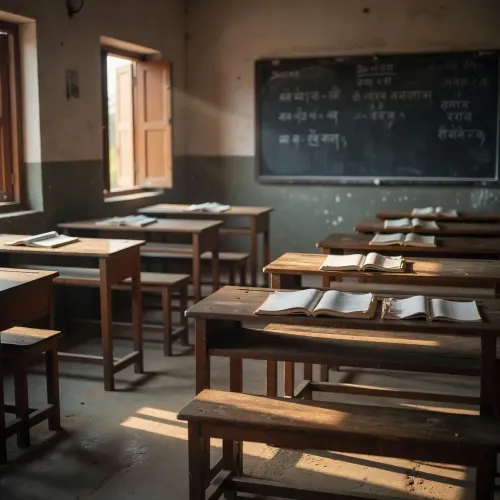
Bihar's OBC Girls Residential Plus-Two Schools are state-run higher-secondary boarding institutions designed to provide quality education to girls from Other Backward Classes, a demographic that has historically faced barriers to higher education. These schools offer a structured residential environment intended to reduce dropout rates and improve academic outcomes among socially and economically disadvantaged girl students.
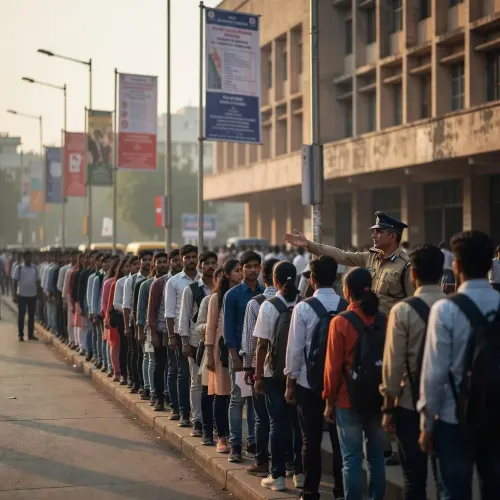
The directive specifically targets preparation for high-stakes national entrance examinations such as NEET (for medical admissions) and JEE (for engineering colleges), where coaching access has long been skewed in favour of urban and economically privileged students.
Policy Backdrop
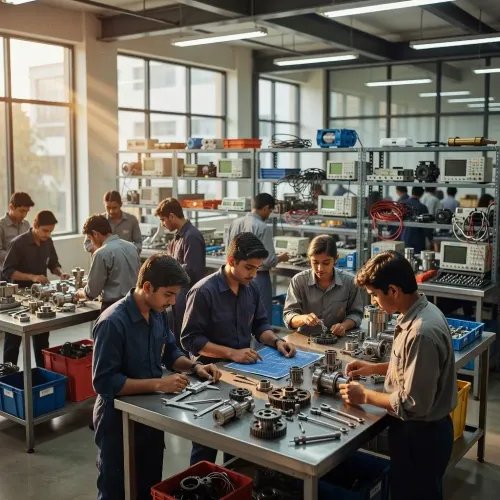
IIT Patna, established in 2008, is Bihar's premier central technical institution and has served as an anchor for the state's ambitions in science and technology education. Its proximity to state government infrastructure makes it a natural partner for outreach and capacity-building programmes.
Bihar has a documented pattern of directing state institutions to partner with centrally funded bodies — including IITs — to deliver structured coaching and mentorship to students from OBC and other underrepresented communities. Nitish Kumar's government has pursued similar linkages since 2005, framing them as tools to narrow urban-rural and caste-based disparities in competitive exam outcomes.
Stakeholders and Impact
The primary beneficiaries are OBC girl students currently enrolled in state residential Plus-Two schools, a group that faces a dual disadvantage of gender and caste in accessing quality coaching for national entrance examinations. A formal coordination mechanism with IIT Patna could bring structured study material, faculty guidance, and mock-test infrastructure within reach of these students.
The move also signals intent to leverage existing public-sector assets — residential schools and IIT Patna's academic resources — rather than creating a new institutional layer, which could make the initiative relatively cost-efficient to implement.
What's Next
The specifics of the coordination mechanism — including whether it will involve faculty visits to residential schools, online modules, dedicated coaching batches, or a blended model — are yet to be announced. Officials at IIT Patna and the state's education department will be expected to work out the operational framework following the Chief Minister's directive.
If implemented effectively, the tie-up could set a replicable template for other states seeking to use IIT outreach cells to extend competitive-exam coaching to residential schools serving marginalised communities.
Point of View
The government sidesteps procurement controversy while lending the effort academic credibility. The real test will be in execution: past state-IIT linkage programmes have often stalled at the memorandum-of-understanding stage without sustained follow-through. If a concrete coordination framework materialises, it could become a model that other states with similar residential school networks seek to replicate.
NationPress
24 Jun 2026
Frequently Asked Questions
What has CM Nitish Kumar directed regarding OBC girls schools in Bihar?
CM Nitish Kumar has directed the Bihar government to coordinate with IIT Patna to improve preparation for medical and engineering competitive entrance examinations among girl students enrolled in OBC residential Plus-Two schools.
Which students will benefit from the IIT Patna tie-up with Bihar OBC schools?
Girl students from Other Backward Classes who are currently studying in state-run OBC residential Plus-Two schools across Bihar are the intended beneficiaries of this coordination initiative.
What exams will the IIT Patna coaching support target?
The directive specifically mentions medical and engineering competitive examinations, which in practice refers to national-level tests such as NEET for medical admissions and JEE for engineering colleges.
When was IIT Patna established and why is it relevant to this initiative?
IIT Patna was established in 2008 and is Bihar's premier central technical institution. Its academic resources and proximity to state infrastructure make it a natural partner for coaching outreach programmes targeting underserved students.
Has Bihar done similar IIT partnership programmes for marginalised students before?
Yes, Bihar has a documented pattern of directing state institutions to partner with centrally funded bodies, including IITs, to deliver coaching and mentorship to OBC and other underrepresented students, a policy approach the state has pursued since 2005.