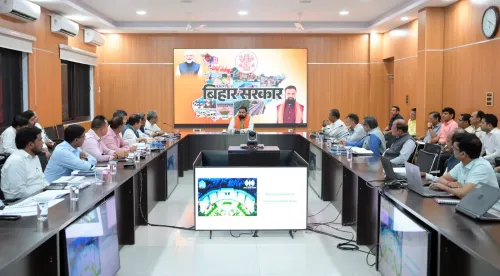
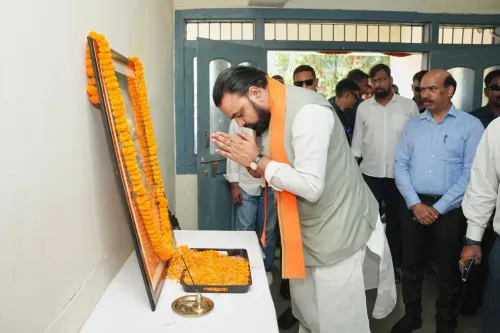
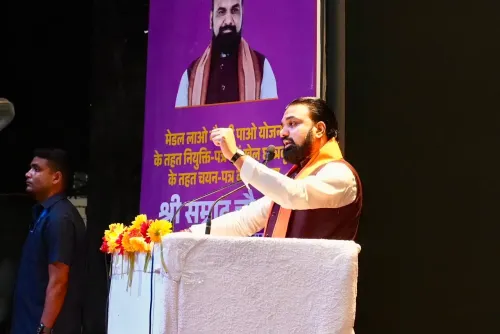
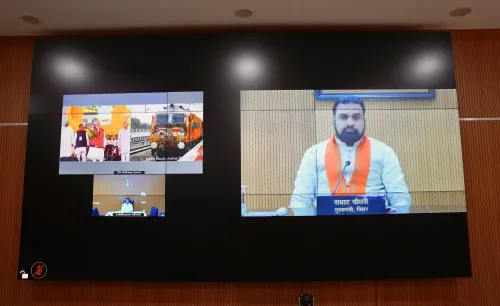
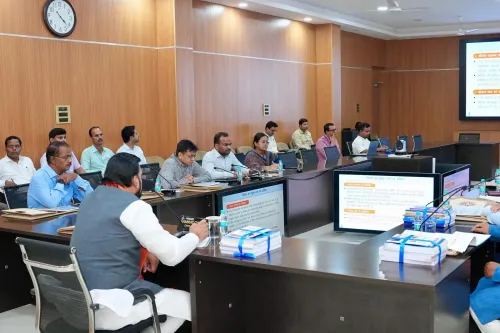
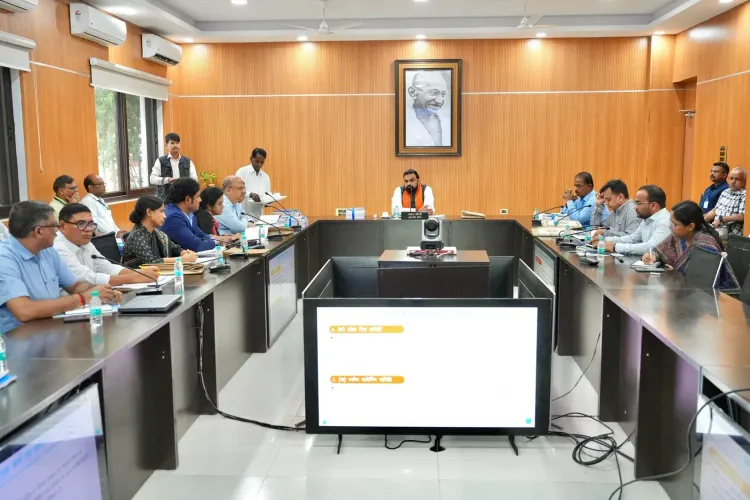
CM Nitish Directs Officials to Frame District-Wise Development Plans
Synopsis
Chief Minister Nitish Kumar has directed Bihar officials to prepare comprehensive, locally tailored action plans for the holistic development of all districts — including aspirational ones — aligning plans with each district's specific needs, resources, and potential to address intra-state development disparities.
Key Takeaways
Chief Minister Nitish Kumar directed state officials on 4 July 2026 to prepare district-specific comprehensive action plans for all districts in Bihar .
The directive covers both aspirational districts and all other districts, ensuring no district is excluded from focused planning.
Plans must be aligned with each district's local needs, available resources, and development potential , reflecting a bottom-up planning model.
Bihar has several districts covered under NITI Aayog's Aspirational Districts Programme , launched in January 2018 , which targets 112 backward districts nationally.
The move continues Nitish Kumar 's long-standing governance emphasis on decentralised planning and reducing intra-state regional disparities.
Rollout timelines and funding details are expected to emerge in upcoming state budget discussions or administrative review meetings.
The Chief Minister's Office of Bihar announced on Saturday, 4 July 2026, that Chief Minister Nitish Kumar has directed state officials to prepare comprehensive action plans for the holistic and balanced development of all districts in Bihar, including aspirational districts, aligned with their local needs, available resources, and potential.
The directive, shared via the official CMO handle, stated: 'राज्य के आकांक्षी जिलों के साथ-साथ अन्य सभी जिलों के समग्र एवं संतुलित विकास के लिए उनकी स्थानीय आवश्यकताओं, उपलब्ध संसाधनों एवं संभावनाओं के अनुरूप व्यापक कार्ययोजना तैयार की जाए' — meaning officials have been instructed to draw up wide-ranging action plans for the comprehensive and balanced development of aspirational as well as all other districts, in keeping with their local requirements, available resources, and possibilities.
Context
Bihar has long grappled with significant intra-state disparities, with some districts lagging behind others in health, education, and infrastructure outcomes. The state's aspirational districts — identified under the central government's programme — have historically received focused attention, but uneven development across remaining districts has remained a persistent governance challenge. Chief Minister Nitish Kumar's latest directive signals a shift toward ensuring that non-aspirational districts are not left behind in the planning cycle.
Policy Backdrop
The Aspirational Districts Programme, launched by NITI Aayog in January 2018, targets 112 of India's most backward districts — several of which fall in Bihar — to improve socio-economic indicators through focused governance and convergence of central schemes. Bihar has over the years extended the spirit of this framework beyond the designated aspirational districts, pushing for tailored, decentralised planning that accounts for local conditions rather than applying uniform top-down targets. The new directive reinforces this approach by making district-specific action plans mandatory across all districts, not only those on the aspirational list.
Chief Minister Nitish Kumar, who has led Bihar across multiple terms since 2005, has consistently emphasised administrative reforms and infrastructure development as the twin pillars of the state's growth strategy. Embedding local resource mapping into district planning represents a continuation of that governance philosophy.
Stakeholders and Impact
District-level officials and collectors are the primary addressees of this directive, as they will be responsible for preparing and executing the action plans. Local communities — particularly in underserved districts — stand to benefit most if the plans translate into targeted investment in schools, health facilities, roads, and livelihood programmes. The instruction to align plans with 'available resources and possibilities' suggests a pragmatic, bottom-up planning model rather than one driven purely by state-level allocations.
Civil society groups and panchayat bodies in aspirational districts such as those in Purnia, Kaimur, and Sheohar divisions will watch closely to see whether the new framework results in measurable improvements in human development indicators at the block and panchayat levels.
What's Next
The key test will be the rollout timeline and funding allocations attached to these district action plans, details of which are expected to surface in upcoming state budget discussions or administrative review meetings. If the plans are integrated into Bihar's annual budget cycle, they could shape resource distribution across all 38 districts in the coming fiscal year. Observers will also track whether a monitoring mechanism is put in place to measure implementation against the stated goals of balanced and holistic development.
Point of View
In practice, sometimes concentrated administrative attention and resources unevenly. By mandating locally calibrated action plans for every district, the government is signalling that decentralised, needs-based governance is now the operating standard rather than the exception. This aligns with a broader national trend of states internalising the Aspirational Districts Programme's methodology and scaling it to their entire geography. The real measure of this initiative, however, will lie in whether adequate fiscal muscle and accountability structures follow the administrative instruction.
NationPress
3 Oct 2026
Frequently Asked Questions
What did Bihar CM Nitish Kumar direct officials to do in July 2026?
Chief Minister Nitish Kumar directed Bihar officials to prepare comprehensive action plans for the holistic and balanced development of all districts — including aspirational districts — based on each district's local needs, available resources, and potential.
What is the Aspirational Districts Programme and how does it relate to Bihar?
The Aspirational Districts Programme was launched by NITI Aayog in January 2018 to improve socio-economic indicators in 112 of India's most backward districts. Several districts in Bihar are covered under this programme, and the state has been working to extend similar focused planning to all its districts.
Which districts in Bihar are aspirational districts?
Several districts in Bihar are designated aspirational districts under the NITI Aayog programme, including districts in the Purnia , Kaimur , and Sheohar regions. The exact current list is maintained by NITI Aayog and the state government.
How does this directive differ from existing district development policies in Bihar?
Unlike earlier approaches that concentrated focused planning primarily on aspirational districts, this directive mandates that all districts — not just backward ones — receive individually tailored action plans aligned with their specific local resources and needs, aiming to reduce intra-state development disparities.
What happens next after this Bihar district development directive?
The next steps involve district officials preparing the action plans, with funding allocations and rollout timelines expected to be detailed in upcoming Bihar state budget discussions or administrative review meetings.