CM Nitish Directs Agri-Tech Push Under Bihar Startup Policy
Synopsis
Chief Minister Nitish Kumar has directed officials to promote innovation, modern techniques and agri-tech under the Bihar Agri Startup Policy, aiming to make the state's farm sector more productive, competitive and profitable, the Chief Minister's Office announced on 23 June 2026.
Key Takeaways
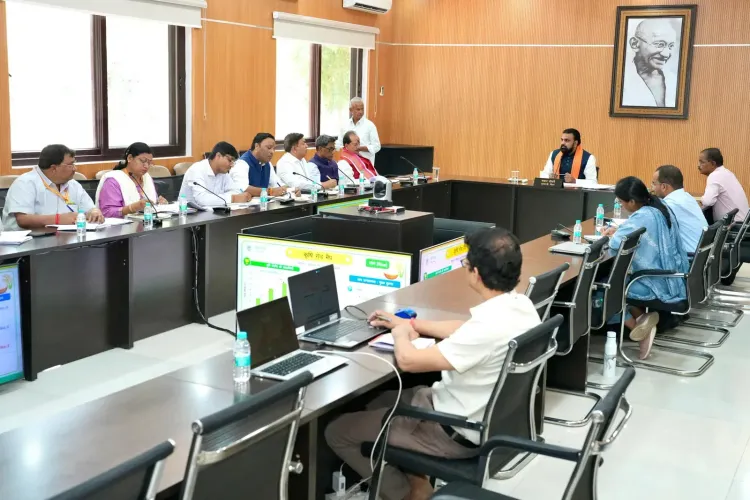
The Chief Minister's Office of Bihar announced on 23 June 2026 that CM Nitish Kumar issued the directive during a review meeting.
The instruction specifically covers promotion of innovation, modern techniques, and agri-tech under the Bihar Agri Startup Policy .
The stated objective is to make Bihar's agriculture more productive, competitive, and profitable.
Key beneficiaries identified include small farmers, agri-tech startups, and rural youth.
The policy aligns with broader national efforts to integrate technology into traditional agricultural sectors.
Rollout of specific guidelines, funding windows, and pilot projects under the policy is anticipated in the coming months.
The Chief Minister's Office of Bihar announced on Tuesday, 23 June 2026 that Chief Minister Nitish Kumar has directed officials to actively promote innovation, modern techniques, and agri-tech under the Bihar Agri Startup Policy, with the stated goal of making the state's agricultural sector more productive, competitive, and profitable.
Context
The directive emerged during a high-level review meeting, during which the Chief Minister underscored the need to accelerate technology adoption in Bihar's farm economy. In the original post, the CMO stated: 'baithhak ke dauran mananiya mukhyamantri ji ne Bihar Krishi Startup Niti ke tahat navachar, aadhunik taknikon tatha Agri-Tech ko badhawa dene ka nirdesh diya' — ('During the meeting, the honourable Chief Minister directed the promotion of innovation, modern techniques and agri-tech under the Bihar Agri Startup Policy'). The instruction was framed around making agriculture 'adhik utpadak, pratiyogi evam labhkari' — ('more productive, competitive and profitable').
Policy Backdrop
The Bihar Agri Startup Policy is a state-level initiative designed to channel entrepreneurial energy and private investment into the agricultural sector, which remains the primary livelihood source for the majority of Bihar's population. The policy draws conceptual alignment with national frameworks that seek to integrate technology into traditional sectors, encouraging both rural youth and agri-tech enterprises to develop solutions tailored to the state's farming conditions. Bihar has historically pursued agricultural modernisation across successive administrations, with Nitish Kumar having anchored multiple reform cycles since his early tenures as Chief Minister.
State-level agri-tech policies across India have increasingly focused on precision farming, supply-chain digitisation, and direct market linkages for small and marginal farmers — areas the Bihar policy is broadly intended to address. The Chief Minister's renewed directive signals an intent to move from policy framing to active implementation and measurable outcomes.
Stakeholders and Impact
Small and marginal farmers stand to benefit most directly if the policy translates into accessible technology tools, better input management, and improved price discovery. Agri-tech startups operating in or looking to enter Bihar could find expanded government support, including potential funding windows and regulatory facilitation under the policy framework. Rural youth represent another key constituency, as agri-startup ecosystems typically generate non-farm employment in areas such as logistics, digital services, and farm advisory.
The directive also carries significance for private investors who have been cautious about deploying capital in Bihar's agricultural supply chains, given historical infrastructure constraints. A clear government signal of intent can help de-risk early-stage agri-tech ventures in the state.
What's Next
Observers will watch closely for the rollout of specific operational guidelines, funding windows, or pilot projects under the Bihar Agri Startup Policy in the coming months. The translation of a ministerial directive into on-ground implementation — including timelines, budgetary allocations, and designated nodal agencies — will determine whether the policy gains traction among startups and farming communities alike. A credible execution roadmap, backed by measurable targets, will be the true test of the initiative's ambition.
Point of View
Where states with clearer policy frameworks and faster implementation cycles tend to draw more startup activity. However, the real political and economic dividend will depend on whether the directive cascades into concrete funding mechanisms and institutional support, rather than remaining a statement of intent. For a state where farming underpins both livelihoods and electoral arithmetic, credible agri-tech delivery could carry significant long-term consequence.
NationPress
22 Sept 2026
Frequently Asked Questions
What is the Bihar Agri Startup Policy?
The Bihar Agri Startup Policy is a state government initiative designed to foster innovation, promote modern agricultural techniques, and encourage agri-tech adoption to improve farm productivity and profitability in Bihar.
What did CM Nitish Kumar direct regarding agriculture in June 2026?
During a review meeting on 23 June 2026, CM Nitish Kumar directed officials to actively promote innovation, modern techniques, and agri-tech under the Bihar Agri Startup Policy to make the agricultural sector more productive, competitive, and profitable.
Who benefits from the Bihar Agri Startup Policy?
The primary beneficiaries are small and marginal farmers, agri-tech startups operating in Bihar, and rural youth who can access non-farm employment opportunities created by the agri-startup ecosystem.
How does Bihar's agri-tech policy compare with national schemes?
Bihar's Agri Startup Policy aligns conceptually with national frameworks that seek to integrate technology into traditional sectors, aiming to attract private investment and modernise supply chains at the state level.
What should we watch for next under Bihar's Agri Startup Policy?
Key developments to watch include the announcement of specific operational guidelines, budgetary allocations, funding windows for startups, and pilot projects that will signal how the policy moves from directive to implementation.