CM Office: Almora's Malla Mahal gets light-and-sound show
Synopsis
Uttarakhand's Chief Minister's Office has spotlighted a new light-and-sound show at Almora's historic Malla Mahal, calling it a confluence of history and modern technology. The initiative aims to boost cultural tourism in Almora, long regarded as the state's cultural capital, and mirrors a growing national trend of technology-enabled heritage interpretation.
Key Takeaways
The Chief Minister's Office of Uttarakhand announced on 23 June 2026 that Malla Mahal in Almora now hosts a light-and-sound show.
Almora is widely recognised as Uttarakhand's cultural capital, known for Kumaoni art, theatre, and literature.
Malla Mahal is a heritage structure in Almora's central market area reflecting traditional Kumaoni architecture.
The initiative follows a national pattern of using light-and-sound technology at heritage sites to combine conservation with tourism revenue.
Uttarakhand has listed Almora as a priority cultural tourism destination since the state's formation in 2000 .
Local shopkeepers, domestic tourists, and heritage managers are among the primary beneficiaries of increased evening footfall.
The Chief Minister's Office of Uttarakhand on Tuesday, 23 June 2026 highlighted a new light-and-sound show at the historic Malla Mahal in Almora, describing the installation as a blend of history and modern technology at the heart of the hill town's central market.
The official post, shared in Hindi, stated: 'Uttarakhand ki sanskritik rajdhani kahe jane wale Almora mein itihas aur aadhunik takneek ka adbhut sangam dekhne ko mil raha hai' — 'In Almora, called the cultural capital of Uttarakhand, a remarkable confluence of history and modern technology is now visible.' The post added that the historic Malla Mahal, located in the main bazaar, is 'carving out a new identity' through a state-of-the-art light-and-sound show.
Context
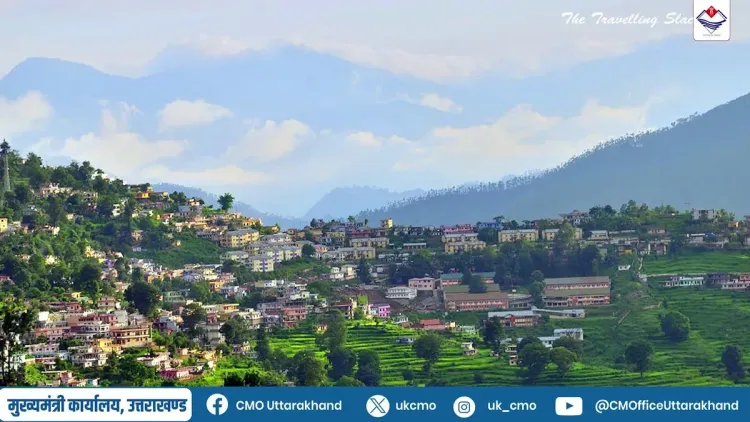
Almora is a hill town in Uttarakhand's Kumaon region and has long been regarded as the state's cultural capital, with deep roots in Kumaoni painting, theatre, literature, and festivals. Malla Mahal, situated in Almora's central market, is a heritage structure reflecting traditional Kumaoni architecture and local history. The building's central location makes it a natural focal point for any cultural tourism initiative aimed at residents and visitors alike.Policy Backdrop
Since Uttarakhand's formation in 2000, successive state governments have listed Almora among priority destinations under their cultural tourism policies, seeking to diversify visitor footfall beyond the state's dominant pilgrimage and adventure circuits. Across India, several states have adopted light-and-sound installations at lesser-known heritage buildings as a dual-purpose tool — combining monument conservation with revenue generation from evening tourism. The approach aligns with centrally encouraged models that use technology-enabled interpretation of monuments while states retain operational control. Uttarakhand's move at Malla Mahal fits this broader national pattern.Stakeholders and Impact
The initiative is expected to benefit domestic tourists visiting the Kumaon hills, local shopkeepers in Almora's central market who stand to gain from increased evening footfall, and heritage site managers who gain a sustainable model for monument upkeep. For the town itself, the show offers a way to present Kumaoni history to a wider audience that may not engage with static displays or conventional museum formats. Cultural practitioners and performers in the region could also find new platforms if the show incorporates live or recorded elements of local art forms.What's Next
The state tourism department's next steps will be closely watched — specifically whether additional heritage sites in Uttarakhand are selected for similar technology-enabled installations and whether the upcoming annual tourism budget earmarks funds for such projects. The Malla Mahal show, if it draws consistent audiences, could serve as a template for other Kumaoni and Garhwali towns with underutilised heritage assets. A wider rollout would signal a deliberate policy shift toward experiential cultural tourism in the Himalayan state.Point of View
Tapping into experiential culture as a draw. This fits a pan-India pattern where state governments use technology-enabled heritage interpretation to generate evening tourism revenue without large capital outlays on new infrastructure. For Uttarakhand, which competes with Himachal Pradesh for Himalayan visitors, differentiating on cultural depth rather than just scenery is a strategically sound pivot. The CMO's social media amplification of the project also suggests the administration views cultural heritage as a politically resonant story ahead of future budget cycles.
NationPress
23 Jun 2026
Frequently Asked Questions
What is the light-and-sound show at Malla Mahal in Almora?
The light-and-sound show at Malla Mahal is a technology-enabled cultural presentation installed at the historic heritage building in Almora 's central market, using modern audio-visual effects to narrate the site's history and Kumaoni heritage to visitors.
Where is Malla Mahal located in Almora?
Malla Mahal is situated in the main bazaar (central market area) of Almora , a hill town in the Kumaon region of Uttarakhand .
Why is Almora called the cultural capital of Uttarakhand?
Almora is called Uttarakhand's cultural capital because of its centuries-old traditions in Kumaoni painting, theatre, literature, music, and festivals, making it a centre of the region's artistic and intellectual heritage.
What is the government's goal behind installing light-and-sound shows at heritage sites?
State governments across India, including Uttarakhand , install light-and-sound shows at heritage sites to attract tourists, generate evening footfall, support local economies, and fund monument conservation through ticket revenue.
Which other heritage sites in Uttarakhand may get similar shows?
The state tourism department has not yet officially announced additional sites, but the success of the Malla Mahal show in Almora is expected to influence future decisions on similar installations across Kumaon and Garhwal heritage locations.