CM Bhupendra Patel Hails Modi's Vision Behind India-Japan Ties
Synopsis
Gujarat Chief Minister Bhupendra Patel has credited PM Narendra Modi's pre-ministerial foresight for shaping India-Japan ties, tracing the partnership from early Vibrant Gujarat Summits and a 2007 Japan delegation to the landmark Mumbai-Ahmedabad Bullet Train project backed by Japanese Shinkansen technology and JICA finance.
Key Takeaways
CM Bhupendra Patel posted on 3 July 2026 attributing India-Japan partnership strength to PM Modi 's long-held vision predating his prime ministership.
Gujarat was positioned as the original gateway for Japanese investment, with Japan named a partner country at the Vibrant Gujarat Global Summit from 2009 onwards.
Modi led a delegation to Japan in 2007 as Gujarat Chief Minister to attract manufacturing investment.
The India-Japan Comprehensive Economic Partnership Agreement was concluded in 2011 , formalising trade and investment liberalisation.
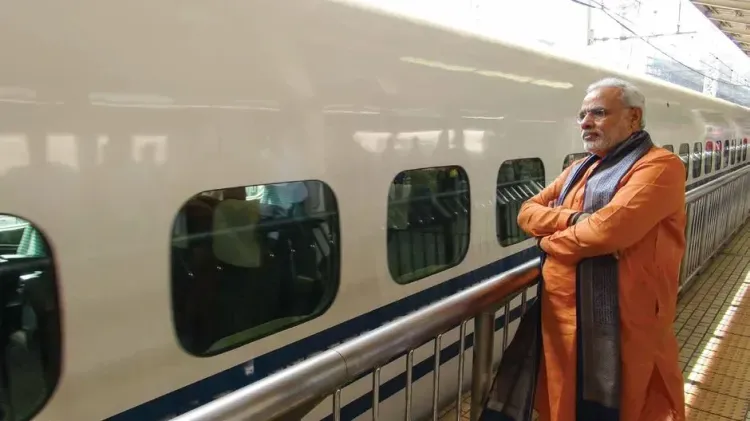
The Mumbai-Ahmedabad High-Speed Rail project, agreed in December 2015 with JICA funding and Shinkansen technology, is cited as the flagship outcome of the bilateral relationship.
Patel frames Gujarat's early outreach as a template that national diplomacy later scaled across infrastructure, manufacturing and technology sectors.
Gujarat Chief Minister Bhupendra Patel on Friday, 3 July 2026, credited Prime Minister Narendra Modi's pre-ministerial vision for laying the foundation of India's enduring partnership with Japan, highlighting how Gujarat served as an early gateway for Japanese investment and how that relationship has since scaled into landmark national projects including the Mumbai-Ahmedabad Bullet Train.
Context
In his post, CM Patel drew a direct line from Modi's tenure as Gujarat Chief Minister to the present, writing that 'long before he became Prime Minister,' Modi 'envisioned a strong partnership with Japan rooted in trust, technology and shared progress.' The post underscores that this bilateral relationship was not born of sudden diplomatic necessity but of sustained, personal conviction spanning more than two decades.
Patel specifically cited Gujarat's role as a 'gateway for Japanese investment' and Japan's participation in the Vibrant Gujarat Global Summit as early proof of that vision taking institutional shape.
Policy Backdrop
The Vibrant Gujarat Global Summit, launched in 2003, became a recurring platform for Japan-India economic engagement, with Japan designated a partner country as early as 2009. During his time as Chief Minister, Modi led an official delegation to Japan in 2007 to attract manufacturing investments, helping establish a durable state-level channel for Japanese capital in auto, engineering and electronics sectors.
At the national level, India and Japan concluded their Comprehensive Economic Partnership Agreement in 2011, liberalising trade and investment flows. The most visible symbol of the partnership remains the Mumbai-Ahmedabad High-Speed Rail corridor — formally agreed during the late Prime Minister Shinzo Abe's visit to India in December 2015 — which brought Shinkansen technology and JICA concessional financing to Indian infrastructure for the first time.
Patel's post frames all of these as downstream outcomes of a vision that predates Modi's elevation to the national stage, positioning Gujarat as the original laboratory for what became a pillar of India's foreign economic policy.
Stakeholders and Impact
The relationship has direct bearing on Japanese investors operating in Gujarat's industrial clusters, workers employed across Japanese-backed manufacturing units in the state, and the broader constituency of Indian Railways passengers and contractors tied to the bullet-train project. Gujarat's early outreach created supply-chain linkages that continue to attract Japanese auto and electronics firms.
For India's Indo-Pacific economic architecture, Japan represents a trusted source of both concessional finance and high-end technology — a combination that successive Indian administrations have sought to deepen. CM Patel's statement reinforces that this is a bipartisan state-level priority, not merely a central-government diplomatic exercise.
What's Next
Observers will track progress on bullet-train land acquisition and the commissioning of trial sections on the Mumbai-Ahmedabad corridor as the most concrete near-term indicator of how the vision Patel describes is translating into infrastructure reality. Japan's announced participation level at the next edition of the Vibrant Gujarat Global Summit will also signal the health of the bilateral investment pipeline. As both nations deepen engagement across semiconductors, green hydrogen and defence manufacturing, the Gujarat model of state-led outreach may serve as a template for other Indian states seeking to attract Japanese capital.
Point of View
Not reactive. By foregrounding the Vibrant Gujarat Summit and the Bullet Train, Patel connects state-level economic diplomacy to national infrastructure ambition, a framing that serves both Gujarat's brand and the BJP's broader governance story. The timing, absent any fresh bilateral event, suggests the post is calibrated to sustain public attention on India-Japan ties as a signature achievement. Analysts will note that Gujarat's Japan outreach predates the current government's Act East policy, lending the narrative a bipartisan credibility that transcends electoral cycles.
NationPress
2 Oct 2026
Frequently Asked Questions
Why is Gujarat considered a gateway for Japanese investment in India?
Gujarat attracted Japanese auto, engineering and electronics firms through sustained outreach including a 2007 CM-level delegation to Japan and Japan's designation as a partner country at the Vibrant Gujarat Global Summit from 2009, creating an early industrial cluster that drew further Japanese capital.
What is the Vibrant Gujarat Global Summit and Japan's role in it?
The Vibrant Gujarat Global Summit is a state investment summit launched in 2003. Japan has been a recurring partner country since at least 2009, participating with dedicated pavilions and bilateral investment commitments across multiple editions.
How is Japan involved in India's Bullet Train project?
Japan provided Shinkansen technology and concessional financing through JICA for the Mumbai-Ahmedabad High-Speed Rail corridor, formally agreed during Prime Minister Shinzo Abe's visit to India in December 2015.
What did PM Modi do for India-Japan relations before becoming Prime Minister?
As Gujarat Chief Minister, Modi led an official delegation to Japan in 2007 to attract manufacturing investment and championed Japan's inclusion as a partner country at the Vibrant Gujarat Summit, building institutional ties that later scaled into national policy.
What is the India-Japan Comprehensive Economic Partnership Agreement?
The Comprehensive Economic Partnership Agreement, concluded in 2011, liberalised trade and investment between India and Japan, covering goods, services and investment flows and providing a legal framework for deeper bilateral economic engagement.