CM Bhupendra Patel Inaugurates Gujarat's First Urban Cable-Stayed Flyover
Synopsis
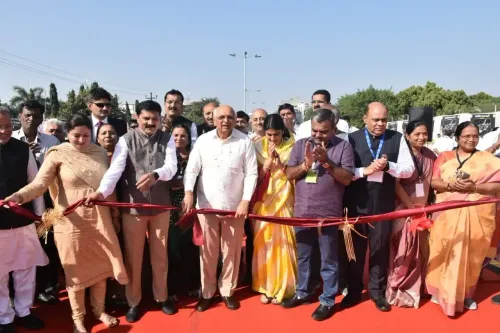
Gujarat Chief Minister Bhupendra Patel on 5 July 2026 inaugurated a ₹175 crore, 1.4-km cable-stayed flyover at Bhat Circle on the Gandhinagar-Koba-Aerodrome Road — the state's first such urban bridge — and laid the foundation for a ₹48 crore project to expand the Narmada Main Canal bridge from 6 to 12 lanes.
Key Takeaways
Gujarat's first urban cable-stayed bridge — a 1.4 km flyover at Bhat Circle on the Gandhinagar-Koba-Aerodrome Road — was inaugurated on 5 July 2026 .
The flyover was built at a cost of ₹175 crore and is designed to make travel on the Gandhinagar-Ahmedabad corridor faster and safer.
CM Bhupendra Patel simultaneously laid the foundation stone for widening the Narmada Main Canal bridge from 6 lanes to 12 lanes .
The canal bridge expansion will cost ₹48 crore , bringing the combined outlay for both projects to ₹223 crore .
Both projects are framed under the state government's 'Viksit Gujarat' (Developed Gujarat) infrastructure vision.
The Gujarat Roads and Buildings Department has been executing multiple flyover and bridge projects across the Ahmedabad-Gandhinagar region since 2015.
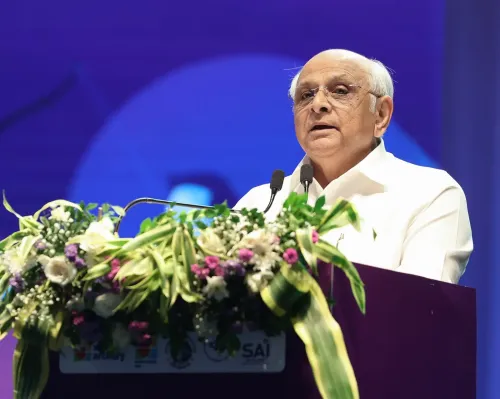
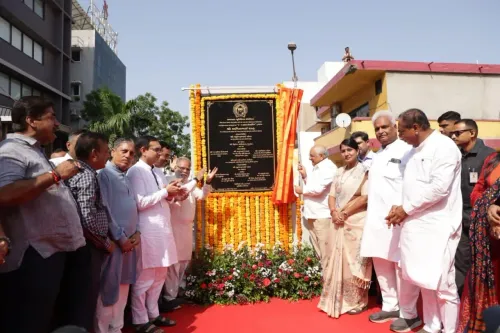
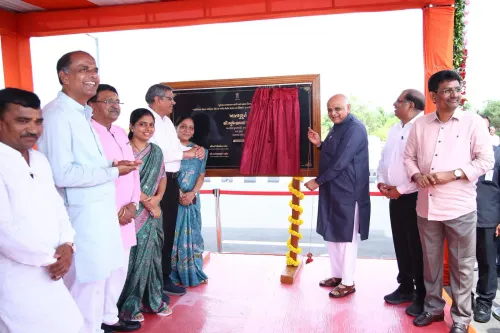
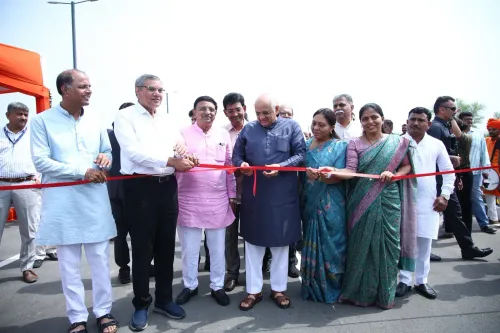
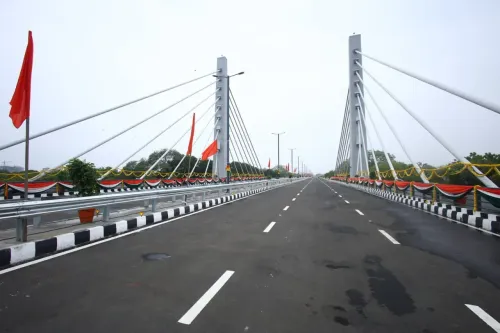
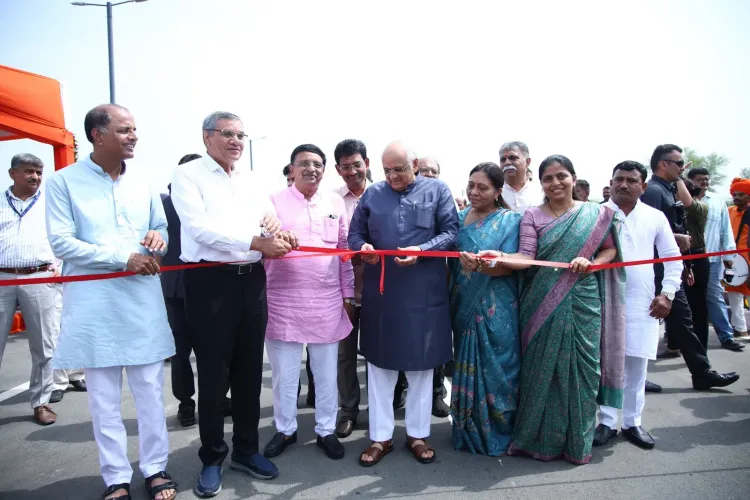
Gujarat Chief Minister Bhupendra Patel on Sunday, 5 July 2026 inaugurated the newly built cable-stayed flyover at Bhat Circle on the Gandhinagar-Koba-Aerodrome Road, marking a significant milestone in the state's urban infrastructure drive. The 1.4-kilometre bridge, constructed at a cost of ₹175 crore, is described as Gujarat's first cable-stayed bridge in an urban area. In the same ceremony, the Chief Minister also laid the foundation stone for a project to expand the existing 6-lane bridge over the Narmada Main Canal to 12 lanes.
Context
Posting on X in Gujarati, CM Patel announced: 'Gandhinagar-Koba-Aerodrome Road par Bhat Circle khate navnirmit Cable Stayed Flyover nu lokarpan karyu' — ('Inaugurated the newly built cable-stayed flyover at Bhat Circle on the Gandhinagar-Koba-Aerodrome Road'). He described the bridge as one that 'will make travel faster and safer,' and reaffirmed the state government's commitment to strengthening infrastructure under the vision of a 'Viksit Gujarat' (Developed Gujarat).
The Bhat Circle junction sits along a high-traffic corridor connecting Gandhinagar, the state capital, to Ahmedabad and the aerodrome zone — an artery that carries substantial daily commuter and freight traffic. A cable-stayed design, which uses diagonal cables anchored to towers to support the bridge deck, is typically deployed for longer spans where conventional flyovers are less efficient.
Policy Backdrop
The Gujarat Roads and Buildings Department has been executing a series of flyover and elevated corridor projects across the Ahmedabad-Gandhinagar urban region under mobility improvement plans that gained pace after 2015. Earlier phases of Narmada canal bridge construction upgraded the structure to 6-lane capacity as part of broader state highway improvements in the 2010s.
The new ₹48 crore project to widen the Narmada Main Canal bridge from 6 to 12 lanes follows the same pattern of staged capacity expansion, responding to growing vehicle volumes on the corridor. The Narmada Main Canal, which originates from the Sardar Sarovar Dam, is a critical piece of Gujarat's water and land infrastructure, and the bridges crossing it serve both local and inter-district traffic.
Stakeholders and Impact
The most immediate beneficiaries are daily commuters between Gandhinagar and Ahmedabad, including government employees, industrial workers, and residents of the rapidly expanding townships along the Koba corridor. The cable-stayed flyover at Bhat Circle is expected to reduce bottlenecks at what has historically been a congestion-prone intersection.
The 12-lane Narmada canal bridge expansion will benefit vehicle traffic moving across the canal belt, easing freight and passenger movement in a zone that supports both agricultural supply chains and urban logistics. Collectively, the two projects represent a combined outlay of ₹223 crore in public infrastructure spending on a single corridor.
What's Next
Attention will now turn to the construction timeline for the 12-lane Narmada canal bridge, and whether the 2026-27 Gujarat state budget carries further allocations for cable-stayed or elevated road projects in other high-density urban zones. CM Patel's framing of both projects under the 'Viksit Gujarat' banner signals that infrastructure announcements of this scale are likely to continue as the state positions itself ahead of future electoral cycles. The Gandhinagar-Ahmedabad corridor remains a bellwether for the pace of Gujarat's urban mobility ambitions.
Point of View
' CM Patel is consciously linking state-level road spending to the national 'Viksit Bharat' narrative, reinforcing the BJP's development-first electoral identity in a state it has held for three decades. The choice of a cable-stayed design — visually distinctive and technically superior to standard flyovers — also signals an ambition to associate Gujarat's urban landscape with higher-specification engineering. Sustained investment in the Gandhinagar-Ahmedabad corridor suggests the state views this twin-city spine as its primary showcase for infrastructure-led governance.
NationPress
5 Oct 2026
Frequently Asked Questions
What is the Bhat Circle cable-stayed flyover in Gandhinagar?
The Bhat Circle cable-stayed flyover is a 1.4 km bridge on the Gandhinagar-Koba-Aerodrome Road , inaugurated on 5 July 2026 by CM Bhupendra Patel . Built at a cost of ₹175 crore , it is described as Gujarat's first cable-stayed bridge in an urban area and aims to ease congestion on the busy Gandhinagar-Ahmedabad corridor.
What is the Narmada Main Canal bridge expansion project?
The Narmada Main Canal bridge expansion is a ₹48 crore project to widen the existing 6-lane bridge over the Narmada Main Canal to 12 lanes . Its foundation stone was laid by CM Bhupendra Patel on 5 July 2026 alongside the Bhat Circle flyover inauguration.
What is a cable-stayed bridge and why is it significant for Gujarat?
A cable-stayed bridge uses diagonal cables anchored to one or more towers to support the bridge deck, allowing longer spans with fewer supports. The Bhat Circle flyover is significant because it is reportedly Gujarat's first cable-stayed bridge in an urban area , representing a step up in engineering specification for the state's city road network.
Who inaugurated the Bhat Circle flyover in Gandhinagar?
Gujarat Chief Minister Bhupendra Patel inaugurated the Bhat Circle cable-stayed flyover on 5 July 2026 . He also laid the foundation stone for the Narmada canal bridge widening project at the same event.
What is 'Viksit Gujarat' and how does it relate to these projects?
'Viksit Gujarat' — meaning 'Developed Gujarat' — is the state government's framing for its infrastructure and development agenda, aligned with the national 'Viksit Bharat' vision. CM Patel cited this goal while announcing both the ₹175 crore flyover and the ₹48 crore canal bridge expansion, positioning them as part of a broader commitment to urban mobility and connectivity.