CM Pema Khandu: Arunachal Cabinet boosts NLEP staff grade pay

Synopsis
The Arunachal Pradesh Cabinet has approved grade pay enhancements for National Leprosy Elimination Programme staff, CM Pema Khandu announced on October 11, 2026, aiming to improve retention, morale, and patient care in the state's challenging terrain.
Key Takeaways
The Arunachal Pradesh State Cabinet has approved enhanced grade pay for multiple categories of posts under the National Leprosy Elimination Programme (NLEP) .
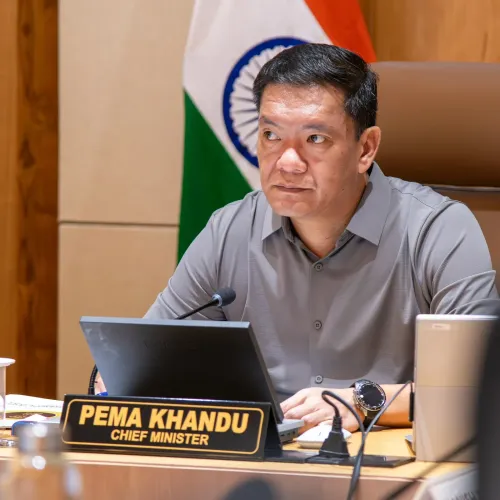
CM Pema Khandu stated the decision recognises the contribution of healthcare personnel engaged in leprosy care and rehabilitation.
The move is aimed at boosting staff morale and improving patient care and rehabilitation services across all 26 districts of the state.
India achieved the WHO leprosy elimination threshold nationally in 2005 , but active cases in pockets make sustained NLEP workforce critical.
Grade pay revision is a key lever to address staff attrition in northeastern states with remote and difficult-to-access geographies.
A quiet but consequential decision came out of Arunachal Pradesh on Sunday, October 11, 2026 — the State Cabinet, under Chief Minister Pema Khandu, approved enhanced grade pay for healthcare personnel working under the National Leprosy Elimination Programme (NLEP), recognising frontline workers who operate in one of India's most geographically challenging states.
What the Cabinet approved — and why it matters
The Cabinet's decision covers 'various categories of posts' under the NLEP, granting them a higher grade pay scale. The move directly affects the compensation structure of health workers engaged in leprosy detection, treatment, and rehabilitation — roles that demand sustained community outreach across remote terrain. CM Khandu framed the decision as twofold: recognising past contribution and sharpening future service delivery.
Grade pay revisions, while bureaucratic in form, carry real operational weight. Better-compensated staff are more likely to remain in postings — a chronic challenge for public health infrastructure in northeastern states, where attrition among specialist and programme-specific workers has historically undercut long-term health outcomes.
Leprosy elimination work in Arunachal's terrain
India achieved the World Health Organization's leprosy elimination threshold — fewer than 1 case per 10,000 population — at the national level in 2005, but district- and state-level pockets have continued to report active cases, requiring sustained NLEP presence. In a state like Arunachal Pradesh, with dispersed populations across 26 districts and difficult road connectivity, NLEP workers are often the primary — sometimes only — point of contact for affected communities seeking diagnosis and multi-drug therapy. Rehabilitative care for those with disability from the disease adds another layer of long-term need that the Cabinet decision specifically acknowledges.
A signal on healthcare workforce policy
The approval slots into a broader pattern of northeastern state governments using Cabinet-level decisions to address healthcare staffing gaps through compensation restructuring rather than large-scale recruitment — a faster lever to pull. For Arunachal Pradesh, which has made gradual investments in health infrastructure over recent years, this move signals that programme-specific cadres — not just regular medical officers — are being brought into the salary-reform conversation. Whether similar enhancements will follow for workers under other vertical health programmes remains to be seen from the Cabinet's future agenda.
The decision, CM Khandu noted, aims to 'boost staff morale and strengthen patient care and rehabilitation services across the state' — language that underscores the government's recognition that eliminating leprosy's footprint is still an active, unfinished task, not a headline already filed away.
Point of View
The Khandu government is aligning administrative action with a public-health narrative that treats leprosy elimination as ongoing rather than concluded. The decision also signals that Arunachal Pradesh is willing to use Cabinet bandwidth on programme-specific health cadres, a choice that could set a precedent for other NLEP-tier decisions across the Northeast. It fits a broader BJP-governed state pattern of using compensation reform as a visible, quick-turnaround governance deliverable in the health sector.
NationPress
11 Oct 2026
Frequently Asked Questions
What did the Arunachal Pradesh Cabinet decide about NLEP workers?
The Arunachal Pradesh State Cabinet approved an enhancement of grade pay for various categories of posts under the National Leprosy Elimination Programme (NLEP), a decision announced by Chief Minister Pema Khandu on October 11, 2026.
What is the National Leprosy Elimination Programme (NLEP)?
The National Leprosy Elimination Programme is a centrally-sponsored public health initiative in India aimed at eliminating leprosy as a public health problem, providing detection, treatment through multi-drug therapy, and rehabilitation services for affected persons.
Why is NLEP work particularly important in Arunachal Pradesh?
Arunachal Pradesh's dispersed population across 26 districts and difficult road connectivity mean NLEP workers are often the primary contact point for communities seeking leprosy diagnosis and care, making staffing continuity critical.
Has India eliminated leprosy?
India achieved the WHO leprosy elimination threshold — fewer than 1 case per 10,000 population — at the national level in 2005, but district- and state-level pockets continue to report active cases, requiring sustained NLEP operations.
What is the significance of a grade pay enhancement over a salary revision?
Grade pay enhancements adjust the pay scale within an existing framework without requiring large-scale recruitment or budgetary restructuring, making them a faster administrative tool to improve compensation and reduce attrition among programme-specific health workers.