CM Pema Khandu opens sacred Buddha relic exposition in Tawang
Synopsis
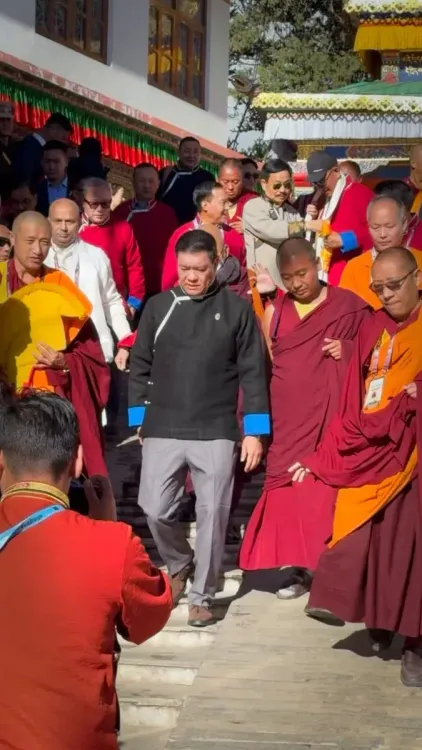
Arunachal Pradesh CM Pema Khandu inaugurated the Sacred Exposition of Holy Relics of Bhagwan Shakyamuni Buddha at Tawang's Gaden Namgyal Lhatse on 1 November 2026. The seven-day public darshan runs until 7 November, offering devotees a rare opportunity to venerate the sacred relics at one of India's most important Tibetan Buddhist monasteries.
Key Takeaways
CM Pema Khandu attended and inaugurated the Sacred Exposition of Holy Relics of Bhagwan Shakyamuni Buddha at Tawang Monastery on 1 November 2026 .
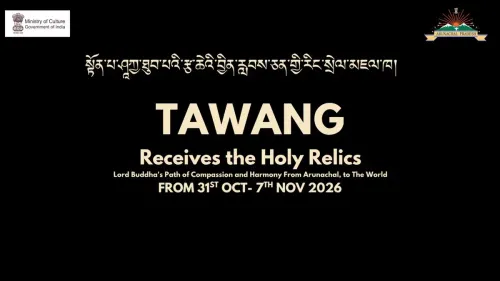
The exposition is open for public darshan from 1st to 7th November 2026 at Gaden Namgyal Lhatse (Tawang Monastery) .
Tawang Monastery is the largest Buddhist monastery in India and the spiritual centre of the Monpa community .
The event holds added significance given Tawang's location in Arunachal Pradesh , a state that borders China and has been the subject of long-standing territorial disputes.
Khandu invoked the Buddha's teachings of 'peace, harmony and compassion' and offered the greeting Namo Buddhaya at the inauguration.
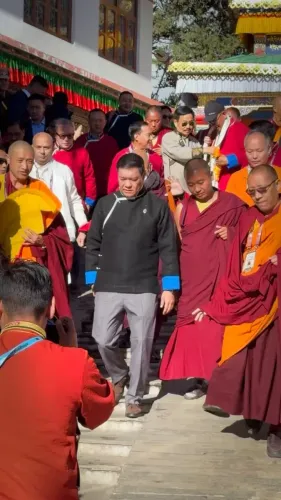
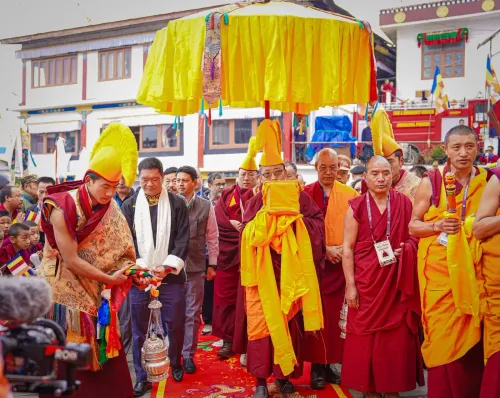
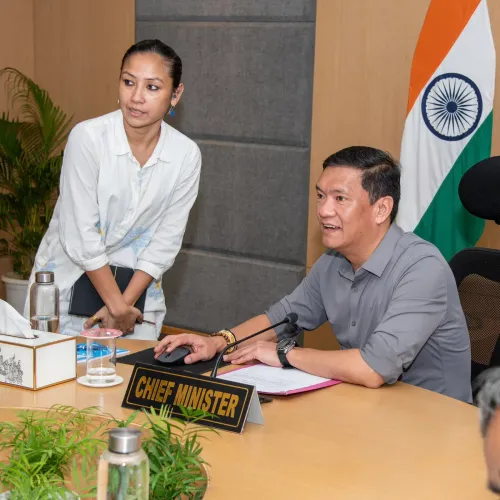
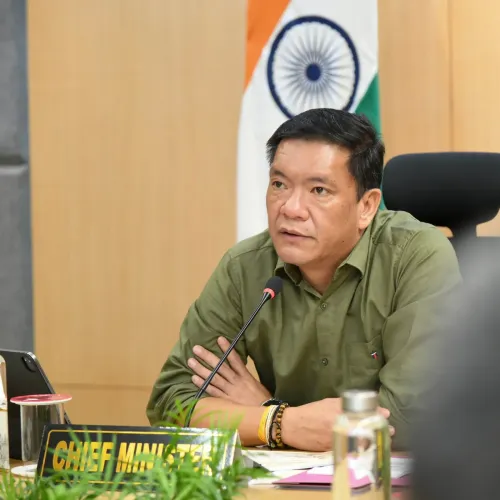
High in the Himalayan frontier, Arunachal Pradesh Chief Minister Pema Khandu on Sunday, 1 November 2026, inaugurated the Sacred Exposition of the Holy Relics of Bhagwan Shakyamuni Buddha at Tawang Monastery — one of the most significant Tibetan Buddhist shrines in India — throwing open a rare window of devotion for pilgrims and visitors alike.
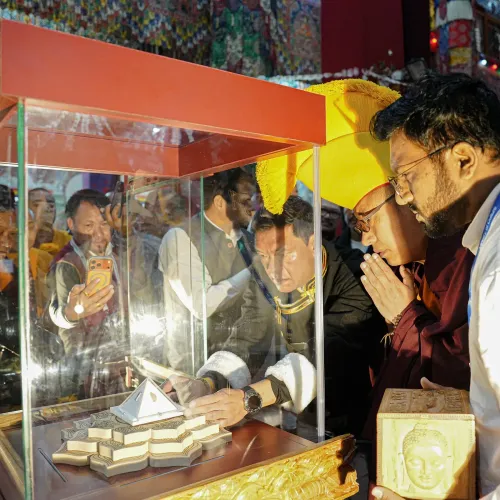
The exposition, staged at the Gaden Namgyal Lhatse — the monastery's formal Tibetan name — will remain open for public darshan and homage from 1st to 7th November 2026. For seven days, devotees will have the uncommon privilege of venerating relics of the historical Buddha, a practice that carries profound spiritual weight across Vajrayana Buddhist traditions.
Tawang Monastery and the weight of this occasion
Tawang Monastery, perched at an altitude of roughly 10,000 feet in West Kameng district, is the largest Buddhist monastery in India and among the most revered in the Tibetan tradition. It is the spiritual heartland of the Monpa community and draws monks, scholars, and pilgrims from across the Himalayan belt. An exposition of Buddha's holy relics here is not a routine ceremony — it is a convergence of faith and cultural memory at one of the subcontinent's most storied sacred sites.
Khandu, himself belonging to the Buddhist Monpa community, attended the inaugural ceremony and shared his blessing: 'May the teachings of Bhagwan Buddha inspire peace, harmony and compassion across the world. Namo Buddhaya.' The sentiment went beyond ritual courtesy — it underlined the living centrality of Buddhist practice to the political and cultural identity of Arunachal Pradesh.
A border state where faith carries strategic resonance
Arunachal Pradesh shares a long, disputed border with China, and Tawang in particular has been at the centre of bilateral territorial friction for decades. Beijing claims the entire state, and Tawang — as a seat of Tibetan Buddhist heritage — carries pointed symbolic significance in that contested geography. High-profile religious events at the monastery have historically drawn attention well beyond the monastery's walls.
The state government periodically supports Buddhist heritage initiatives, and this exposition fits a broader pattern of affirming Arunachal's distinct cultural identity on the national and international stage. The seven-day darshan window is expected to draw pilgrims from within Arunachal Pradesh and from neighbouring Buddhist communities across the northeastern region.
For the faithful arriving in Tawang this week, the relics offer something no summit or policy document can replicate — a moment of direct contact with the sacred. That, in this mountain town at the edge of India, is its own kind of statement.
Point of View
Inaugurated by CM Pema Khandu, is both a deeply spiritual occasion and a subtle assertion of Arunachal Pradesh's distinct civilisational identity. For a state whose territorial status China actively contests, high-visibility religious events at Tawang have always carried diplomatic undertones — reinforcing the cultural rootedness of the region within India. Khandu's personal participation underlines the BJP government's broader strategy of aligning state-level leadership with the religious traditions of indigenous communities in the Northeast, building political legitimacy through cultural stewardship. The seven-day public darshan also points to the state's growing ambition to position Tawang as a living pilgrimage destination, not merely a geopolitical flashpoint.
NationPress
1 Nov 2026
Frequently Asked Questions
What is the Sacred Exposition of Holy Relics at Tawang Monastery 2026?
It is a public religious event at Tawang's Gaden Namgyal Lhatse monastery where the holy relics of Bhagwan Shakyamuni Buddha are displayed for devotees to venerate. The exposition runs from 1st to 7th November 2026 and was inaugurated by Arunachal Pradesh CM Pema Khandu.
Where is Tawang Monastery located?
Tawang Monastery, formally known as Gaden Namgyal Lhatse, is located in the Tawang district of Arunachal Pradesh in northeastern India. It is the largest Buddhist monastery in India and sits near the India-China border.
Can the public attend the Buddha relic darshan at Tawang?
Yes. The Sacred Exposition is open for public darshan and homage from 1st to 7th November 2026 at Tawang Monastery in Arunachal Pradesh.
Why is Tawang significant for Tibetan Buddhism?
Tawang Monastery is one of the most important seats of Tibetan Vajrayana Buddhism outside Tibet and is the spiritual heartland of the Monpa community. It has historical connections to the Gelug school of Tibetan Buddhism and is a major pilgrimage site in the Himalayan region.