Karnataka CM marks Rajyotsava with Kannada pride message
Synopsis
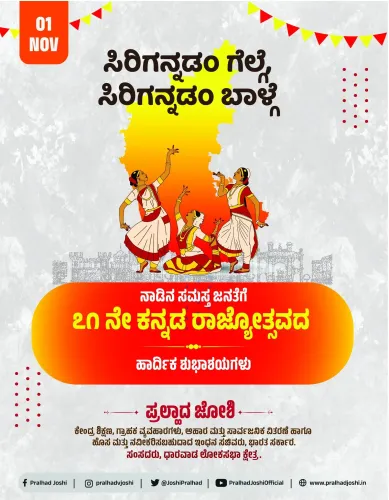
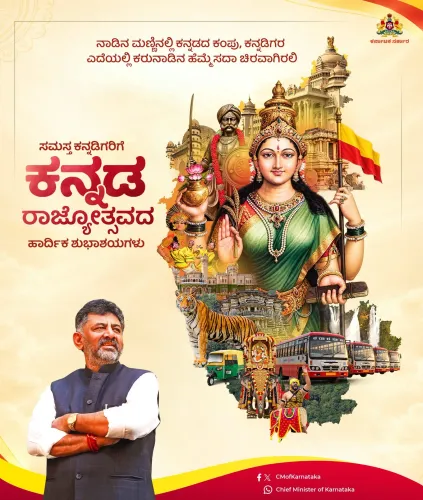
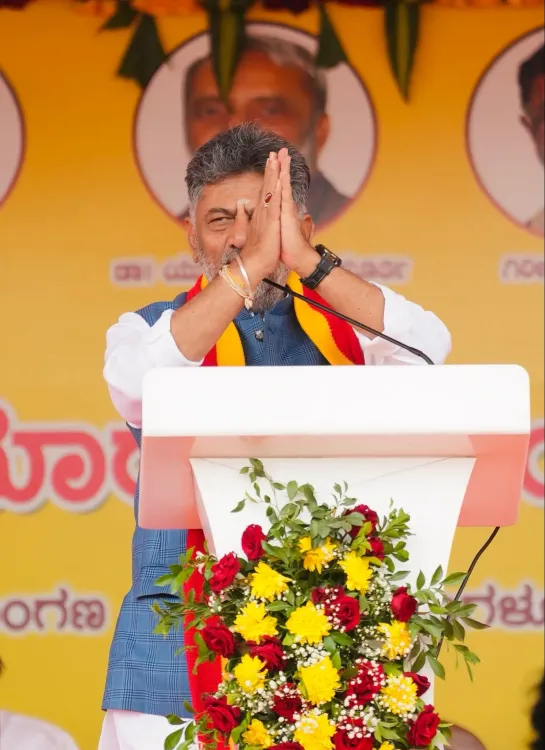
On Karnataka Rajyotsava 2026, CM DK Shivakumar's office posted a stirring Kannada-pride tribute quoting poets D. R. Bendre and Kuvempu, framing devotion to the mother tongue as the highest public duty and the state's celebration as an act of 'maatrupuje' — worship of the mother.
Key Takeaways
The Chief Minister's Office of Karnataka issued a Kannada-pride message on 1 November 2026 , Karnataka Rajyotsava.
The message is attributed to Chief Minister DK Shivakumar and quotes two literary giants: D.
Bendre and Kuvempu .
Kuvempu's line — 'Even raising a little finger for Kannada becomes the Govardhana mountain' — was cited as a call to action for language preservation.
Karnataka Rajyotsava has been observed every 1 November since the state's linguistic reorganisation in 1956 .
The post frames the celebration not as a political anniversary but as maatrupuje (worship of the mother), linking language survival to state survival.
The message connects Kuvempu's Vishwa Manava (universal humanist) ideal with Karnataka's contemporary global standing.
On the 69th Karnataka Rajyotsava, 1 November 2026, the Chief Minister's Office of Karnataka issued a sweeping tribute to the Kannada language — framing devotion to the mother tongue not as sentiment alone, but as the highest act of public duty. The message, attributed to Chief Minister DK Shivakumar, drew from two of Kannada literature's most towering voices to make its case.
A message woven from the masters: Bendre and Kuvempu
The post opened with a declaration that has become almost a creed for Kannada advocates: 'ನಮ್ಮ ಉಸಿರು ಕನ್ನಡ, ನಮ್ಮ ಹೆಸರು ಕನ್ನಡ, ನಮ್ಮ ಕಸುಬು ಕನ್ನಡ' — 'Our breath is Kannada, our name is Kannada, our craft is Kannada.' It then invoked D. R. Bendre, the beloved poet who wrote that the world's progress would one day flow from Karnataka — a line the CM's message recalled as prophetic rather than aspirational.
Equally prominent was Kuvempu, the Jnanpith-winning poet who preached Vishwa Manava — universal humanism — through the Kannada tongue. The message quoted his famous exhortation: 'Even if you raise a little finger for Kannada, it becomes the Govardhana mountain.' In the land of the poet who once carried a message for all humanity in one regional language, the CM's office argued, Kannada identity today shines on a global stage.
Language as culture, culture as identity
Beyond the literary references, the message laid out a philosophy: a mother tongue is not merely a communication tool but a vessel for knowledge and culture. 'Knowledge learned in the mother tongue holds firm,' the post stated, echoing a view that has quietly driven Karnataka's persistent push for Kannada-medium instruction across its government schools.
The closing metaphor was deliberately domestic: just as a mother loves her newborn unconditionally, citizens must love their mother tongue. 'Loving Kannada and loving one's mother are one and the same,' the message concluded, before summing the entire Rajyotsava occasion as not merely a state formation anniversary but maatrupuje — 'worship of the mother.'
Rajyotsava's seven-decade arc
Karnataka Rajyotsava has been observed every 1 November since the state's linguistic reorganisation in 1956, when Kannada-speaking regions were merged into a single administrative unit. Over nearly seven decades, the day has accumulated layers of meaning — state pride, literary celebration, and a recurring signal to the Centre and neighbouring states about the primacy of Kannada in public life.
Governments of every political stripe in Bengaluru have used the occasion to reaffirm the language's place in schooling, administration, and civic culture. This year's message continues that tradition — but with particular rhetorical force, anchoring Kannada identity in the universalist legacy of Kuvempu to argue that regional pride and global aspiration are not in tension. They are, the CM's office insists, the very same thing.
When a language survives, a land survives — and when a land survives, so does its language. Nudi ulidade naadu uliyuttade. That is the circle Karnataka celebrates today, and the one its government has pledged to keep unbroken.
Point of View
The CM's office makes a subtle but deliberate argument: Kannada pride is not parochialism but a gateway to broader human values. This framing helps Karnataka governments navigate the perennial tension between regional assertiveness and national integration. Watch for whether the rhetorical commitment translates into concrete moves — expanded Kannada-medium schooling, new literary awards, or revised language requirements in state administration — in the months ahead.
NationPress
1 Nov 2026
Frequently Asked Questions
What is Karnataka Rajyotsava and why is it celebrated on 1 November?
Karnataka Rajyotsava marks the formation of the state of Karnataka on 1 November 1956 , when Kannada-speaking regions were unified under a single administration following India's linguistic reorganisation. It is observed every year as the state's official formation day.
Who is DK Shivakumar and what is his role in Karnataka?
DK Shivakumar is a senior Congress leader from Karnataka. According to the post attributed to him on Rajyotsava 2026, he holds the position of Chief Minister of Karnataka.
Who was Kuvempu and what is the Vishwa Manava ideal?
Kuvempu (Kuppali Venkatappa Puttappa) was a Jnanpith Award-winning Kannada poet and writer. His Vishwa Manava philosophy called for a universal humanism that transcended caste, religion, and region — expressed through the Kannada language.
Who was D. R. Bendre and why is he significant to Kannada literature?
D. R. Bendre (Da. Ra. Bendre) was a celebrated Kannada poet and Jnanpith laureate whose verses often celebrated Karnataka's landscape, language, and regional identity. He is widely regarded as one of the greatest figures in Kannada literary history.
What did the Karnataka CM's Rajyotsava 2026 message say about the Kannada language?
The message framed devotion to the Kannada mother tongue as the highest public duty — maatrupuje (worship of the mother). It quoted Bendre and Kuvempu to argue that language survival and state survival are inseparable, and that Kannada identity is now shining on a global stage.