CM Shivakumar: Kannada must be a heart language, not just official
Synopsis
On Karnataka Rajyotsava Day, CM DK Shivakumar called Kannada a 'language of the heart', urging parents and teachers to ensure children not only learn Kannada but use it daily, and reaffirming the government's commitment to protecting Kannada, land, water, and culture.
Key Takeaways
Chief Minister DK Shivakumar issued a Kannada Rajyotsava message on 1 November 2026 urging daily use — not just learning — of the language.
He described Kannada as a 'language of the heart', contrasting it with its status as merely an official government language.
A life without language, he said, is like a 'silent film' ( mūki chitra ), underlining language as life itself.
The statement highlighted Kannadigas' achievements in art, science, space, IT-BT, and technology globally, calling their success 'unmatched'.
The Karnataka government reaffirmed its commitment to protecting Kannada alongside land, water, and culture.
Parents and teachers were specifically asked to cultivate love and interest in Kannada among children to prepare them for global competition.
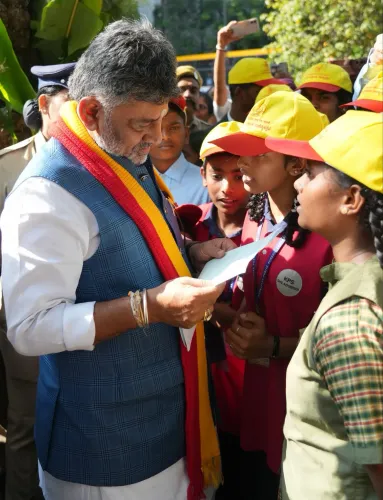
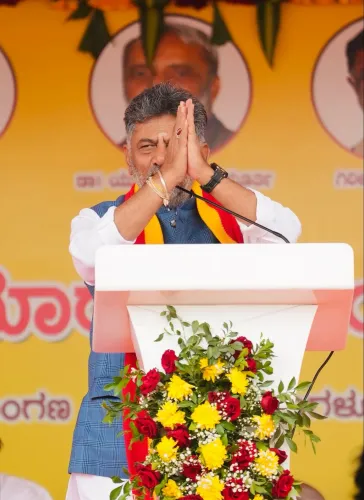
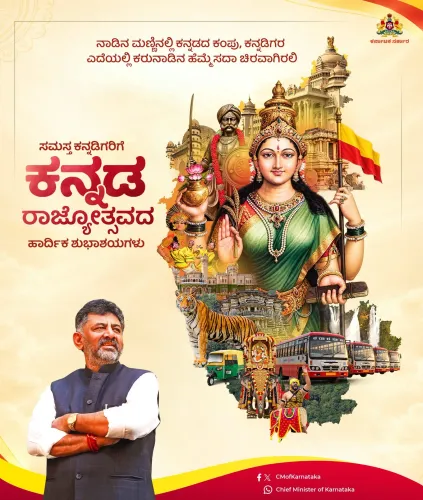
Learning Kannada is not enough — using it every single day is what keeps a language alive. On Sunday, 1 November 2026, Rajyotsava Day, the Chief Minister's Office of Karnataka shared a powerful statement attributed to Chief Minister DK Shivakumar, calling on parents, teachers, and children across the state to move Kannada from the realm of formal obligation into the warmth of daily life.
The statement, delivered in Kannada, carried a memorable line that cut to the core of every language-preservation debate: 'ಕನ್ನಡ ಸರ್ಕಾರಿ ಭಾಷೆಯಾಗಬಾರದು, ಹೃದಯದ ಭಾಷೆಯಾಗಬೇಕು' — 'Kannada should not remain a language of government; it must become a language of the heart.' A life without language, the statement added, is like a 'silent film' — mūki chitra — vivid imagery that landed hard.
Roots in Karnataka, branches across the world
The statement framed Kannada not as a regional relic but as a living, global force. 'The roots of Kannada are in Karnataka,' it read, 'but its branches spread across the world.' Thousands of Kannadigas settled globally are already carrying the language's fragrance into art, science, space, technology, and the IT-BT sector — fields where, the statement argued, Kannadiga achievement stands unmatched.
That is not hyperbole. Karnataka, anchored by Bengaluru's technology corridor, has produced a disproportionate share of India's engineers, scientists, and entrepreneurs since the 1990s liberalisation wave. The state's ability to compete globally while protecting a classical linguistic heritage is precisely the tension Chief Minister Shivakumar was addressing.
The digital-age challenge to mother-tongue education
The statement acknowledged the scale of competition head-on: in a digital era where every language on earth fits inside a mobile phone, Kannada must earn its daily space rather than assume it. This is a real policy anxiety across southern India, where English-medium schooling has surged and mother-tongue usage has quietly retreated even inside Kannada-speaking homes.
Karnataka's Official Language Act of 1963 made Kannada the state's sole official language, and compulsory Kannada teaching was built into school curricula from the 1980s onward. But legislation has its limits. The statement's appeal was directed squarely at the two actors law cannot fully reach: parents and teachers. They must, it argued, nurture in children not just competence in Kannada but genuine love and respect for it.
Government's pledge on Kannada, land, water, and culture
'Our government is committed to the protection of Kannada, land, water, and culture,' the statement declared, framing linguistic identity alongside environmental and territorial sovereignty — a politically resonant trio in Karnataka, where river-water disputes and border questions have long intertwined with Kannada pride.
The ask was collective, not merely governmental: 'We must all come together to strengthen these roots' — so that Karnataka's children can stand ready for global competition without losing the ground beneath their feet.
On a day when Karnataka turns another year as a unified state, the message was less a policy announcement and more a call to cultural conscience. Whether it translates into new curriculum guidelines or school-level daily-use mandates will be the test that follows the rhetoric.
Point of View
He sidesteps the contentious coercion debate while placing moral responsibility on civil society. The 'roots and branches' metaphor deftly reconciles Kannada identity with the state's global IT ambitions, signalling that linguistic pride and economic competitiveness are not in conflict. The real test will be whether this sentiment generates concrete education-department action, or remains a Rajyotsava rhetorical tradition.
NationPress
1 Nov 2026
Frequently Asked Questions
What did CM DK Shivakumar say on Kannada Rajyotsava 2026?
Chief Minister DK Shivakumar said learning Kannada is not enough — children must use it every day. He called on parents and teachers to build love and respect for the language, and declared that Kannada must become a language of the heart, not merely an official government language.
When is Karnataka Rajyotsava celebrated?
Karnataka Rajyotsava is celebrated on 1 November every year, marking the formation of the unified Kannada-speaking state in 1956 .
What is the Karnataka Official Language Act?
The Karnataka Official Language Act of 1963 declared Kannada the sole official language of the state. Compulsory Kannada teaching in schools was later strengthened through education orders from the 1980s onward.
Why is daily use of Kannada important in the digital age?
CM Shivakumar argued that in the digital era, every language is accessible on mobile phones, intensifying competition. He said Kannada must earn its daily presence — especially among children — or risk fading despite being officially protected.
What did Shivakumar mean by Kannada being a 'silent film' without use?
He used the metaphor 'mūki chitra' (silent film) to say that a life without active language use is incomplete and without expression — stressing that a language survives only when spoken and lived, not just studied.