CM Pema Khandu thanks Daporijo co-op for ambulance donation
Synopsis
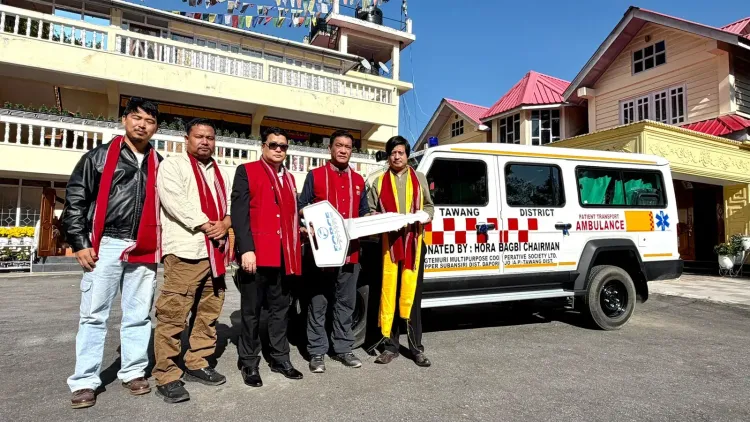
Arunachal Pradesh CM Pema Khandu publicly thanked Hora Bagbi of Ningtemuri Multipurpose Cooperative Society in Daporijo for donating an ambulance, calling the gesture a boost for emergency healthcare in the state's remote and far-flung areas.
Key Takeaways
Hora Bagbi , Chairman of Ningtemuri Multipurpose Cooperative Society Ltd, Daporijo , donated an ambulance to support emergency healthcare.
CM Pema Khandu expressed heartfelt gratitude on 19 October 2026 , highlighting the benefit to people in remote and far-flung areas.
Daporijo , in Upper Subansiri district , serves tribal populations in one of Arunachal Pradesh's most geographically challenging regions.
The donation reflects a broader pattern of cooperative societies supplementing public healthcare infrastructure in India's Northeast border districts.
Effective integration of the ambulance into the district health network will determine its long-term community impact.
An ambulance heading into the remote hills of Upper Subansiri district could mean the difference between life and death — and on Monday, 19 October 2026, Arunachal Pradesh Chief Minister Pema Khandu acknowledged exactly that kind of lifeline, expressing 'heartfelt gratitude' to a local cooperative society for donating one.
Shri Hora Bagbi, Chairman of Ningtemuri Multipurpose Cooperative Society Ltd based in Daporijo, made the donation, which CM Khandu described as a 'noble gesture' that 'will go a long way in strengthening emergency healthcare services and ensuring timely medical assistance to the people, particularly those living in remote and far-flung areas.'
Why one ambulance matters in Upper Subansiri
Daporijo, the headquarters of Upper Subansiri district, sits deep in the Arunachal hinterland — a region of steep gorges, seasonal road closures, and tribal settlements hours from the nearest referral hospital. Emergency transport has historically been one of the most critical gaps in healthcare delivery across this terrain. A single additional ambulance does not just add a vehicle; it can collapse the time-to-care window for dozens of villages that currently have none.
Arunachal Pradesh's border districts have long relied on a patchwork of state facilities and community goodwill to plug gaps in public infrastructure. When roads wash out during monsoon or freeze in winter, the absence of any functional emergency transport is acutely felt. Cooperative societies stepping into this space — as Ningtemuri Multipurpose has done — increasingly form an informal but vital layer of the state's health safety net.
Cooperative societies filling the healthcare gap in the Northeast
Across the Northeast, state governments have quietly encouraged cooperative societies and civil-society organisations to supplement public healthcare investment, particularly in districts where population density is too low to justify large government outlays but need remains acute. Community-funded ambulances, equipment donations, and health camps have become a recognisable pattern in this model.
CM Khandu's public acknowledgement on X signals the state government's appreciation for private civic participation — and implicitly invites more of it. It also puts on record a donation that might otherwise pass without notice in a state where development news rarely travels beyond district boundaries.
Whether the ambulance is formally integrated into the district health administration's dispatch network, or remains under the cooperative's operational control, will shape how effectively it serves the communities it is meant to reach. That coordination question is now the one worth watching.
Point of View
Such community contributions are not peripheral but structural. The gesture also fits Khandu's broader political communication pattern of spotlighting grassroots development initiatives in remote districts, reinforcing a narrative of inclusive, bottom-up governance ahead of any future electoral cycle in the Northeast.
NationPress
19 Oct 2026
Frequently Asked Questions
Who donated an ambulance in Daporijo, Arunachal Pradesh?
Hora Bagbi, Chairman of Ningtemuri Multipurpose Cooperative Society Ltd based in Daporijo, donated the ambulance to support emergency healthcare services in the region.
Why is ambulance access important in Upper Subansiri district?
Upper Subansiri is a remote, hilly district with scattered tribal settlements far from referral hospitals. Emergency transport gaps mean patients in these areas often cannot reach timely medical care, making every additional ambulance critical.
What did CM Pema Khandu say about the ambulance donation?
CM Khandu called it a 'noble gesture' and said it 'will go a long way in strengthening emergency healthcare services and ensuring timely medical assistance to the people, particularly those living in remote and far-flung areas.'
What is the Ningtemuri Multipurpose Cooperative Society?
It is a cooperative society operating in Daporijo, Arunachal Pradesh, engaged in community support and welfare activities in the Upper Subansiri district.
How do cooperative societies help healthcare in Arunachal Pradesh?
In Arunachal Pradesh and across the Northeast, cooperative societies and civil-society organisations supplement government healthcare infrastructure through donations of equipment, ambulances, and community health initiatives, especially in remote border districts.