CM Rekha Gupta Ends 36 Families' 8-Year Wait for Power
Synopsis
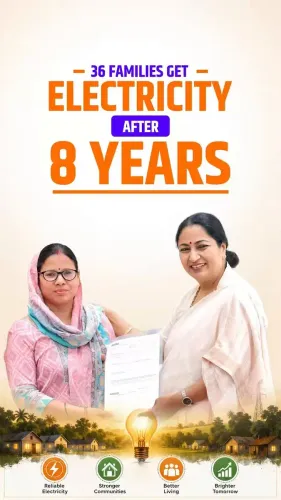
Delhi Chief Minister Rekha Gupta on 24 May 2026 highlighted the closure of an eight-year-old electricity connection case involving 36 families in Delhi. The case, pending since 2018, reflects the chronic regulatory hurdles residents of unauthorised colonies face in accessing basic utilities in the capital.
Key Takeaways
36 families in Delhi had been waiting for an electricity connection since 2018 — a wait of nearly eight years.
Delhi Chief Minister Rekha Gupta drew public attention to the resolution of this case via a video post on 24 May 2026 .
The case reflects a broader pattern of regulatory hurdles preventing electricity access in Delhi's unauthorised colonies and informal settlements.
The Central government regularised nearly 1,731 unauthorised colonies in Delhi in 2019 , but on-ground implementation has remained uneven.
The CM's intervention signals a focus on closing legacy pending cases as part of last-mile service delivery in the capital.
Further announcements on similar pending electricity cases across Delhi settlements are expected.
Delhi Chief Minister Rekha Gupta on Sunday, 24 May 2026, highlighted the resolution of a long-pending electricity connection case affecting 36 families in Delhi who had been waiting since 2018 — an eight-year ordeal that has now been brought to a close under her administration. The Chief Minister shared a video on X drawing attention to the case and asking how the wait finally ended.
Posting in Hindi, Rekha Gupta wrote: 'Kaise khatam hua Dilli mein rah rahe 36 parivaron ka bijli connection ke liye saal 2018 se chala aa raha intezaar?' ['How did the wait of 36 families living in Delhi for an electricity connection, ongoing since 2018, finally come to an end?']. The post accompanied a video and was framed as an invitation for viewers to learn about the resolution.
Context
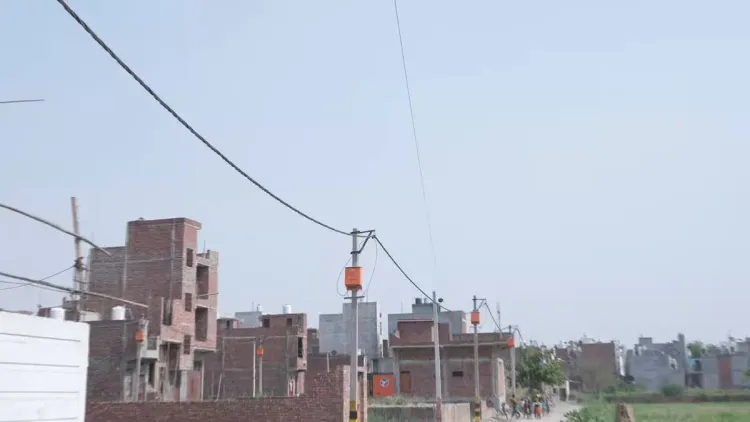
The 36 families in question had reportedly been without a formal electricity connection for nearly eight years, a situation that points to the deep-rooted regulatory and administrative challenges faced by residents of unauthorised colonies and informal settlements across Delhi. Such households often fall outside the formal grid due to land-title disputes, planning restrictions, and the legal status of their settlements.
Delhi's distribution companies — known as discoms — are bound by regulatory frameworks that restrict the release of new connections in areas without clear land or planning approvals. This has historically left tens of thousands of residents in a legal grey zone, unable to access basic utilities despite being long-term inhabitants of the city.
Policy Backdrop
Successive Delhi governments have attempted to address this problem through regularisation drives for unauthorised colonies. The Central government in 2019 took a significant step by notifying the regularisation of nearly 1,731 unauthorised colonies in Delhi, a move intended to unlock access to civic amenities — including electricity — for millions of residents. However, on-ground implementation has remained uneven, with individual cases often requiring administrative intervention to resolve.
The BJP-led administration under Chief Minister Rekha Gupta, which came to power in Delhi in early 2025, has signalled a focus on closing such legacy pending cases. The spotlight on the 36 families appears to be part of a broader effort to demonstrate last-mile delivery of basic services in the capital.
Stakeholders and Impact
For the 36 families at the centre of this case, the resolution means access to legal electricity supply after nearly a decade — ending dependence on informal or hazardous connections that are common in such settlements. Residents of unauthorised colonies across Delhi will be watching closely to see whether this signals a wider administrative push to clear similar backlogs.
Consumer advocacy groups and civil society organisations working on urban housing rights have long flagged the electricity access gap in Delhi's informal settlements as a public health and safety concern. Illegal wiring and overloaded circuits in such areas have been linked to fire incidents and electrocution deaths in the past.
What's Next
The Chief Minister's post is likely a precursor to further announcements on pending electricity connections in other Delhi settlements. Regulatory orders to the discoms and possible expansion of the regularisation framework to cover more households remain areas to watch. Whether the administration will release aggregate data on how many such pending cases exist across the city — and a timeline for their resolution — will be a key indicator of the scale and ambition of this effort.
Point of View
Chief Minister Rekha Gupta is deploying a classic retail-politics narrative — converting an administrative outcome into a human-interest story that travels well on social media. The framing of an eight-year wait underscores an implicit critique of previous administrations, positioning the current BJP government as the one that finally delivered. This fits a broader pattern of the Delhi BJP leadership using visible, granular service-delivery wins to build credibility on governance after years in opposition. The critical question is whether this signals a systemic push to clear the city's entire backlog of pending electricity connections, or remains a one-off highlight.
NationPress
19 Sept 2026
Frequently Asked Questions
Why were 36 families in Delhi waiting for electricity since 2018?
The families were likely residents of an unauthorised colony or informal settlement where land and planning restrictions prevented discoms from releasing formal electricity connections, a common regulatory hurdle in Delhi.
What did Delhi CM Rekha Gupta do about the electricity connection issue?
On 24 May 2026, CM Rekha Gupta posted a video on X highlighting how the eight-year wait of 36 Delhi families for an electricity connection was finally resolved under her administration.
How does Delhi provide electricity to unauthorised colonies?
Delhi has pursued regularisation of unauthorised colonies since the early 2010s, and the Central government notified regularisation of about 1,731 such colonies in 2019, which in principle allows discoms to release electricity connections to residents.
Who is Rekha Gupta and what is her role?
Rekha Gupta is a BJP leader who serves as the Chief Minister of Delhi, having come to power in early 2025.
Are there more pending electricity connection cases in Delhi?
Yes, Delhi has long faced a backlog of pending electricity connections in unauthorised settlements and jhuggi clusters, and further announcements on resolving such cases are expected from the current administration.