CM Rekha Gupta Gets Electricity to 36 Harsh Vihar Families
Synopsis
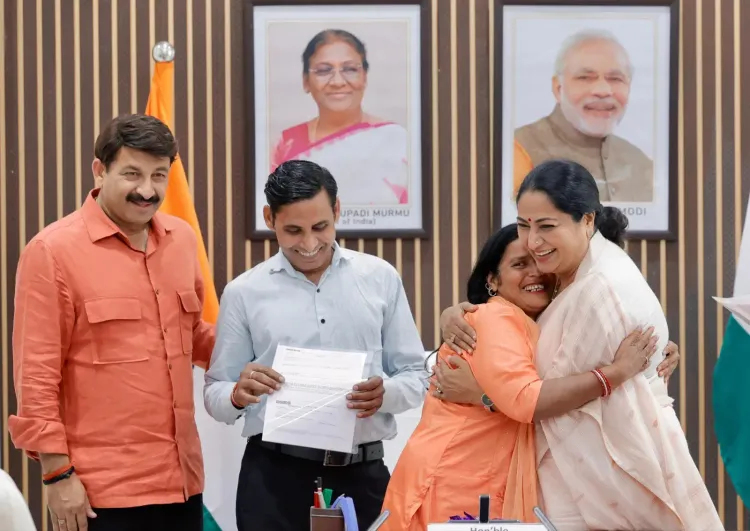
Delhi Chief Minister Rekha Gupta met 36 families in Harsh Vihar A-3 who had waited since 2018 for electricity connections. After they raised the issue at a Jan Sunwai, she ordered mission-mode transformer installation. BJP MP Manoj Tiwari was also present at the event.
Key Takeaways
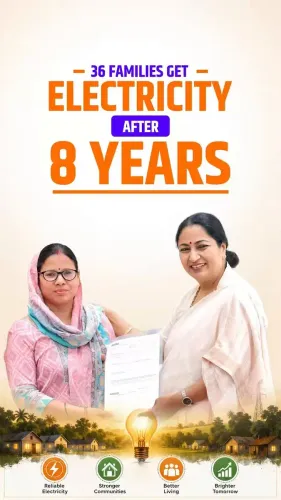
36 families in Harsh Vihar A-3 , North East Delhi, are receiving electricity connections after a wait of approximately seven years since 2018 .
The grievance was raised directly before Delhi CM Rekha Gupta during a Jan Sunwai (public hearing), after which she issued immediate directions.
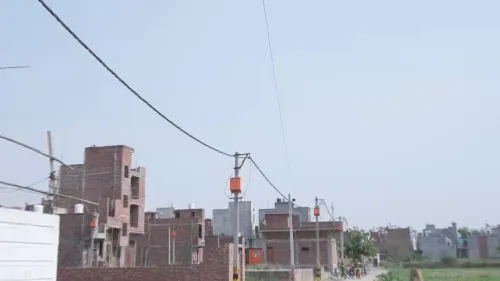
New transformers are being installed on a mission-mode basis to facilitate the connections.
BJP MP Manoj Tiwari of North East Delhi was present at the event, reflecting coordination between the CM's office and the local constituency representative.
The case highlights the persistent challenge of providing formal electricity access to peripheral and rapidly urbanised colonies in Delhi.
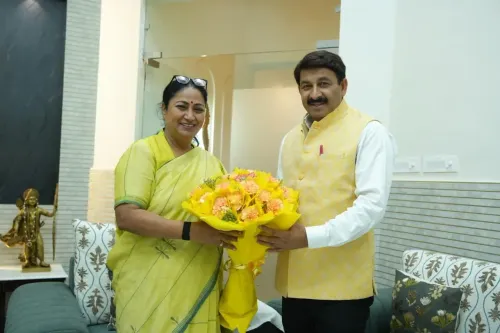
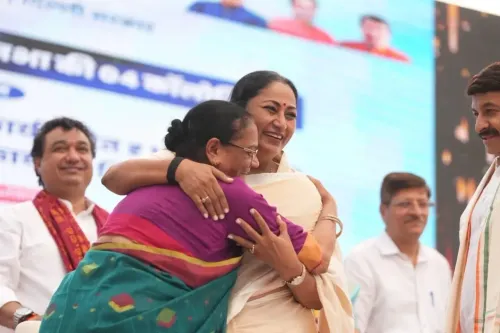
Delhi Chief Minister Rekha Gupta on Sunday, 24 May 2026, met families in Harsh Vihar A-3, North East Delhi, and confirmed that 36 households who had waited years for electricity connections were finally being provided power supply through newly installed transformers deployed on a mission-mode basis.
Context
The Chief Minister posted on X that the families had raised their grievance during a Jan Sunwai (public hearing) session, informing her that they had been waiting for electricity connections since 2018. Gupta wrote: 'जन सुनवाई के दौरान जब उन्होंने मेरे समक्ष यह विषय रखा कि 2018 से वो बिजली कनेक्शन की प्रतीक्षा कर रहे हैं तो तत्काल आवश्यक निर्देश दिए गए' — 'When they placed before me during the public hearing that they had been awaiting electricity connections since 2018, immediate necessary directions were issued.' She added that transformers were being installed on a mission-mode basis to provide new connections.
BJP Member of Parliament Manoj Tiwari, who represents North East Delhi in the Lok Sabha, was present at the event, underlining the coordination between the Chief Minister's office and the local MP in addressing constituency-level infrastructure gaps.
Policy Backdrop
Harsh Vihar is a residential locality in North East Delhi that has historically faced delays in civic infrastructure, including formal electricity access. Peripheral and rapidly urbanised colonies in Delhi have long struggled to obtain regular power connections owing to land regularisation procedures and distribution company requirements.
The Jan Sunwai format — structured public grievance hearings — has been used by successive Delhi administrations as a mechanism to fast-track individual and small-group complaints related to power, water, and sanitation. Connecting such hearings directly to on-ground action, as in this case, is a recurring feature of how localised infrastructure bottlenecks get resolved in the capital.
Stakeholders and Impact
The 36 families of Harsh Vihar A-3 are the immediate beneficiaries, gaining access to formal electricity supply after an approximately seven-year wait. Residents of similar unauthorised or resettlement colonies across North East Delhi stand to watch this case as a potential precedent for expedited redressal.
The Chief Minister noted that the visible relief on the faces of the families was proof that 'sensitive efforts bring real change in people's lives' — 'संवेदनशील प्रयास लोगों के जीवन में वास्तविक परिवर्तन लाते हैं'. She also assured the families that 'our government is always ready to solve Delhi's problems.'
What's Next
The resolution in Harsh Vihar A-3 is likely to draw attention to other North East Delhi pockets where similar electricity access gaps were flagged during recent Jan Sunwai sessions. The rollout of additional transformers and connections in comparable colonies will be a key indicator of whether this mission-mode approach is being scaled across the constituency.
Any formal policy changes to simplify connection norms for resettlement and peripheral colonies — a structural fix rather than a case-by-case intervention — remain a longer-term question for the Delhi government's energy and urban planning agenda.
Point of View
High-impact grievance-resolution tool — converting a years-old infrastructure failure into a positive optic within a single news cycle. The presence of MP Manoj Tiwari signals deliberate coordination between state and central elected representatives in North East Delhi, a constituency the BJP has held and cultivated carefully. While the immediate relief for 36 families is real, the broader policy question — whether connection norms for similar peripheral colonies will be systematically reformed — remains unanswered. Until structural fixes accompany such case-by-case interventions, the Jan Sunwai model risks becoming a recurring firefighting exercise rather than a durable governance solution.
NationPress
19 Sept 2026
Frequently Asked Questions
Why did Harsh Vihar A-3 families wait so long for electricity connections?
The families had been waiting since 2018 due to delays typical in peripheral and rapidly urbanised Delhi colonies, where land regularisation procedures and distribution company requirements slow down formal electricity access. The issue was resolved only after they raised it directly at a Jan Sunwai with CM Rekha Gupta.
What is a Jan Sunwai and how does it work in Delhi?
A Jan Sunwai is a structured public grievance hearing where residents can present their problems directly to senior officials or elected representatives. In this case, the Harsh Vihar A-3 families used the format to flag their seven-year wait for electricity, prompting immediate directions from the Chief Minister.
What action did CM Rekha Gupta take for the Harsh Vihar families?
CM Rekha Gupta issued immediate directions after hearing the grievance, ordering transformers to be installed on a mission-mode basis so that new electricity connections could be provided to the 36 affected families.
Who is Manoj Tiwari and why was he present at the Harsh Vihar event?
Manoj Tiwari is the BJP Member of Parliament from North East Delhi. His presence at the event reflects the coordination between the Delhi Chief Minister's office and the local MP in addressing constituency-level infrastructure issues.
Will other colonies in North East Delhi get electricity connections the same way?
The Harsh Vihar A-3 case may set a precedent for other North East Delhi pockets with similar gaps flagged at Jan Sunwai sessions. However, a broader policy reform on connection norms for peripheral colonies has not yet been announced by the Delhi government.