CM Rekha Gupta Cheers ISRO's GSLV-F18/NVS-03 Launch Tonight
Synopsis
Delhi CM Rekha Gupta on 30 October 2026 backed ISRO's GSLV-F18/NVS-03 mission, framing the navigation satellite launch as a key step in India's Aatmanirbhar Bharat drive for GPS-independent positioning capability.
Key Takeaways
Delhi CM Rekha Gupta publicly backed ISRO's GSLV-F18/NVS-03 launch scheduled for the night of 30 October 2026 .
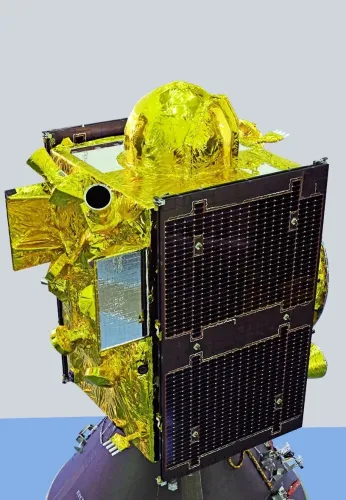
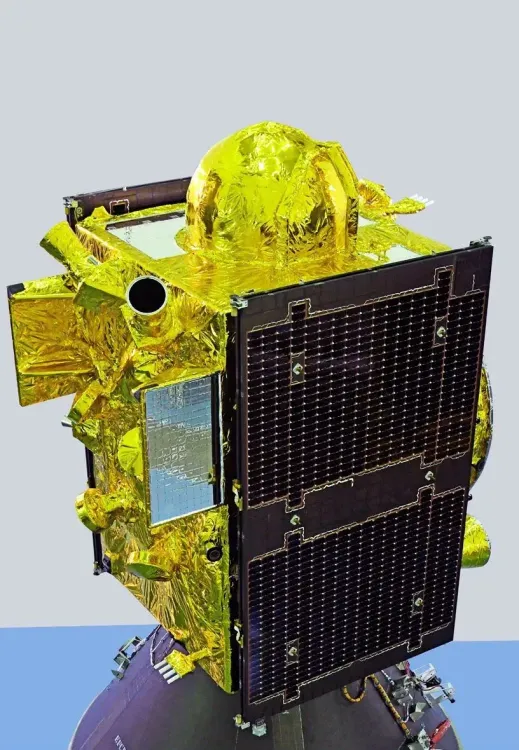
NVS-03 is the third satellite in ISRO's second-generation NavIC navigation series, upgrading the original IRNSS constellation that began with IRNSS-1A in 2013 .
The first second-generation satellite, NVS-01 , was launched in May 2023 ; NVS-03 continues that incremental build-out.
Aatmanirbhar Bharat , announced by PM Modi in May 2020 , set reducing import dependence in space and defence technology as an explicit national goal.
NavIC is designed to provide sovereign positioning services for India's defence forces, civil aviation, shipping, and civilian users, independent of foreign systems like GPS.
Successful orbital insertion and on-orbit testing of NVS-03 will determine when the satellite begins contributing to the live constellation.
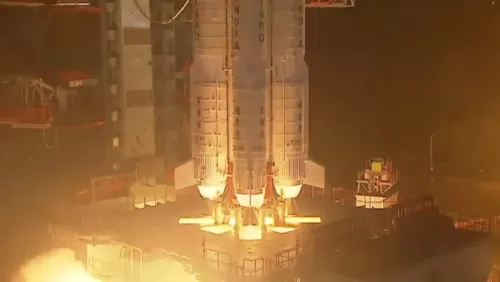
India's quest for navigation sovereignty reaches another milestone tonight — and Delhi Chief Minister Rekha Gupta wants the country watching. On Friday, 30 October 2026, she took to X to back ISRO's scheduled launch of GSLV-F18/NVS-03, the latest satellite set to bolster India's homegrown NavIC navigation constellation.
Posting her support ahead of the mission, CM Gupta framed the launch squarely within Prime Minister Narendra Modi's Aatmanirbhar Bharat vision, writing: 'Our satellites. Our navigation. Our future.' The three-word cadence was deliberate — a sharp reminder that what rides on tonight's rocket is not just hardware, but strategic independence from foreign navigation systems like GPS.
What NVS-03 adds to India's NavIC constellation
NavIC — India's Regional Navigation Satellite System, formally known as IRNSS — has been in the making since the launch of IRNSS-1A in 2013. The first generation built out a seven-satellite geosynchronous constellation capable of providing positioning services across the Indian subcontinent and surrounding waters. The second generation, the NVS series, upgrades that architecture with improved signal capabilities. NVS-01, the series opener, flew aboard a GSLV in May 2023; NVS-03 tonight is the third in that upgraded line. Each addition expands coverage, redundancy, and signal fidelity — the unglamorous but essential plumbing of modern navigation.Aatmanirbhar Bharat's strategic space dimension
When Prime Minister Modi announced Aatmanirbhar Bharat in May 2020, space and defence technology sat near the top of the self-reliance agenda. The logic was straightforward: a country that depends on another nation's GPS signals for military targeting, disaster response, or critical infrastructure is a country with a structural vulnerability. India's defence forces, civil aviation, merchant shipping, and precision agriculture all benefit from a sovereign navigation layer. Successive GSLV missions carrying NavIC satellites have translated that policy intent into orbital reality, one satellite at a time.ISRO's GSLV and the road to geosynchronous orbit
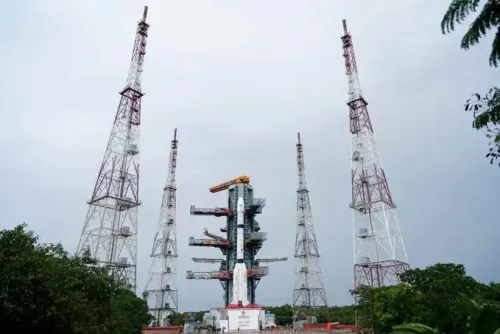
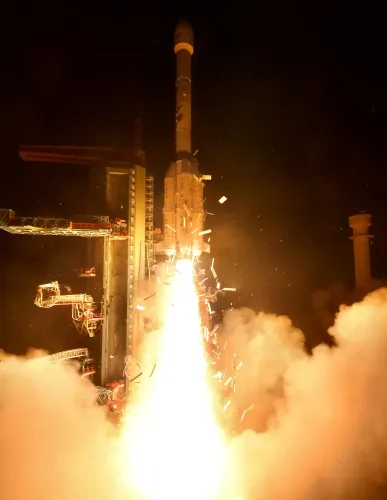
The Geosynchronous Satellite Launch Vehicle (GSLV) is ISRO's workhorse for placing heavier payloads in the geosynchronous transfer orbit that navigation satellites need. Tonight's mission, GSLV-F18, follows a well-rehearsed flight profile — but space launch is never routine. Successful orbital insertion and subsequent on-orbit testing will determine when NVS-03 can begin contributing to the constellation. The wider world will be watching too: India's steady, mission-by-mission build-out of NavIC is increasingly cited as a template for middle-power technological sovereignty in space. If the rocket clears the pad and the satellite settles into orbit, India will be one significant step closer to a navigation system that answers to nobody but itself.Point of View
Associating with ISRO's credibility carries obvious political dividend in a city where the party recently recaptured power. The real measure, however, will be operational: whether NVS-03 achieves orbit and whether NavIC eventually displaces GPS dependency in India's critical systems.
NationPress
30 Oct 2026
Frequently Asked Questions
What is GSLV-F18 NVS-03?
GSLV-F18/NVS-03 is an ISRO mission launched on 30 October 2026 that places the third second-generation navigation satellite of the NVS series into geosynchronous orbit to strengthen India's NavIC positioning system.
What is NavIC and how is it different from GPS?
NavIC (Navigation with Indian Constellation) is India's own regional satellite navigation system, developed by ISRO to provide positioning services independent of the American GPS network, covering the Indian subcontinent and surrounding regions.
What is the NVS series of satellites?
The NVS series is the second generation of India's navigation satellites, improving on the original IRNSS constellation; NVS-01 launched in May 2023 was the first, and NVS-03 is the third in the upgraded line.
What is Aatmanirbhar Bharat and how does it relate to ISRO?
Aatmanirbhar Bharat , announced by PM Modi in May 2020 , is a self-reliance programme that includes reducing India's dependence on foreign space and defence technology — ISRO's NavIC missions are a direct expression of that goal.
Why did Delhi CM Rekha Gupta comment on the ISRO launch?
Delhi CM Rekha Gupta posted on X to express support for the mission and align the launch with PM Modi 's Aatmanirbhar Bharat vision, framing India's homegrown navigation capability as a national achievement.