CM Rekha Gupta Hails Cabinet Nod for BHAVYA Rasayan Scheme
Synopsis
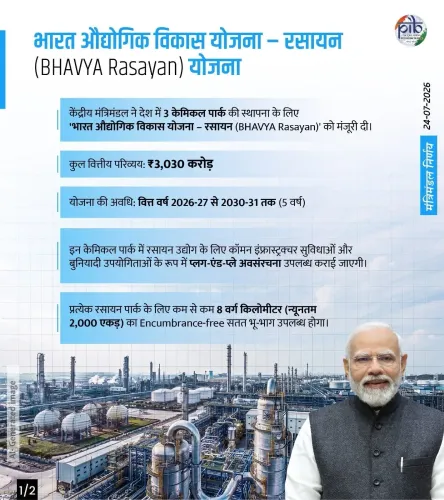
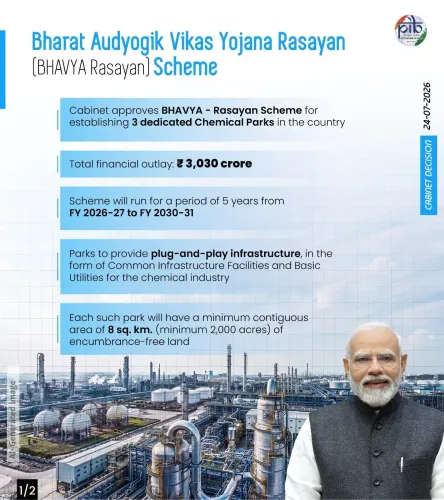
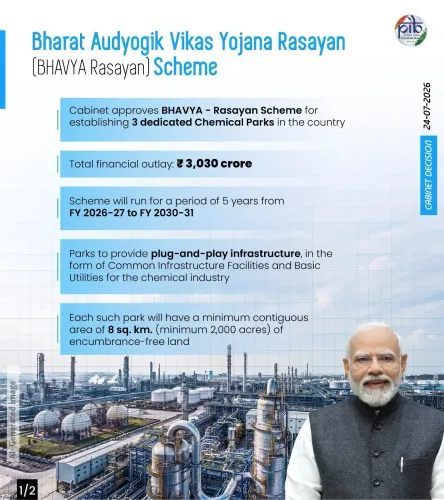
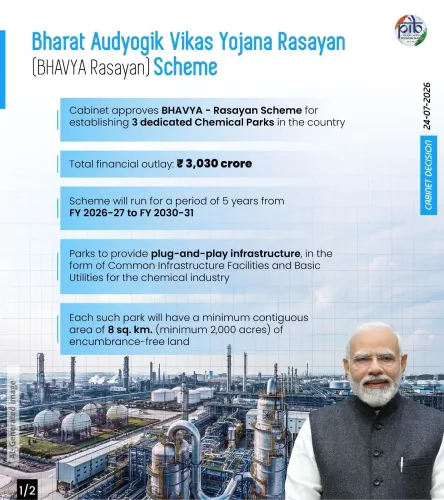
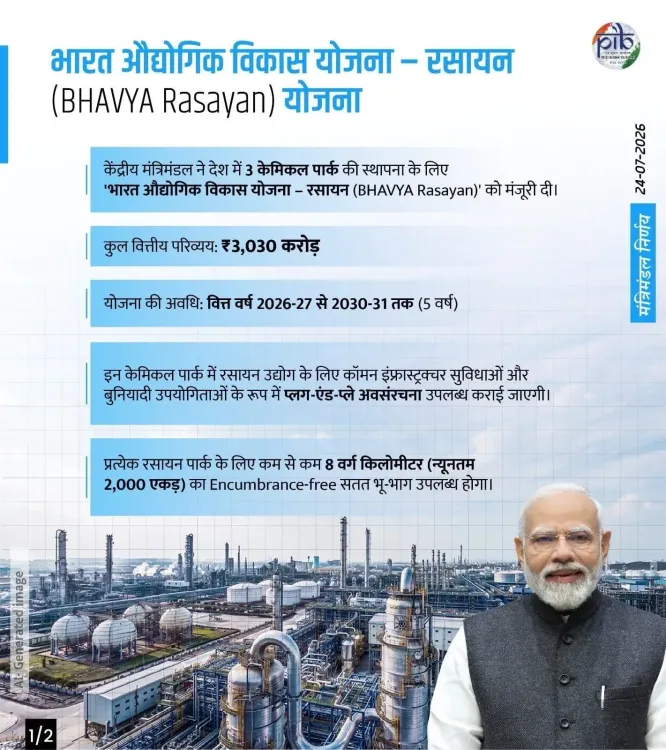
The Union Cabinet, chaired by PM Narendra Modi, approved BHAVYA Rasayan — a ₹3,030 crore scheme to develop three dedicated chemical parks in India. Delhi CM Rekha Gupta welcomed the move, saying it will boost investment, exports, and jobs while reducing import dependence in the chemicals and petrochemicals sector.
Key Takeaways
The Union Cabinet, chaired by PM Narendra Modi , approved the BHAVYA Rasayan scheme on 24 July 2026 .
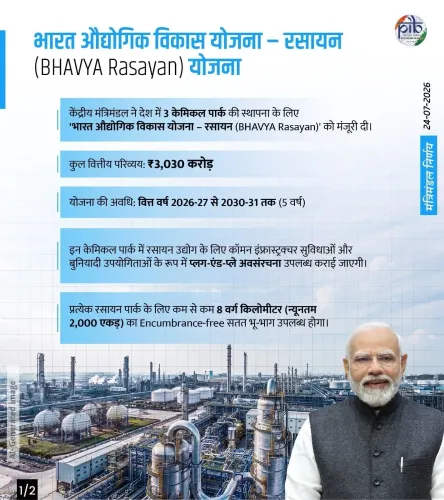
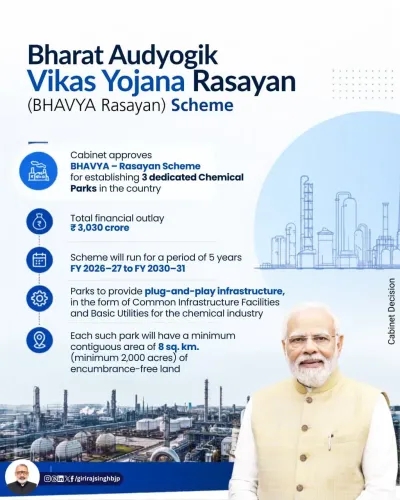
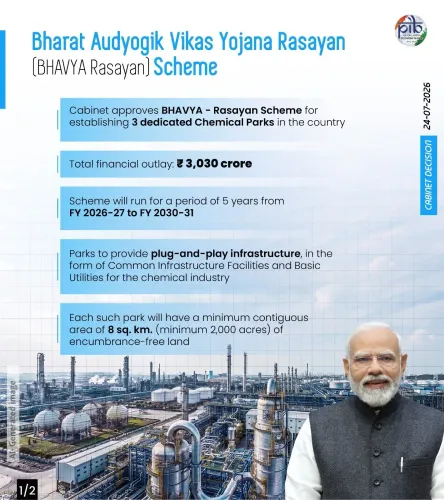
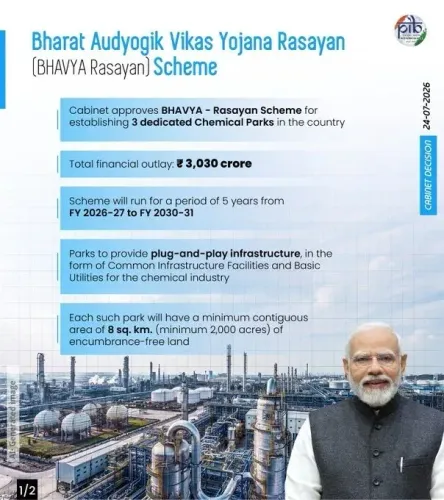
The scheme carries a central outlay of ₹3,030 crore .
Three dedicated chemical parks will be developed across India under the scheme.
Key objectives include boosting investment, promoting exports, reducing import dependence, and generating employment in the chemicals and petrochemicals sector.
The decision aligns with the Atmanirbhar Bharat and Viksit Bharat frameworks.
India's cluster-based industrial policy in chemicals builds on the PCPIR policy first notified in 2007 .
Delhi Chief Minister Rekha Gupta on Friday, 24 July 2026, welcomed the Union Cabinet's approval of the Bharat Audyogik Vikas Yojana Rasayan (BHAVYA Rasayan) scheme, calling it a landmark decision for India's chemicals and petrochemicals sector. The cabinet, chaired by Prime Minister Narendra Modi, sanctioned an outlay of ₹3,030 crore for the scheme, which envisages the development of three dedicated chemical parks across the country.
Context
Gupta shared the development on X, describing it as a significant step toward strengthening the chemicals and petrochemicals sector. In her post, she wrote: 'रसायन एवं पेट्रो-रसायन क्षेत्र के विकास की दिशा में महत्वपूर्ण निर्णय' — 'an important decision in the direction of developing the chemicals and petrochemicals sector.' She added that the scheme would boost investment, enhance the industry's competitiveness, promote exports, reduce import dependence, and create new employment opportunities.
The CM framed the cabinet decision within the broader vision of Atmanirbhar Bharat (Self-Reliant India) and Viksit Bharat (Developed India), attributing its significance to Prime Minister Modi's leadership.
Policy Backdrop
India's push for dedicated chemicals infrastructure has a policy lineage stretching back to 2007, when the Petroleum, Chemicals and Petrochemicals Investment Regions (PCPIR) policy was notified to promote integrated cluster-based development in the sector. BHAVYA Rasayan represents a continuation and deepening of that approach, now backed by a specific central outlay.
The cluster model has previously been deployed in electronics, pharmaceuticals, and textiles — sectors where dedicated industrial zones helped attract large-scale investment and reduce dependence on imports. The chemicals and petrochemicals sector, a significant contributor to India's manufacturing base, has long been identified as a priority area for similar infrastructure-led intervention.
Stakeholders and Impact
Chemical manufacturers and petrochemical exporters stand to benefit most directly from the three planned parks, which are expected to provide shared infrastructure, logistics connectivity, and a regulatory environment conducive to large-scale production. Workers in the broader manufacturing sector are also among the intended beneficiaries, with job creation cited as a key objective of the scheme.
By reducing import dependence in chemicals and petrochemicals — a category where India has historically run significant trade deficits — the scheme aims to improve the country's current account position over the medium term. Enhanced export competitiveness could position Indian chemical producers more strongly in global value chains.
What's Next
The selection of locations for the three dedicated chemical parks and the framework for private investment participation will be closely watched as indicators of implementation pace. Analysts will track subsequent budget allocations and employment generation figures to assess real-world outcomes against the scheme's stated objectives.
With the cabinet approval now in place, the focus shifts to the Ministry of Chemicals and Fertilizers to operationalise the scheme. If executed at scale, BHAVYA Rasayan could mark a structural shift in India's chemicals sector — moving the country from a net importer toward a more self-sufficient and export-oriented industrial base.
Point of View
A sector where India's import bill has been a persistent concern. With a ₹3,030 crore commitment, the scheme is substantive enough to attract serious private co-investment if park locations and governance frameworks are announced promptly. Delhi CM Rekha Gupta's endorsement, while largely ceremonial given chemicals is a central subject, reflects the BJP's broader effort to build a consistent narrative around manufacturing self-reliance ahead of future electoral cycles. The scheme's real test will lie in execution speed and whether the three parks achieve critical mass of tenants within a defined timeline.
NationPress
24 Jul 2026
Frequently Asked Questions
What is the BHAVYA Rasayan scheme?
BHAVYA Rasayan — short for Bharat Audyogik Vikas Yojana Rasayan — is a central government scheme approved by the Union Cabinet with an outlay of ₹3,030 crore to develop three dedicated chemical parks in India, aimed at boosting the chemicals and petrochemicals sector.
How much money has been approved for BHAVYA Rasayan?
The Union Cabinet has approved ₹3,030 crore for the BHAVYA Rasayan scheme.
How many chemical parks will be built under BHAVYA Rasayan?
Three dedicated chemical parks will be developed across India under the BHAVYA Rasayan scheme.
What are the goals of the BHAVYA Rasayan scheme?
The scheme aims to promote investment in the chemicals sector, enhance export competitiveness, reduce India's dependence on chemical imports, and create new employment opportunities in the manufacturing sector.
What did Delhi CM Rekha Gupta say about BHAVYA Rasayan?
Delhi CM Rekha Gupta welcomed the cabinet decision, saying it would strengthen the chemicals and petrochemicals sector and advance the goals of Atmanirbhar Bharat and Viksit Bharat under PM Modi's leadership.