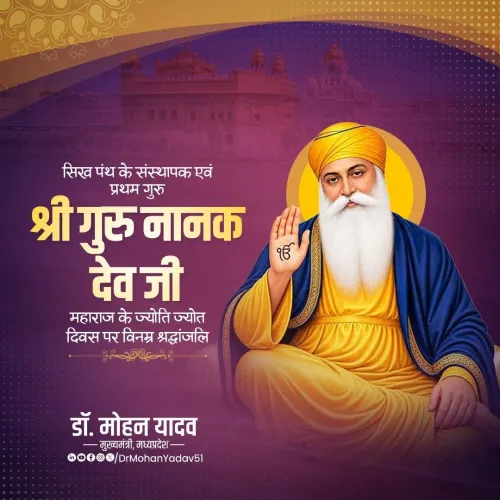
CM Rekha Gupta Pays Tribute on Guru Nanak Dev Ji's Jyoti-Jot Divas
Synopsis
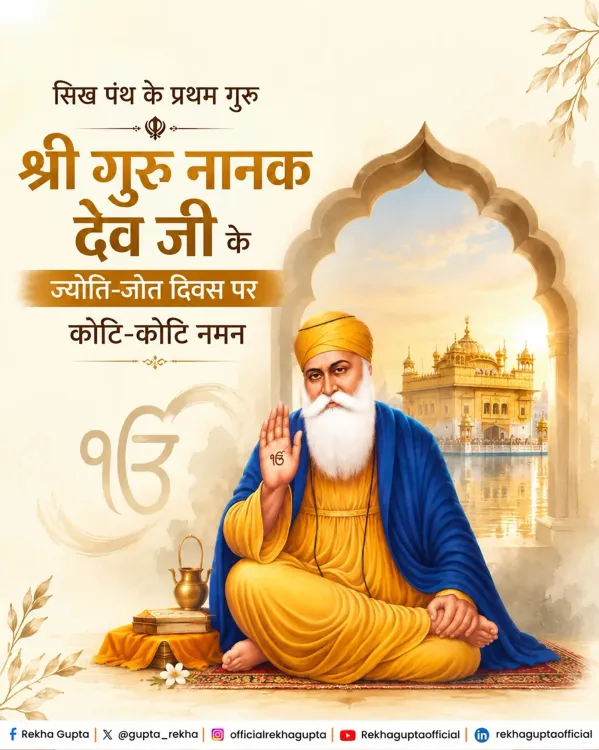
Delhi Chief Minister Rekha Gupta offered a reverent tribute on Guru Nanak Dev Ji's Jyoti-Jot Divas, invoking the Guru's eternal message of 'Sarbat da Bhala' — the well-being of all — and framing selfless public service as the truest form of devotion to the Guru's legacy.
Key Takeaways
Delhi CM Rekha Gupta posted a tribute on Guru Nanak Dev Ji's Jyoti-Jot Divas , observed on October 5, 2026 .
She opened with 'Ik Onkar Satnam' , the foundational affirmation of the Sikh faith from the Guru Granth Sahib.
The tribute highlighted three pillars of Guru Nanak's philosophy: truth (satya), service (seva), and harmony (sadbhav) .
CM Gupta specifically invoked 'Sarbat da Bhala' — the Guru's call for the universal well-being of all people.
She framed public welfare as a duty and service as a spiritual practice, connecting governance to the Guru's teachings.
Jyoti-Jot Divas marks the day Guru Nanak Dev Ji is believed to have merged with the divine light — a solemn occasion distinct from the celebratory Gurpurab.
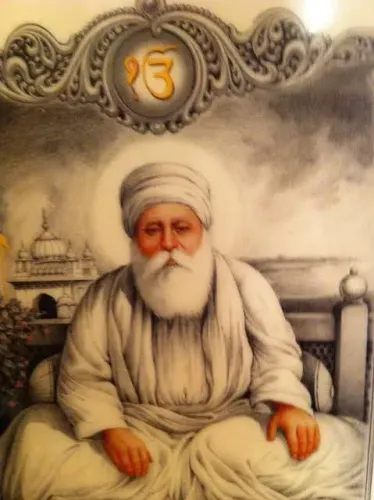
On the solemn occasion of Guru Nanak Dev Ji's Jyoti-Jot Divas — the day the founder of Sikhism is said to have merged with the eternal light — Delhi Chief Minister Rekha Gupta offered her reverent tribute on Monday, October 5, 2026, invoking the Guru's timeless teachings of truth, service, and harmony.
In her post, CM Gupta wrote: 'एक ओंकार सतनाम' — 'One God, whose name is Truth' — framing her tribute around the divine illumination that Guru Nanak Dev Ji brought to humanity. She reflected that his vaani (sacred utterances) hold the welfare of all humankind, that his teachings carry the essence of selfless service, and that his life embodied the eternal message of 'Sarbat da Bhala' — the well-being of all.
A Message Rooted in the Guru's Core Philosophy
Guru Nanak Dev Ji, the first of the ten Sikh Gurus, founded a spiritual tradition centred on equality, compassion, and the rejection of caste and creed. The phrase 'Ik Onkar' — the opening line of the Guru Granth Sahib — is among the most recognisable affirmations in South Asian spiritual life, and CM Gupta anchored her tribute in it deliberately.
The Jyoti-Jot Divas, observed with quiet devotion across Sikh communities worldwide, marks the moment Guru Nanak Dev Ji is believed to have left his mortal form and merged with the divine light. It is a day of prayer, scripture recitation, and reflection — distinct in its solemnity from the jubilant celebrations of Gurpurab, the Guru's birth anniversary.
Service as Devotion: The Sentiment CM Gupta Underscored
CM Gupta's closing thought carried political and civic resonance: she wrote that walking on the path shown by Guru Nanak Dev Ji — making service a spiritual practice and public welfare one's duty — is the truest form of reverence. The invocation of 'seva' (selfless service) and 'jankalayn' (public welfare) as personal duties echoes a framing that political figures in India frequently use to connect governance with spiritual purpose.
The tribute reflects the broad cross-community significance that Guru Nanak Dev Ji holds in India — venerated not only within the Sikh faith but across many communities as a saint, reformer, and moral compass. In Delhi, home to a significant Sikh population and several historically important Gurudwaras, such observances carry particular civic weight.
The message of Sarbat da Bhala — that governance and service must reach every person without distinction — remains as relevant a benchmark today as when the Guru first gave it voice.
Point of View
A constituency of considerable electoral and civic weight in Delhi. By centring her message on seva and jankalayn, she translates devotional language into a governance narrative — positioning public service as a continuation of the Guru's mission rather than a purely political programme. The invocation of 'Sarbat da Bhala' is particularly pointed: it is a universal, non-partisan ideal that transcends any single community, broadening the appeal of the tribute. Such observances signal that religious and cultural milestones remain integral to how elected leaders in India communicate their identity and values to a diverse electorate.
NationPress
5 Oct 2026
Frequently Asked Questions
What is Jyoti-Jot Divas of Guru Nanak Dev Ji?
Jyoti-Jot Divas marks the day Guru Nanak Dev Ji, the founder of Sikhism, is believed to have merged with the divine eternal light — observed with prayer, scripture recitation, and quiet devotion by Sikh communities worldwide.
What does 'Sarbat da Bhala' mean?
'Sarbat da Bhala' is a Punjabi phrase meaning 'the well-being of all' — a central teaching of Guru Nanak Dev Ji that calls for universal compassion, welfare, and equality without distinction of caste, creed, or religion.
What did Delhi CM Rekha Gupta say on Guru Nanak Dev Ji's Jyoti-Jot Divas?
CM Rekha Gupta paid tribute by invoking 'Ik Onkar Satnam', reflected on the Guru's teachings of truth, service, and harmony, and said that making public welfare one's duty is the truest reverence for Guru Nanak Dev Ji.
What is the difference between Gurpurab and Jyoti-Jot Divas?
Gurpurab celebrates Guru Nanak Dev Ji's birth anniversary and is marked with joyful processions and festivities, while Jyoti-Jot Divas is a solemn observance marking the day the Guru is believed to have departed from his mortal form and merged with the divine.